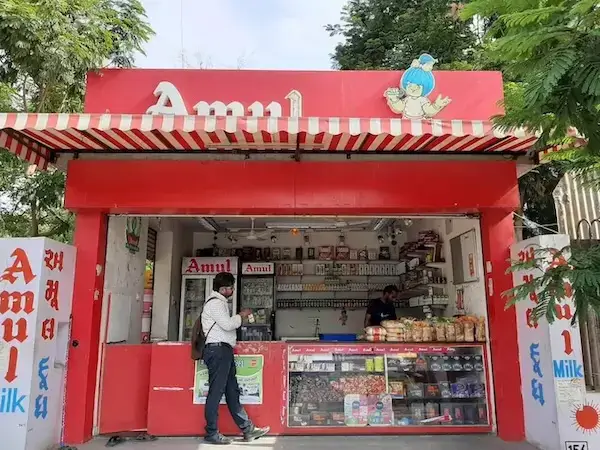
The cost to open an Amul franchise in India in 2026 ranges ₹2,00,000–₹6,00,000, depending on whether you start a small Amul Preferred Outlet/Kiosk or a full Ice-Cream Scooping Parlour. The kiosk model typically costs around ₹2 lakh, while a larger scooping parlour with seating and a full dessert menu costs around ₹6 lakh. Amul does not charge any royalty, and franchise owners earn profit entirely from retail margins on dairy and ice-cream products.
Additional costs include rent, electricity, initial stock, staff salaries, and monthly working capital. Amul franchise cost in India (2026) is ₹2–6 lakh depending on outlet type. Learn cost breakdown for kiosks, scooping parlours, equipment, security deposit, interiors, and expected profits.
Amul Franchise Cost in India: Complete Investment Breakdown
How Much Does an Amul Franchise Cost?
Amul is one of India’s most trusted dairy brands and is well known for offering a franchise opportunity with comparatively low startup costs. Unlike many franchise businesses, Amul generally does not charge royalty fees, allowing franchise partners to earn through product margins.
The total investment depends on the type of outlet you choose, the size of the shop, interior work, refrigeration equipment, and the location of the business. In most cases, entrepreneurs can expect to invest between ₹2 lakh and ₹6 lakh to start an Amul outlet.
Apart from the initial setup cost, you should also budget for recurring expenses such as rent, electricity, salaries, and inventory replenishment. The company offers both compact kiosks and larger ice cream parlours, making it suitable for different investment levels.
Amul Preferred Outlet or Kiosk Investment
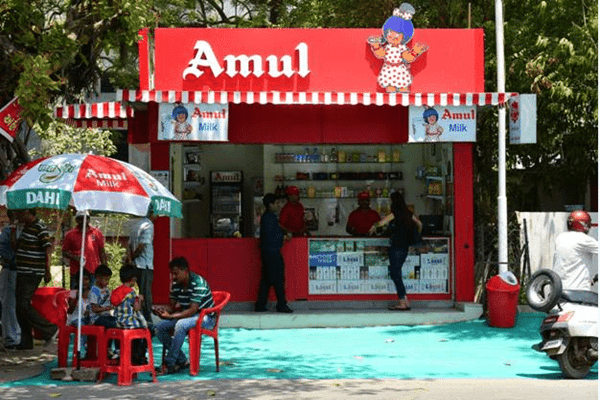
The Amul Preferred Outlet (APO) or kiosk is the most affordable option for first-time business owners. It is designed for entrepreneurs who want to enter the retail business with a relatively small investment while selling Amul’s popular dairy products. These outlets work well in residential areas, busy markets, railway stations, bus terminals, educational institutions, and commercial neighbourhoods where there is steady demand throughout the year.
A kiosk generally requires 100 to 150 square feet of space and an estimated investment of around ₹2 lakh. This amount usually covers the refundable security deposit, basic interior work, branding, deep freezers, visi-coolers, and other essential equipment. Since the outlet primarily sells packaged dairy products, ice creams, beverages, butter, cheese, paneer, and curd, operations remain simple and staffing requirements are minimal. For many entrepreneurs, this format offers an affordable way to start a business with manageable operating costs.
Amul Ice Cream Scooping Parlour Cost
For investors looking for higher revenue potential, the Amul Ice Cream Scooping Parlour is the premium retail format. Unlike a standard kiosk, this outlet serves freshly scooped ice creams along with sundaes, thick shakes, floats, brownies, sandwiches, and a wider selection of dairy products. Because customers spend more time inside the store, the business can generate higher average bills and better profit margins.
A scooping parlour generally requires at least 300 square feet of space in a busy commercial location, shopping complex, or high-footfall market. The total investment is typically around ₹6 lakh, covering the refundable deposit, interior decoration, professional display counters, scooping cabinets, deep freezers, blenders, seating arrangements, signage, and other equipment. Although the investment is higher than a kiosk, the broader menu and premium products often create stronger earning potential.
Additional Operating Expenses
The franchise investment is only one part of the total financial commitment. Every Amul outlet also has regular monthly operating expenses that vary depending on the city, shop size, and daily customer traffic. These recurring costs play an important role in determining long-term profitability.
Working capital is required to purchase fresh inventory such as milk, butter, cheese, paneer, curd, beverages, chocolates, and ice creams. Monthly rent depends entirely on the location, while electricity bills remain significant because refrigeration equipment operates continuously throughout the day.
Staff salaries vary according to the outlet format, with kiosks often requiring only one employee, whereas larger parlours may need two to four staff members. Business owners should also budget for maintenance and proper temperature control to minimize spoilage of dairy products.
Profit Potential and Returns
One of the biggest advantages of an Amul franchise is its simple earning model. Since Amul generally does not charge ongoing royalty fees, franchise partners earn directly from the margins on products they sell. Daily essentials such as milk generate relatively small margins but produce consistent cash flow because of high sales volume. Value-added dairy products including butter, paneer, cheese, curd, and beverages typically provide better margins.
Ice cream parlours often achieve the highest profitability because products such as scoops, sundaes, thick shakes, and other dessert preparations carry stronger margins than packaged products. A well-managed outlet in a busy location with consistent customer traffic can build a stable monthly income while benefiting from Amul’s strong brand recognition.
Location-Wise Cost Differences
Although the initial franchise investment remains broadly similar across India, monthly operating costs can differ significantly depending on the city. Metro cities such as Mumbai, Delhi, Bengaluru, Chennai, and Hyderabad generally involve higher rental costs, employee salaries, and electricity expenses. However, these locations also offer larger customer bases and higher sales potential.
Many Tier-2 cities such as Pune, Jaipur, Lucknow, Indore, Kochi, and Coimbatore provide an attractive balance between investment and demand. Rental costs are lower than metros while customer demand for dairy products continues to grow. In Tier-3 cities and smaller towns, lower operating expenses can improve overall profitability, particularly for compact kiosk models located near markets, schools, or transportation hubs.
Products You Can Sell
The range of products available depends on the outlet format. A standard kiosk or Preferred Outlet generally sells packaged milk, curd, butter, cheese, paneer, flavoured milk, buttermilk, chocolates, kulfi, frozen desserts, and packaged ice creams.
An Ice Cream Scooping Parlour offers all of these products while adding freshly prepared scoops, sundaes, shakes, cones, floats, brownies, sandwiches, and other dessert items. Because these value-added products command higher prices, they often contribute significantly to the outlet’s overall profitability.
One-Time Investment vs Monthly Expenses
Before starting an Amul franchise, it is important to distinguish between the initial investment and the ongoing monthly costs. The one-time investment generally includes the refundable security deposit, store interiors, branding, refrigeration equipment, counters, and overall store setup.
Monthly expenses include rent, electricity, staff salaries, inventory purchases, maintenance, and other day-to-day operational costs. Business owners should also maintain sufficient working capital to manage slower sales periods, although demand usually increases during the summer season when ice cream sales are at their highest.
Break-Even Period
The time required to recover the investment depends on sales volume, operating expenses, and the chosen outlet format. Under favourable conditions, an Amul Preferred Outlet may recover its investment within 9 to 15 months, especially when located in areas with steady customer traffic and reasonable rent.
An Amul Ice Cream Scooping Parlour can often achieve break-even within 6 to 12 months, particularly if it operates in shopping malls, college areas, or busy commercial locations where dessert demand is strong throughout the year. Consistent customer service, product availability, and local marketing can further accelerate the return on investment.
Amul Franchise Cost Summary
| Franchise Format | Estimated Investment | Major Cost Components | Recommended Space |
|---|---|---|---|
| Amul Preferred Outlet / Kiosk | Around ₹2 lakh | Security deposit, basic interiors, branding, deep freezer, visi-cooler and equipment | 100–150 sq. ft. |
| Amul Ice Cream Scooping Parlour | Around ₹6 lakh | Security deposit, premium interiors, seating, display counters, scooping equipment and freezers | 300 sq. ft. or more |
Source: Amul India