How Much Does an Air Ambulance Cost in India?
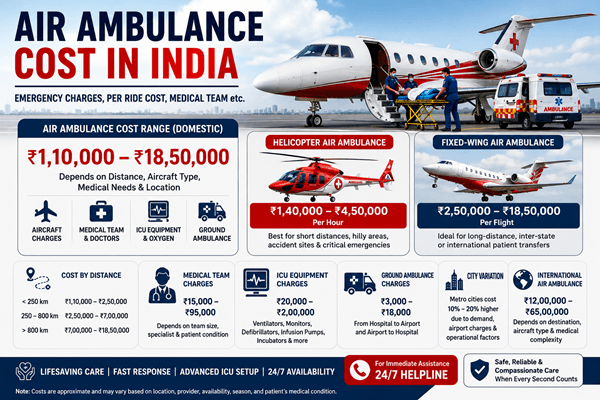
In 2026, air ambulance services in India typically range from ₹1,10,000 for short-haul turboprop intrastate hops to ₹18,50,000 for critical care, long-haul domestic fixed-wing transfers equipped with full intensive care unit (ICU) capabilities.
The final invoice reflects a combination of flight operational logistics—such as aircraft positioning, aviation turbine fuel (ATF), airport handling fees, and watch-hour extensions—alongside specialized bedside-to-bedside clinical staffing and life-support hardware.
Short-distance regional transfers under 250 kilometers, such as intra-state flights between regional airfields and state capitals, generally bill between ₹1,10,000 and ₹2,50,000 using pressurized turboprop planes. Medium and long-distance inter-state transfers connecting tier-2 cities to tertiary healthcare hubs—including routes like Patna to Delhi, Bhubaneswar to Hyderabad, or Lucknow to Mumbai—generally range between ₹3,50,000 and ₹9,50,000.
For highly unstable patients requiring continuous in-flight ventilation, intra-aortic balloon pumps, or specialized pediatric and neonatal incubators (NICU), domestic charter costs frequently reach ₹7,00,000 to ₹18,50,000. Meanwhile, rotary-wing helicopter charters for high-altitude emergency evacuations operate on hourly charter models, averaging ₹1,40,000 to ₹4,50,000 per flying hour.
Domestic Air Ambulance Pricing Matrix (2026 Benchmarks)
Because emergency medical aviation relies on private charter capacity, pricing depends on aircraft category, operational flight hours, and the medical intervention tier mandated by the treating physician. The table below outlines standard market ranges across aircraft configurations and distance brackets.
| Transfer Scope | Representative Routes | Typical Aircraft Used | Clinical Crew Configuration | Estimated Price Range (₹) |
|---|---|---|---|---|
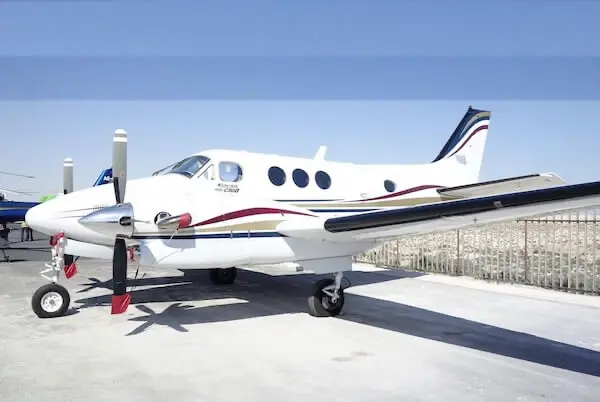
| Short Intrastate (<250 km) | Jharsuguda to Bhubaneswar, Chandigarh to Delhi | Twin-engine Turboprop (e.g., King Air C90) | Critical Care Paramedic + Flight Nurse | ₹1,10,000 – ₹2,50,000 |
| Medium Interstate (250–800 km) | Ranchi to Kolkata, Lucknow to Delhi | Turboprop / Light Jet (e.g., King Air B200) | Emergency Physician + Critical Care Nurse | ₹2,50,000 – ₹5,50,000 |
| Long Domestic (>800 km) | Guwahati to Delhi, Patna to Mumbai | Light to Mid-size Jet (e.g., Premier 1A, Citation) | Intensivist/Anesthetist + Flight Medic | ₹5,50,000 – ₹11,00,000 |
| Advanced ECMO / Neonatal ICU | Pan-India Tier-2 to Metro Hub Transfers | Mid-size Jet (e.g., Learjet 45/60, Falcon) | Cardiologist/Neonatologist + Intensivist + Dual Nurses | ₹7,50,000 – ₹18,50,000 |
| Helicopter Evacuation (Hourly) | Kedarnath/Joshimath to Dehradun, Shimla to PGIMER | Single/Twin Engine Rotary (Bell 407, Airbus H130) | Emergency Trauma Medic / Flight Doctor | ₹1,40,000 – ₹4,50,000 / hr |
Detailed Breakdown of Operational and Clinical Cost Drivers
An air ambulance quote is not a simple mileage rate; it functions as an unscheduled on-demand aviation charter that integrates airborne intensive care. Aviation Turbine Fuel (ATF), airport landing, parking, navigation, and terminal handling charges (TNLC) represent the primary aviation overheads.
If a transfer requires flying outside standard operating hours at non-metro airstrips, operators incur watch-hour extension fees ranging from ₹30,000 to over ₹1,00,000 per hour. Furthermore, empty leg deadhead flights—repositioning the aircraft from its home base to the patient’s pick-up city—are fully factored into client billing.
Clinical life-support setups add distinct hardware and liability costs. Mobilizing portable intensive care suites including transport ventilators (such as Hamilton-T1 or Dräger Oxylog), arterial blood gas analyzers, multiparameter cardiac monitors, defibrillators, and high-flow medical oxygen manifolds typically adds ₹20,000 to ₹2,00,000 depending on complexity.
In high-risk neonatal or pediatric cases requiring transport incubators and nitric oxide delivery systems, specialist logistics require extensive calibration to account for cabin pressure alterations. Onboard medical staffing costs range between ₹15,000 and ₹95,000 depending on whether the mission mandates senior intensivists, interventional cardiologists, or trained emergency flight nurses.
Seamless bed-to-bed transfers require synchronized Advanced Life Support (ALS) ground ambulances at departure and arrival hubs. These road legs ensure continuous hemodynamic monitoring while transitioning between hospital ICUs and airport aprons.
Ground ambulance coordination, ramp entry clearances, and escort passes typically contribute between ₹3,000 and ₹18,000 per sector to the aggregate invoice.
Consumer Alert: Avoiding Fake Air Ambulance Brokers and Advance-Fee Scams
During acute medical crises, families face extreme emotional vulnerability, making them targets for deceptive online aggregators. Fraudulent broker websites running aggressive search ad campaigns often claim direct ownership of aviation fleets they do not operate.
After collecting non-refundable deposits or demanding 100% advance wire transfers, these rogue middlemen frequently become unreachable, fabricate indefinite operational delays citing weather or air traffic control clearance, or fail to secure required DGCA (Directorate General of Civil Aviation) and AAI permissions.
To ensure patient safety and financial security, always confirm that your flight coordinator works directly with a DGCA-licensed Non-Scheduled Operator Permit (NSOP) holder. Demand the operating aircraft’s official registration tail number (e.g., VT-registered aircraft) and request the Operator’s Certificate before remitting full funds.
Legitimate emergency aviation companies provide verified commercial bank accounts under registered corporate entities rather than unverified third-party personal accounts, and they issue binding service agreements specifying clear refund schedules in the event of technical grounding or flight cancellations.
Industry Economics: Capital Expenditures, Operating Overhead, and Margins
The air ambulance sector is characterized by heavy capital commitments and strict civil aviation compliance. Acquiring a dedicated pre-owned pressurized turboprop like the Beechcraft King Air B200 and outfitting it with aeromedical modifications, FAA/DGCA-certified stretcher loading systems (such as LifePort), and medical-grade inverters involves a capital expenditure between ₹18 crore and ₹35 crore.
Entering the long-range sector with mid-size jets like a Bombardier Learjet or Cessna Citation demands outlays exceeding ₹45 crore to ₹75 crore. Additionally, operators must maintain significant reserves for regular turbine overhauls, mandatory 100-hour structural inspections, and costly avionics certifications.
Gross operating margins for aircraft operators generally settle between 18% and 28% per mission. However, net margins frequently contract to 8% to 12% once factoring in crew retainers, round-the-clock aeromedical dispatch centers, aviation liability insurance, hangar leases at major metro airports, and sporadic asset utilization.
Pure medical flight coordination firms and brokerage desks operate on leaner asset-light structures, taking agency margins between 7% and 15% on charter coordination, medical team management, and ground logistics.
International Medical Evacuations: Cross-Border Logistics and Costs
Cross-border aeromedical repatriations are substantially more complex than domestic sectors, requiring long-range pressurized jets, multi-nation overflight clearances, rapid medical visa processing, and consular liaison. International medevac pricing typically begins at ₹12,00,000 and can extend up to ₹65,00,000 depending on nautical mileage and the necessity of intermediate refueling stops.
Short-haul international medical routes—such as transporting patients between India and the UAE, Qatar, Oman, Thailand, or Singapore—average between ₹12,00,000 and ₹28,0,000. Intercontinental missions to Western Europe, the United Kingdom, North America, or Australia require large-cabin, ultra-long-range aircraft capable of controlled sea-level cabin pressurization for cardiac and neurotrauma stability, regularly pushing total expenses from ₹35,00,000 to ₹65,00,000.
Health Insurance and Cashless Air Ambulance Coverage
Standard indemnity health insurance plans in India increasingly offer air ambulance coverage, typically as an optional policy rider or under high-sum-insured comprehensive healthcare tiers. Policy sub-limits vary, commonly providing capped reimbursement between ₹1,00,000 and ₹5,00,000 per hospitalization, while select high-net-worth plans cover the total chartered expenditure up to the policy sum insured.
Obtaining insurance reimbursement requires strict adherence to insurer guidelines. The transfer must be clinically certified as an emergent medical necessity by treating physicians, establishing that local medical facilities lack the diagnostic or surgical infrastructure required to treat the patient and that ground transport poses a life-threatening risk.
Cashless approvals for private air charters remain rare due to the short mobilization window; families typically pay out-of-pocket and submit downstream reimbursement claims supported by flight manifests, medical transfer records, and detailed tax invoices showing the 18% Goods and Services Tax (GST) applicable to domestic charter flights.
Explore Further:
Complete Guide on Cancer Treatment Cost in India [2026]
Frequently Asked Questions
What is the average cost of an air ambulance flight within India?
Most domestic fixed-wing transfers fall within a price range of ₹3,50,000 to ₹9,50,000 for inter-city travel between tier-2 locations and metro super-specialty hospitals. Short-distance turboprop transfers can start at ₹1,10,000, while severe cases requiring multi-organ life support or round-the-clock ECMO setups can exceed ₹15,00,000.
How quickly can an emergency medical flight be airborne?
Under optimal conditions, private medical charters mobilize within 60 to 180 minutes of receipt of clinical handover and financial confirmation. Flight clearance timing depends heavily on obtaining urgent Air Traffic Control slots, non-scheduled flight clearances, DGCA watch-hour extensions if flying after sunset at smaller airports, and aircraft positioning distance.
Are helicopter ambulances cheaper than fixed-wing medical aircraft?
Helicopters are billed on an hourly rate—typically between ₹1,40,000 and ₹4,50,000 per hour—making them cost-effective for localized transfers, inaccessible mountainous terrain, and accident scene extractions under 200 kilometers. For longer interstate distances, fixed-wing aircraft are safer, faster, provide pressurized cabins for compromised lungs, and offer lower aggregate costs per kilometer.
How do I confirm if an air ambulance provider is legitimate?
Always ask the service provider for their Non-Scheduled Operator Permit (NSOP) details or the registered certificate of the charter partner executing the sector. Verify the aircraft tail registration number, confirm that the onboard doctor is an ACLS-certified critical care intensivist, and ensure the payments are transferred to an established corporate bank account rather than individual UPI or unverified personal accounts.