Investment Overview: Atti Square Franchise
Atti Square has established itself as an accessible quick-service restaurant (QSR) brand, primarily recognized in South India for its pocket-friendly Lebanese shawarmas, wraps, and specialty beverages. For prospective entrepreneurs assessing the fast-casual dining space, the brand provides an entry point with compact floor requirements and standardized central supply support.
Launching a franchise unit typically demands an overall capital expenditure ranging from ₹12 lakh to ₹25 lakh, depending on whether you adopt a compact kiosk or a high-street dine-in format. Unlike large full-service coffee chains that require sprawling layouts, Atti Square’s operational model focuses on smaller footprints (100 to 500 square feet) designed for brisk walk-in transactions and aggregator delivery fulfillment.
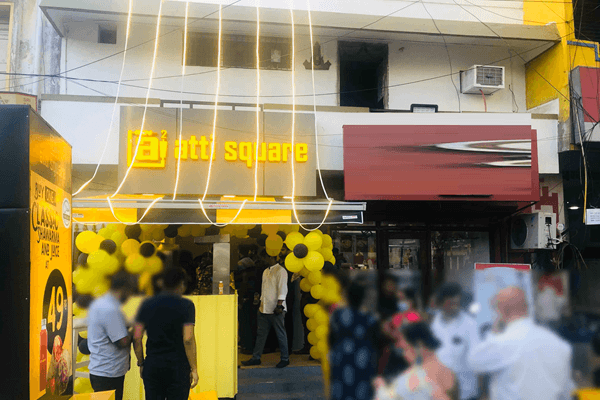
Detailed CapEx Breakdown (100–500 Sq. Ft. Setup)
Evaluating an F&B franchise requires decoupling the initial brand fee from physical store outlays, working capital buffers, and real estate security deposits. While the brand fee grants trademark rights, site clearance, and kitchen blueprint access, physical civil works and food-grade kitchen equipment constitute the largest portion of early capital deployment.
| Expense Category | Estimated Outlay (INR) | Financial & Operational Purpose |
|---|---|---|
| Franchise Fee / Brand License | ₹3,00,000 – ₹6,00,000 | Upfront 5-year licensing rights, brand standard manuals, and initial launch guidance. |
| Civil Work & Interior Fit-out | ₹3,50,000 – ₹7,00,000 | Commercial ventilation, tile work, stainless-steel prep counters, brand glow signage, and lighting. |
| Kitchen Equipment & POS Hardware | ₹2,50,000 – ₹5,00,000 | Commercial vertical shawarma spit machines, deep fryers, under-counter chillers, blenders, and cloud-connected POS. |
| Initial Raw Material & Packaging Stock | ₹1,00,000 – ₹2,00,000 | Pre-cut marinated protein inventories, proprietary sauces, pita base items, and branded tamper-proof packaging. |
| Licenses, Registrations & Launch Signage | ₹50,000 – ₹1,00,000 | FSSAI state license, municipal trade license, fire NOC compliance, GST registration, and local print promotions. |
| Contingency Reserve / Working Capital | ₹1,50,000 – ₹4,00,000 | Minimum 90-day cash buffer to sustain utility bills, commercial gas refilling, and wages during early gestation. |
| Total Estimated Capital Outlay | ₹12,00,000 – ₹25,00,000 | Excludes commercial landlord rental deposits, which vary by micro-market. |
Business Model: FOFO vs. FOCO Framework
Before executing any binding commercial agreements, partners must distinguish how operational responsibilities and revenue distributions are structured. Most regional QSR franchises in India operate on a Franchise-Owned, Franchise-Operated (FOFO) system, meaning the franchisee supplies the risk capital and directly supervises store staffing, inventory shrinkage, and daily hygiene standards.
| Operational Dimension | FOFO Model (Atti Square Primary) | FOCO Model (Passive Alternative) |
|---|---|---|
| Daily Store Management | Franchisee hires, trains, and monitors staff on ground. | Central brand assigns store managers and shifts. |
| Capital Risk Exposure | Franchisee absorbs local footfall and waste variances. | Franchisee absorbs CapEx; brand manages operations. |
| Royalty & Revenue Distribution | Standard 5%–6% monthly royalty on gross sales to the franchisor. | Fixed revenue share or net profit distribution split. |
| Suitability | Active owner-operators able to dedicate 4–6 hours daily. | Silent or institutional financial investors. |
Unit Economics, Net Margins, and Payback Reality
A frequent error among first-time food franchisees is confusing gross food margins with bottom-line net profit. Because QSR shawarma and snacking concepts rely on centralized supply chain sourcing for sauces, marinated proteins, and packaging, raw material food costs typically consume 38% to 45% of gross billings.
Once you factor in monthly commercial lease rentals (₹35,000 to ₹1,20,000 depending on Tier 1 vs. Tier 2 localities), staff wages for two shifts (₹40,000 to ₹90,000), electricity and gas utilities (₹20,000 to ₹35,000), delivery aggregator commissions (18% to 25% on Zomato and Swiggy orders), and the ongoing 6% brand royalty, healthy units retain an actual EBITDA margin of 12% to 18%. Assuming consistent counter footfalls of 120 to 220 customers daily with an average order value of ₹150, realistic capital payback generally materializes between 18 and 30 months.
Next in This Category:
American Friend Chicken Franchise Cost in India (2026)
Due Diligence & Franchise Fraud Advisory
As interest in compact fast-food brands increases, fraudulent third-party intermediaries and clone websites frequently target prospective business owners. Investors must adhere to strict verification standards prior to sharing identification documents or executing bank transfers:
Ensure that all discussions occur via registered corporate domain emails rather than personal Gmail or Yahoo addresses. Authentic franchisors execute formalized letters of intent (LOI) and disclosure documentation through registered banking current accounts; you should never disburse site inspection fees or token booking amounts to individual UPI IDs. Furthermore, independently verify that the brand holds a registered trademark under Class 43 with the Indian Intellectual Property Office, ensuring you are not licensing an unprotectable local name that could face trademark disputes.
Editorial Audit & Final Investment Viability
An Atti Square franchise unit represents an economically viable prospect for an entrepreneur seeking a low-ticket F&B venture with manageable operational footprints. However, its success hinges entirely on pedestrian density, hyper-local delivery accessibility, and strict portion control. Prospective licensees should thoroughly inspect operational stores in their territory, verify the stability of the franchisor’s central kitchen dispatch timeline, and demand an audited profit-and-loss sheet rather than relying solely on franchisor marketing decks.