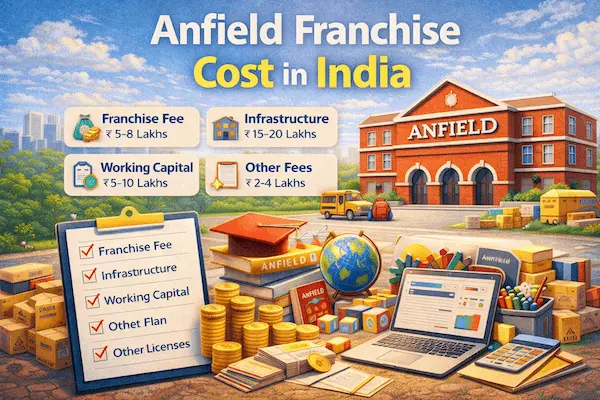
Anfield franchise cost in India in 2026 ranges between ₹18,00,000 and ₹45,00,000, depending on store size, city tier, location type, interior standards, and inventory depth. This investment includes franchise authorization, store interiors, fixtures, initial apparel stock, branding, software systems, staff training, and launch support. Anfield operates as a mid-premium fashion and lifestyle retail brand focused on contemporary clothing, accessories, and seasonal collections.
Monthly operating expenses typically range ₹1.5–4.5 lakh, while average monthly revenue varies ₹6–15 lakh in well-located stores. With strong visual merchandising and steady apparel demand, most Anfield franchise outlets achieve break-even within 14–28 months, making it suitable for fashion-focused retail investors seeking scalable growth. Anfield franchise cost in India 2026 ranges ₹18–45 lakh. Learn franchise fee, store size, interiors, inventory, monthly expenses, revenue, profit margins, ROI, and break-even timeline.
Overview of Anfield Franchise Business
Anfield is a fashion retail brand that focuses on stylish and affordable clothing for men and women. The brand targets urban and semi-urban customers who want trendy apparel at reasonable prices. Its product range includes casual wear, seasonal collections, and fashion accessories that are updated regularly to match changing trends.
Anfield stores are designed with modern interiors, attractive product displays, and organized layouts to create a pleasant shopping experience. The franchise model emphasizes standardized operations, centralized product supply, and efficient inventory management.
The brand performs best in malls, high-street shopping areas, and growing retail hubs with strong youth and family footfall.
Total Investment Required for Anfield Franchise
The total investment required to open an Anfield franchise in India generally ranges from ₹18 lakh to ₹45 lakh. The final amount depends on the store size, city, and location. Stores in malls usually require a higher investment than high-street outlets because of stricter fit-out standards and larger security deposits.
This investment covers the franchise fee, store interiors, fixtures, opening inventory, technology systems, licenses, and working capital needed for the first few months of operation.
Anfield Franchise Fee
The Anfield franchise fee is generally estimated to range from ₹4 lakh to ₹8 lakh. The exact amount depends on the store format and location. This fee provides the right to operate under the Anfield brand and sell its products. It usually includes onboarding support, store planning assistance, staff training, and access to the company’s merchandising and operational systems.
Store Formats and Space Requirement
Anfield recommends a store size of 600 to 1,200 square feet. Mall outlets usually operate within 700 to 1,000 square feet, while high-street stores may require more space depending on the product range. A store with a wide frontage and good glass visibility attracts more walk-in customers. Choosing the right location is important because visibility and customer traffic directly affect sales.
Interior Setup, Fixtures, and Branding Cost
Store interiors are a major investment for an Anfield franchise. The cost generally ranges from ₹6 lakh to ₹15 lakh. This includes display racks, shelves, mannequins, trial rooms, billing counters, lighting, signage, and branded décor. Mall stores often require higher-quality finishes and additional compliance, increasing the setup cost. A modern and well-designed store helps improve customer experience and encourages purchases.
Initial Inventory and Apparel Stock Cost
The initial inventory investment typically ranges from ₹6 lakh to ₹18 lakh. The amount depends on the store size and product assortment. Opening stock includes men’s and women’s apparel, accessories, display samples, and backup inventory. Anfield usually follows a centralized supply system, making it easier for franchisees to replenish stock. Regular collection updates help keep the store fresh and encourage repeat visits.
Technology, POS, and Software Systems
Anfield stores use technology to manage billing and inventory efficiently. The setup cost for POS systems and software generally ranges from ₹50,000 to ₹1.5 lakh. This investment includes billing software, barcode scanners, inventory management tools, and sales reporting systems. These systems improve stock accuracy, simplify operations, and reduce inventory losses.
Licenses, Permits, and Compliance Cost
Opening an apparel store requires several business registrations and permits. The total cost generally ranges from ₹20,000 to ₹60,000. This includes GST registration, trade licenses, and other local approvals. The exact expense depends on state and municipal regulations. Renewal costs are usually low after the initial setup.
Location Selection and Monthly Rent
Location is one of the biggest factors affecting an Anfield store’s success. Monthly rent generally ranges from ₹60,000 to ₹3.5 lakh, depending on the city and shopping area. Mall stores usually have higher rental costs but benefit from steady customer traffic. High-street stores offer more flexibility but depend heavily on visibility and nearby businesses to attract shoppers.
Staffing Requirements and Salary Expenses
Anfield stores typically require 2 to 4 sales executives along with a store supervisor. Monthly salary expenses generally range from ₹60,000 to ₹1.8 lakh, depending on the store size and city. Friendly and knowledgeable staff improve customer satisfaction, increase sales conversions, and encourage repeat purchases.
Utilities and Monthly Operating Expenses
Monthly operating expenses usually range from ₹1.5 lakh to ₹4.5 lakh. These costs include rent, employee salaries, electricity, air conditioning, internet, maintenance, and other day-to-day expenses. Stores located in malls may also have CAM (Common Area Maintenance) charges, which increase monthly costs. Efficient operations help improve long-term profitability.
Marketing, Promotions, and Visual Merchandising
Marketing is essential for attracting customers and increasing sales. Initial promotional spending generally ranges from ₹50,000 to ₹2 lakh and covers launch events, local advertising, and promotional campaigns. Ongoing marketing expenses usually range from ₹20,000 to ₹60,000 per month. Seasonal promotions, attractive window displays, and regular visual merchandising updates help bring repeat customers into the store.
Royalty Fees and Ongoing Charges
Anfield franchisees generally pay a royalty of 5% to 8% of monthly net sales. These charges support national advertising, product design, brand development, and operational assistance. Some franchise agreements may also include a minimum monthly royalty commitment. Franchisees should carefully review the agreement to understand all recurring charges.
Revenue Potential of Anfield Franchise
An Anfield franchise can generate monthly revenue of around ₹6 lakh to ₹15 lakh, depending on the location, customer footfall, and seasonal demand. Sales usually increase during festivals, holiday seasons, and special promotional events. Stores in busy malls often enjoy more consistent sales throughout the year than standalone outlets.
Profit Margins and Net Earnings
Fashion retail offers attractive profit margins when inventory is managed efficiently. Gross margins generally range from 45% to 60%, depending on the product mix. After deducting rent, salaries, utilities, and other operating costs, a successful Anfield store may earn a net monthly profit of ₹80,000 to ₹3 lakh. Fast inventory turnover and strong customer demand help improve profitability.
Break-Even Period and ROI
Most Anfield franchises recover their initial investment within 14 to 28 months. Stores in high-performing locations usually reach break-even faster because of stronger sales. As the customer base grows and repeat purchases increase, the return on investment improves steadily over time.
City-Wise Cost and Performance Variation
Investment and profitability vary from one city to another. Metro cities require higher investments because of expensive rent and setup costs. However, they also offer stronger sales potential. Tier-1 cities provide a balanced mix of investment and revenue opportunities. Tier-2 cities are suitable for entrepreneurs looking to start with a smaller investment while benefiting from growing retail demand.
Risks and Challenges in Anfield Franchise
Fashion retail is a competitive business. Unsold inventory and changing fashion trends can affect profits. High fixed expenses such as rent and salaries make consistent sales important. Franchise owners also need to manage inventory carefully and retain trained staff to deliver a good customer experience.
Key Success Factors for Franchise Owners
Success depends on strong store management and understanding local customer preferences. Attractive window displays and effective visual merchandising encourage walk-in customers. Participating in seasonal promotions helps increase sales. Excellent customer service and regular product updates build customer loyalty and improve repeat business.
Ideal Franchisee Profile
Anfield is suitable for entrepreneurs who can invest ₹20 lakh or more and have an interest in retail or fashion. Previous experience in the apparel industry is helpful but not essential. Franchise owners should be willing to manage inventory, supervise daily operations, and actively participate in growing the business.
Is Anfield Franchise Worth It in 2026?
Anfield offers a promising opportunity for investors interested in the fashion retail sector. The investment is moderate compared to many premium clothing brands, and the business has good growth potential in urban and developing markets. Entrepreneurs who choose the right location, manage inventory efficiently, and focus on customer service can build a profitable and sustainable retail business.