If you have ever thought about starting a small food business, vada pav is one of the easier formats to understand. The product is simple. The customer base is broad. The price point is affordable. For a Bhau Vada Pav franchise, an estimated investment of ₹5 lakh to ₹15 lakh can be considered for planning purposes. A small takeaway outlet may need around ₹5 lakh to ₹8 lakh.
A larger branded outlet could require ₹10 lakh to ₹15 lakh or more. The final amount depends on the shop size, city, rent, interiors, kitchen equipment, opening stock, staff, and working capital. Since franchise terms can change, investors should confirm the latest commercial details directly with the brand before making a payment.
Bhau Vada Pav is associated with the popular Mumbai-style vada pav business. The concept focuses on a quick and affordable snack that works well in busy markets, near offices, colleges, residential areas, and transport hubs. This type of food business does not require a huge dining space.
That is one reason the startup cost can stay relatively manageable. A basic outlet may fit within ₹5 lakh to ₹8 lakh, while a more developed store can move toward ₹10 lakh to ₹15 lakh. Besides vada pav, the menu may include other snacks and beverages depending on the outlet format. The real attraction is the simple operating model. However, location and daily sales still decide whether the numbers work.
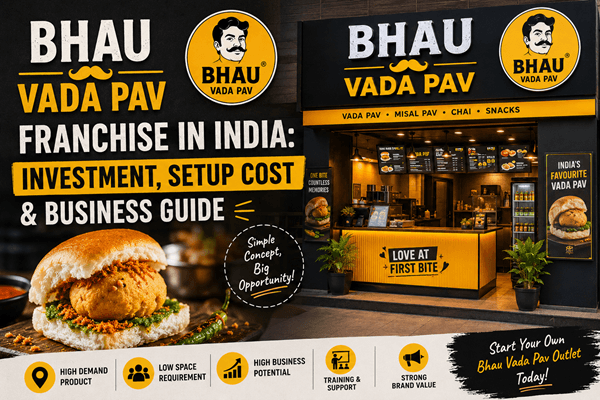
Bhau Vada Pav Franchise Investment
A practical planning range for a Bhau Vada Pav outlet is around ₹5 lakh to ₹15 lakh. The lower range could suit a compact takeaway counter. A larger shop with seating and stronger branding may require ₹10 lakh to ₹15 lakh. Interiors could take approximately ₹1.5 lakh to ₹4 lakh.
Kitchen equipment may require ₹1 lakh to ₹3 lakh. Initial ingredients and packaging could cost ₹50,000 to ₹1.5 lakh. Rent deposits and advance payments may add ₹1 lakh to ₹3 lakh. You should also keep ₹1 lakh to ₹3 lakh aside as working capital. These figures are estimates. The actual investment should be based on the current franchise agreement and property selected.
Bhau Vada Pav Franchise Fee
The franchise fee should not be confused with the total investment of ₹5 lakh to ₹15 lakh. If Bhau Vada Pav currently offers a franchise or outlet partnership, the company may have its own brand fee and commercial structure. The exact fee should be confirmed before investing ₹5 lakh, ₹10 lakh, or ₹15 lakh.
Avoid relying on random online claims that quote one fixed franchise price without showing the source. Ask for a written breakdown. It should explain the brand fee, setup requirements, equipment, inventory, royalty, marketing contribution, renewal terms, and other charges. If the franchise fee is separate from the ₹5 lakh to ₹15 lakh setup budget, your total capital requirement will naturally be higher.
Outlet Setup Cost
The outlet itself could require around ₹1.5 lakh to ₹4 lakh for basic interiors and branding. A small takeaway counter may stay close to ₹1.5 lakh to ₹2.5 lakh. A proper street-facing shop with seating, lighting, signage, counters, and better décor could cost ₹3 lakh to ₹4 lakh.
You do not necessarily need an expensive interior for a vada pav business. Customers generally care more about taste, hygiene, speed, and price. If your overall investment budget is ₹7 lakh to ₹10 lakh, spending ₹4 lakh on decoration may not be the smartest move. It is better to maintain a balance between appearance, equipment, inventory, and working capital.
Kitchen Equipment Cost
A vada pav outlet does not need the same kitchen investment as a full-service restaurant. Equipment may cost approximately ₹1 lakh to ₹3 lakh. The budget can cover commercial fryers, burners, preparation tables, refrigerators, storage containers, exhaust systems, utensils, sinks, and other basic items. A compact setup may operate with around ₹1 lakh to ₹1.5 lakh.
A larger store could spend closer to ₹2 lakh to ₹3 lakh. If your total Bhau Vada Pav investment is ₹5 lakh to ₹8 lakh, keeping equipment below ₹2 lakh can help protect your cash flow. Equipment quality still matters. Cheap machinery that breaks frequently can create avoidable repair and replacement costs.
Rent and Security Deposit
Rent can make a big difference to the overall ₹5 lakh to ₹15 lakh investment. A small shop in a local market could cost around ₹20,000 to ₹50,000 per month. A high-footfall location in a major city may cost ₹50,000 to ₹1.5 lakh or more. The security deposit and advance rent could add another ₹1 lakh to ₹3 lakh.
For a new entrepreneur with only ₹6 lakh to ₹8 lakh available, taking a shop with ₹1 lakh monthly rent can be risky. A smaller property with ₹30,000 to ₹40,000 rent may offer a better starting point. For this business, a strong location does not always mean the most expensive location.
City-Wise Bhau Vada Pav Franchise Cost
Mumbai
Mumbai is an obvious market for a vada pav business, but property costs can be challenging. A Bhau Vada Pav outlet could require around ₹8 lakh to ₹15 lakh in Mumbai. Rent may range from ₹30,000 to ₹1.2 lakh or more, depending on the area. Interiors could take ₹2 lakh to ₹4 lakh, while equipment may require ₹1.5 lakh to ₹3 lakh. A compact takeaway outlet could keep the investment near ₹8 lakh to ₹10 lakh.
Delhi
Delhi could require approximately ₹7 lakh to ₹13 lakh for a suitable vada pav outlet. Rent may fall around ₹25,000 to ₹80,000 per month in many markets, although premium areas can cost more. Around ₹2 lakh to ₹3.5 lakh could go toward interiors and ₹1.5 lakh to ₹2.5 lakh toward equipment. Including deposits and working capital, a budget of ₹8 lakh to ₹12 lakh may be practical for a modest outlet.
Bengaluru
A Bhau Vada Pav outlet in Bengaluru may require around ₹7 lakh to ₹14 lakh. Rent could range from ₹30,000 to ₹1 lakh per month in busy areas. Interior work may cost ₹2 lakh to ₹4 lakh, while kitchen equipment could take ₹1.5 lakh to ₹3 lakh. With inventory and working capital included, an investor should consider keeping around ₹9 lakh to ₹12 lakh available rather than trying to operate with the absolute minimum budget.
Hyderabad
Hyderabad can offer a relatively manageable entry cost. A small Bhau Vada Pav outlet could require approximately ₹6 lakh to ₹12 lakh. Monthly rent may range from ₹20,000 to ₹70,000, depending on the location. Interiors could cost ₹1.5 lakh to ₹3 lakh, and equipment may require ₹1 lakh to ₹2.5 lakh. Adding deposits and working capital could bring the complete investment closer to ₹8 lakh to ₹10 lakh for a carefully selected location.
Chennai
Chennai may require around ₹6 lakh to ₹12 lakh for a Bhau Vada Pav-style outlet. Rent could be approximately ₹20,000 to ₹70,000 per month. Setup and branding may cost ₹1.5 lakh to ₹3 lakh, while kitchen equipment could require ₹1 lakh to ₹2.5 lakh. Including opening stock and working capital, keeping around ₹8 lakh to ₹10 lakh available would provide a more comfortable starting budget.
Initial Stock Cost
Opening stock may require approximately ₹50,000 to ₹1.5 lakh. This can include potatoes, gram flour, spices, bread, chutneys, oil, beverages, packaging material, cleaning supplies, and other ingredients. A small outlet may begin with around ₹50,000 to ₹80,000.
A busier shop could need closer to ₹1 lakh to ₹1.5 lakh. Food businesses need regular replenishment, so this is not a one-time expense. If you invest ₹8 lakh to ₹10 lakh in the outlet, you should avoid putting too much of that amount into furniture. Keeping enough money for stock is essential. Fresh ingredients also need proper storage to control wastage.
Staff and Monthly Operating Cost
A small vada pav outlet can operate with a relatively compact team. Depending on the format, monthly salaries could total around ₹35,000 to ₹80,000. Electricity, gas, water, cleaning, packaging, maintenance, and other expenses could add another ₹15,000 to ₹35,000.
This puts basic monthly operating expenses around ₹50,000 to ₹1.15 lakh, before rent. If rent is another ₹30,000 to ₹70,000, total monthly expenses could reach approximately ₹80,000 to ₹1.85 lakh. Someone investing ₹8 lakh to ₹12 lakh should therefore keep at least ₹1 lakh to ₹3 lakh as working capital rather than using the entire amount during setup.
Marketing Cost
Marketing does not have to consume a large part of the ₹5 lakh to ₹15 lakh investment. A new outlet could start with around ₹30,000 to ₹1 lakh for local promotions, signage, social media, opening offers, flyers, and digital advertising. A stronger launch campaign may require ₹1 lakh to ₹1.5 lakh.
For a small takeaway outlet, local visibility can be more useful than expensive advertising. Good signage and food delivery listings can help bring customers. If your total investment is ₹7 lakh, spending ₹1.5 lakh on marketing may be excessive. A controlled budget of around ₹50,000 to ₹75,000 could be a better starting point.
Bhau Vada Pav Profit Potential
The profit potential depends on daily sales and operating costs. It is difficult to give one guaranteed profit figure for a business requiring ₹5 lakh to ₹15 lakh. Suppose an outlet reaches monthly sales of ₹3 lakh to ₹5 lakh. Its result will depend on food costs, salaries, rent, delivery commissions, electricity, wastage, and other expenses.
A shop paying ₹30,000 rent has a very different cost structure from one paying ₹1 lakh. Before investing ₹10 lakh or ₹15 lakh, calculate the expected daily orders and average bill value. A simple business model can work well when the outlet maintains high volume and controlled expenses.
Working Capital Requirement
Working capital of around ₹1 lakh to ₹3 lakh should ideally be included in the ₹5 lakh to ₹15 lakh startup budget. This reserve can help with salaries, rent, food purchases, electricity, repairs, and unexpected expenses. The first few months may not produce the sales you expect.
If monthly fixed expenses reach ₹1 lakh, having only ₹30,000 in reserve can create pressure. A reserve of ₹2 lakh is much more comfortable for a small outlet. If you are investing close to ₹12 lakh to ₹15 lakh, keeping around ₹3 lakh available for operations can make the early stage easier to manage.
Is Bhau Vada Pav Franchise Worth It?
A Bhau Vada Pav outlet could be worth considering if you want a relatively compact food business and have around ₹5 lakh to ₹15 lakh available. The concept is simple. The product has mass appeal. The operating space can also be smaller than a full restaurant. But there is a catch.
Vada pav is a competitive category. Customers have plenty of alternatives. Taste, hygiene, speed, pricing, and location will matter every day. Before investing ₹8 lakh, ₹10 lakh, or ₹15 lakh, check the current franchise terms and expected margins. A good location with ₹30,000 rent may be more attractive than a premium location costing ₹1 lakh per month.
Bhau Vada Pav Franchise Cost
The estimated Bhau Vada Pav franchise cost in India is ₹5 lakh to ₹15 lakh for a small to medium outlet. A compact takeaway format could fit near ₹5 lakh to ₹8 lakh, while a larger branded outlet may require ₹10 lakh to ₹15 lakh. Interiors can cost around ₹1.5 lakh to ₹4 lakh.
Equipment may require ₹1 lakh to ₹3 lakh. Initial stock could take ₹50,000 to ₹1.5 lakh, while working capital may need ₹1 lakh to ₹3 lakh. These are estimated figures for planning. Always verify the current franchise fee, outlet requirements, royalty, and agreement directly with the company before investing your ₹5 lakh to ₹15 lakh.