In India, you generally cannot buy a traditional franchise of an official Apple Store like food or retail brands. Apple operates most of its flagship stores itself and allows partners only through the Authorized Reseller or Premium Reseller model. To start an Apple retail business in 2026, the cost usually ranges from ₹30 lakh to ₹2 crore investment depending on store category, location, and interior standards.
The space requirement typically starts from 400 to 1,500 sq ft in premium shopping areas. Because Apple products have high demand but fixed pricing, partners usually reach break-even within 18 to 36 months with strong sales volume. Apple Store franchise in India isn’t traditional; partners open Authorized Reseller stores. Cost ₹30 lakh–₹2 crore with 400–1,500 sq ft space requirement and break-even about 18–36 months.
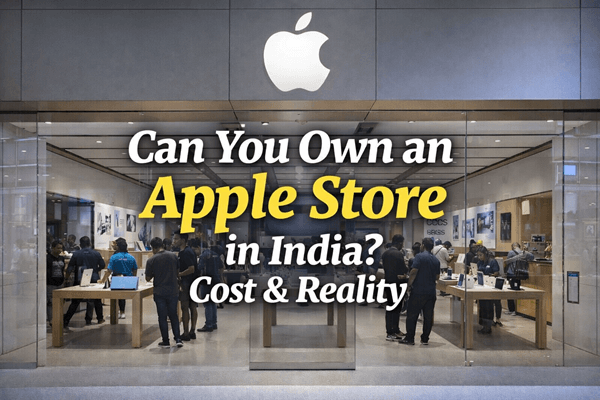
Apple Franchise Reality in India
Many people search for an Apple franchise thinking it works like a normal brand outlet, but Apple follows a very strict retail system. The company keeps strong control over brand experience, store design, and pricing. Instead of giving simple franchises, Apple appoints selected partners as authorized sellers.
These stores sell original iPhones, MacBooks, iPads, and accessories while following Apple’s display and service standards. So practically, you own the business but operate under Apple’s retail guidelines.
Types of Apple Partner Stores
There are mainly two partner formats available in India. Authorized Resellers are smaller electronics stores that sell Apple products along with other brands. Apple Premium Resellers are high-end exclusive stores designed almost like official Apple outlets, focusing mainly on Apple devices and accessories.
Premium Reseller stores require higher investment because interiors, lighting, and product display must match Apple’s global aesthetic standards.
Total Investment Breakdown
The overall cost depends heavily on store category and city tier. A major part goes toward interior design including wooden tables, lighting panels, security systems, and display counters as per Apple layout. Initial product stock is another big expense because iPhones and MacBooks have high purchase value.
Billing systems, demo units, and accessories also require capital. Some working capital must be kept for staff salaries and operating expenses during early months.
Space Requirement and Location
The space requirement ranges from around 400 sq ft for smaller reseller outlets to 1,500 sq ft or more for premium stores. Apple prefers high-end malls, IT hubs, or busy commercial streets where target customers frequently visit.
Visibility and store presentation matter more than size because Apple buyers focus on experience and trust. The brand usually reviews and approves location before granting authorization.
Profit Margin and Earnings
Apple products operate on relatively low profit margin per device, usually around 5% to 8%, because pricing is controlled nationally. However, high sales volume and accessory sales increase earnings. Accessories, AppleCare plans, and services give better margins than devices. Stores in tech cities or student hubs often perform better due to constant gadget upgrades.
Support from Apple
Apple provides product training, display guidelines, promotional materials, and launch event support. Staff learn device features and customer interaction style to match Apple’s premium experience. Marketing campaigns and new product launches also drive customers automatically toward authorized sellers, reducing advertising effort.
Eligibility and Documents
To become a partner, applicants must meet strict eligibility standards including financial capacity, retail experience, and premium store maintenance ability. Required documents generally include business registration, GST registration, financial statements, bank proof, and commercial property documents. Electronics retail background increases approval chances.
Break-even and Business Stability
Because products are premium priced, stores need consistent footfall to cover expenses. Most partners expect break-even within 18 to 36 months depending on location and product demand cycles. Once customer trust builds, repeat buyers and upgrade customers provide stable revenue year after year.
Challenges to Consider
High initial stock value blocks capital and unsold inventory can affect cash flow. Price competition is limited because Apple controls MRP nationwide. Strict display and service standards must always be maintained. However, strong brand loyalty and frequent product launches keep demand active.
FAQ about Apple Store Franchise in India
Q. Can I open an official Apple Store franchise?
A. No, Apple does not provide traditional franchises in India. You can only become an authorized reseller or premium reseller partner.
Q. Do I need electronics experience?
A. Experience is not mandatory but improves approval chances because the brand prefers retail knowledge.
Q. What is the average monthly profit?
A. Profit varies by sales volume; stores often earn mainly from accessories and service plans rather than device margins.
Q. Can I open in a small town?
A. Approval is easier in cities with strong purchasing power because Apple targets premium customers.
Q. Does Apple supply products directly?
A. Authorized distributors supply products according to Apple’s allocation system.
Q. Is the business risky?
A. Risk is moderate because demand for Apple products remains strong, but high investment requires proper location selection.