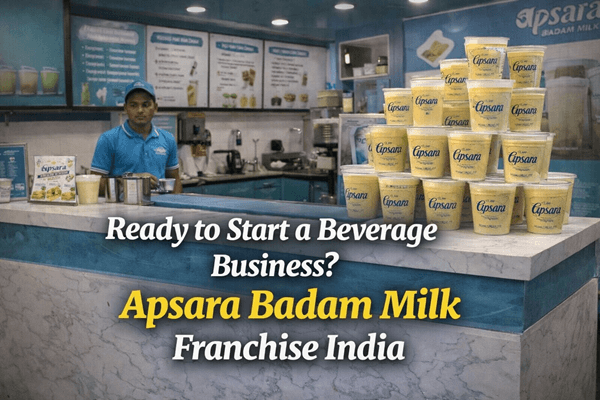
Entering India’s quick-service beverage sector with a dedicated dessert milk kiosk presents a low-complexity entry point for first-time retail entrepreneurs. Apsara Badam Milk, a brand tracing its roots to coastal Andhra Pradesh (Machilipatnam) and popular for thick, almond-infused chilled dairy beverages, operates within a lean retail footprint.
Setting up an independent counter or authorized retail unit in 2026 typically entails an initial capital expenditure ranging between ₹6.00 lakh and ₹10.50 lakh, depending heavily on the physical format, real estate deposit, and refrigeration setup.
Business Model Reality: Franchise vs. Distributorship Licensing
Prospective investors frequently fall into the traditional “franchise fee” assumption without verifying the underlying business relationship. Unlike large corporate chains that operate through structured FOFO (Franchisee-Owned, Franchisee-Operated) models with rigid royalty structures, regional dairy brands often expand through authorized brand licensing, direct supply arrangements, or trade distributorships.
In these structures, you are primarily purchasing branded syrups, spice concentrates, and signage rights rather than buying into a managed enterprise system. Clarifying whether your agreement represents a legally binding franchise, a wholesale dealership, or a third-party brand licensing agreement is critical before allocating capital to legal and on-boarding fees.
Investor Advisory: Due Diligence & Fraud Prevention
Due to the growing popularity of regional dessert beverages, unauthorized agents and fraudulent intermediary websites frequently impersonate legacy brands like Apsara Badam Milk to collect upfront “token fees,” “refundable allotment deposits,” or “location approval charges.”
Never transfer funds to personal savings accounts or unverified UPI IDs. Always inspect the Ministry of Corporate Affairs (MCA) registration, cross-reference brand trademark documents, visit the physical headquarters (such as registered premises in Andhra Pradesh), and conduct in-person verification with existing store operators before executing any legal agreement.
Comprehensive CapEx Breakdown (80 to 250 Sq Ft Kiosk)
The capital expenditure for an Apsara Badam Milk counter is largely anchored in commercial dairy cooling infrastructure and customer-facing aesthetics.
Because the core product does not require complex venting, grease traps, or heavy cooking stoves, architectural outlays remain conservative. The estimates below reflect realistic vendor rates and commercial dairy setup costs in 2026 across Tier 1 and Tier 2 commercial hubs.
| Investment Component | Estimated Cost Range (INR) | Operational Purpose & Specification |
|---|---|---|
| Brand Rights / Onboarding Fee | ₹1,00,000 – ₹2,00,000 | One-time brand usage fee, technical SOP manual, and standard recipe training. |
| Interior Civil & Fabrication | ₹1,50,000 – ₹3,00,000 | Hygiene-compliant washable wall cladding, stainless steel wash area, lighting, and acrylic signage. |
| Commercial Refrigeration Equipment | ₹1,20,000 – ₹2,20,000 | Heavy-duty visi-coolers, deep chest freezers (-18°C), and commercial milk dispensers. |
| POS, Billing & Security | ₹35,000 – ₹55,000 | Thermal printer, barcode scanner, inventory software, and CCTV setup. |
| Initial Raw Material Inventory | ₹50,000 – ₹1,00,000 | Proprietary almond base mixes, branded glass/PET bottles, food-grade seals, and garnishes. |
| Licenses, Permits & Working Buffer | ₹60,000 – ₹1,20,000 | FSSAI state license, Shop & Establishment registration, GST filing, and 30-day liquid cash reserve. |
| Total Estimated Setup Capital | ₹5,15,000 – ₹9,95,000 | Excludes commercial rental security deposits (which vary from ₹50,000 to ₹3,00,000). |
Location Selection and Space Requirements
The operational efficiency of an almond milk bar relies heavily on rapid pedestrian footfall rather than destination seating. A compact kiosk format spanning 80 to 150 square feet is adequate for high-volume takeaway service, allowing operators to position themselves inside metro transit hubs, college perimeters, or open-air market streets.
Because badam milk consumption surges during evening hours and warm seasons, securing unobstructed frontage with a clean pickup counter creates immediate walk-up impulse purchases.
Larger spaces (150 to 250 square feet) accommodate partial bench seating or complementary dessert displays, such as regional kulfi or ice cream tubs.
However, expanding floor area increases commercial rent per square foot and utility expenses. Keeping square footage tightly calibrated prevents fixed operational overhead from eroding unit-level margins.
Unit Economics: Margins, Operating Expenses, and Payback Reality
From an operational cost standpoint, badam milk provides strong gross product margins. A standard 200 ml serving priced between ₹40 and ₹70 typically carries a direct food cost (COGS) of roughly 40% to 50%, factoring in fresh standardized whole milk, proprietary almond-nut paste, saffron, cardamom, and food-grade packaging. This leaves an operational gross margin of 50% to 60%.
| Financial Parameter | Conservative Scenario (80 Units/Day) | Optimistic Scenario (220 Units/Day) |
|---|---|---|
| Monthly Gross Revenue (@ ₹50/unit) | ₹1,20,000 | ₹3,30,000 |
| Cost of Goods Sold (Milk + Flavoring @ 45%) | ₹54,000 | ₹1,48,500 |
| Fixed Overhead (Rent + Staff + Power) | ₹42,000 | ₹58,000 |
| Estimated Monthly Net Profit | ₹24,000 (20.0%) | ₹1,23,500 (37.4%) |
| Projected Payback Period | 18 to 24 Months | 7 to 10 Months |
The table demonstrates how unit sales volume drives actual payback timelines. While an exceptional retail location generating over 200 bottles daily can recover setup capital in 8 to 10 months, average suburban kiosks moving under 100 units daily generally require 16 to 22 months to achieve complete capital recovery once local commercial rent is factored in.
Regulatory Approvals and Operational Compliance
Commercial milk preparation falls strictly under dairy hygiene directives overseen by the Food Safety and Standards Authority of India (FSSAI). Operating an authorized counter requires obtaining an active FSSAI State License or Registration, depending on projected annual turnover.
In addition, store owners must secure a local Municipal Corporation Health Trade License, complete Shop and Establishment Act formalities for staff onboarding, and acquire a standard GSTIN for commercial supplier invoicing and packaging procurement.
Before You Decide:
Apsara Ice Cream Franchise Cost in India (2026)
Key Risk Factors to Evaluate Before Signing
While the business model is operationally lean, owners face three specific challenges:
First, dairy products are perishable. Managing an unbroken cold chain is non-negotiable; brief power outages or inadequate refrigeration will cause rapid milk spoilage, leading to inventory write-offs. A reliable power backup or inverter system is mandatory.
Second, seasonality impacts daily volume. While hot badam milk provides moderate cold-weather sales, customer interest in chilled milk beverages tends to dip during monsoon and peak winter months in North India, requiring prudent cash-flow planning.
Finally, raw milk price fluctuations directly impact gross margins. If your franchise or supply agreement locks retail selling prices while local wholesale dairy prices climb, margins tighten unless proprietary concentrate discounts offset milk cost variations.