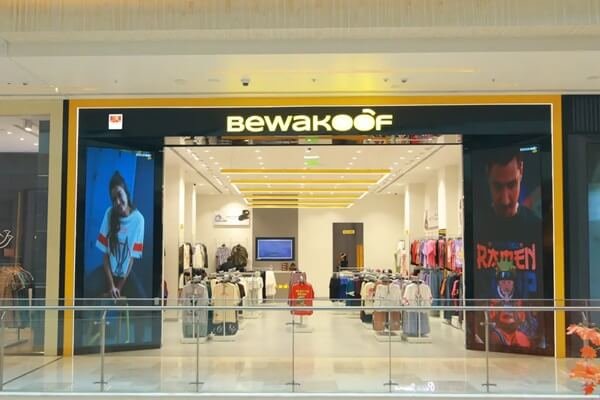
Understanding the Bewakoof Business Model: D2C and Corporate Expansion
Bewakoof established its market presence as a digital-first apparel label, capturing the youth demographic through graphic casual wear, loungewear, and activewear. Following its strategic acquisition by TMRW under Aditya Birla Fashion and Retail Limited (ABFRL), the company’s offline retail expansion prioritizes corporate-led omnichannel distribution over decentralized franchise licensing.
In institutional fashion retail, physical store rollouts typically follow Company-Owned, Company-Operated (COCO) or specialized Franchise-Owned, Company-Operated (FOCO) formats. Under these frameworks, inventory replenishment, point-of-sale infrastructure, and retail pricing remain strictly managed by the corporate headquarters.
Advertising a standard Bewakoof franchise model with a fixed brand entry fee is commercially misleading. Retail exposure for brands in this category primarily develops through direct commercial property leases, multi-brand department store consignments, or structured institutional distribution pacts. Prospective retail investors must approach unsolicited dealership packages with skepticism and verify any corporate retail expansion through official corporate channels.
Investor Due Diligence: Beware of Fake Franchise Portals
The popularity of leading Indian fashion brands has led to widespread franchise phishing operations. Unofficial operators launch imitation landing pages that duplicate corporate branding, presenting fraudulent application questionnaires and demanding advance transfers disguised as site approval charges, Letter of Intent fees, or refundable franchise deposits ranging from ₹50,000 to ₹3,00,000.
Bewakoof, its parent company TMRW, and the Aditya Birla Group do not request upfront franchise fees via personal bank accounts, third-party UPI addresses, or generic webmail services. Thorough operational due diligence requires cross-referencing domain authentication, conducting physical meetings at registered corporate premises, and validating GSTIN numbers through the national portal prior to signing any commercial contract.
Estimated Capital Expenditure (CapEx) for Branded Apparel Outlets
Establishing an independent apparel store spanning 400 to 800 square feet involves significant capital expenditure centered on structural fit-outs, inventory acquisition, and lease deposits rather than an arbitrary brand licensing fee.
Standard commercial interior requirements include specialized track lighting, fire-rated modular display shelving, fitting room partitions, facade branding, and enterprise billing systems.
Opening stock requirements for fast-moving youth apparel demand adequate variety across multiple categories, including printed tees, denim, sweatshirts, and seasonal accessories. Maintaining sufficient inventory depth prevents visual depletion, while a dedicated operating liquidity reserve helps sustain the unit during the initial six to nine months of customer footfall stabilization.
| Investment Component | Compact Store (350–500 sq. ft.) | Standard High-Street (600–900 sq. ft.) | Operational Purpose & Allocation |
|---|---|---|---|
| Store Interiors & Fit-Outs | ₹3,50,000 – ₹5,50,000 | ₹6,00,000 – ₹9,50,000 | Flooring, track lighting, display racks, trial rooms, and brand facade signage. |
| Opening Inventory (SKUs) | ₹3,00,000 – ₹5,00,000 | ₹6,00,000 – ₹9,00,000 | Seasonal product stocking across T-shirts, joggers, hoodies, casual shirts, and accessories. |
| Commercial Rental Deposit | ₹1,50,000 – ₹3,00,000 | ₹3,00,000 – ₹6,00,000 | 3 to 6 months refundable advance lease deposit subject to commercial real estate micro-markets. |
| Billing POS, CCTV & Compliance | ₹75,000 – ₹1,20,000 | ₹1,20,000 – ₹1,80,000 | Barcode scanning systems, anti-theft gates, inventory ERP, trade licenses, and legal filings. |
| Working Capital Reserve | ₹1,50,000 – ₹2,50,000 | ₹2,50,000 – ₹4,50,000 | Liquidity cushion covering payroll, utilities, and local marketing during the launch phase. |
| Total Practical Outlay | ₹10,25,000 – ₹17,20,000 | ₹18,70,000 – ₹30,80,000 | Excludes unauthorized brand acquisition fees and intermediary broker markups. |
Unit Economics: Realistic Operating Margins and Financial Feasibility
Financial viability in fast-fashion retailing depends on sustainable retail unit margins rather than top-line projections. Gross product margins in the branded apparel sector typically sit between 30% and 42%. However, mandatory end-of-season sales, mid-season markdowns, and promotional discount campaigns usually bring the blended net gross margin down to 24% to 28%.
Operating viability is tied directly to store occupancy cost ratios. In physical apparel retail, rent should not exceed 12% to 15% of gross monthly sales.
For example, a store recording ₹6,00,000 in monthly turnover with an occupancy cost of ₹90,000, two sales employees (₹35,000), power tariffs (₹12,000), and card processing fees generally retains a net operating profit between 8% and 12% before depreciation and income tax. Claims suggesting net margins over 25% overlook inventory holding depreciation, unsold seasonal lines, and footfall fluctuations.
Related Deep Dive:
The Arvind Store Dealership & Franchise Cost (2026)
| Metric Parameter | Conservative Scenario | Healthy Benchmark | Financial Reality / Impact |
|---|---|---|---|
| Average Monthly Revenue | ₹3,50,000 | ₹7,50,000 | Represents 15 to 35 retail sales tickets per day at an average order value of ₹800–₹1,200. |
| Blended Gross Margin | 26% (₹91,000) | 34% (₹2,55,000) | Realized gross margin after discounting and promotional offers. |
| Store Operating Expenses (OpEx) | ₹95,000 | ₹1,65,000 | Fixed store lease, floor staff compensation, utility expenses, and logistics. |
| Net Pre-Tax Profit | -₹4,000 (Operating Deficit) | +₹90,000 (12.0% Net) | Highlights the direct impact of high fixed rental costs on operating break-even. |
| Target Payback Horizon | Undetermined / Unviable | 24 to 36 Months | Standard capital recovery period for retail fit-outs and initial inventory outlays. |
Official Protocol: How to Engage with Corporate Apparel Brands
Commercial property owners and experienced retail operators looking to partner with corporate apparel groups should follow established institutional procedures rather than unverified third-party forms:
- Property Portfolio Presentation: Commercial property holders with 500 to 1,500 square feet of high-visibility frontage in prominent retail corridors should present their commercial layout directly to corporate leasing representatives at Aditya Birla Fashion and Retail or TMRW.
- Auditing the Commercial Terms: Verify whether the agreement represents a standard commercial lease, a revenue-sharing retail tenancy, or an institutional wholesale arrangement. Confirm critical operational parameters, including inventory return terms, stock obsolescence protections, and replenishment schedules.
- Legal and Documentation Review: Retain independent legal counsel specialized in commercial real estate to review all lease agreements and corporate contracts prior to issuing security deposits. Ensure all correspondence originates from verified corporate communication systems.