The organized variety retail and home improvement segment in India has witnessed explosive expansion, fueled by consumer appetite for affordable household accessories, hardware tools, stationery, and lifestyle utilities under one roof. At the forefront of this segment is MR. DIY, the multinational retail giant founded in Malaysia in 2005. Having rapidly expanded to over 400 retail locations across Indian malls and high streets, commercial property owners and retail entrepreneurs frequently search for the official MR. DIY franchise cost in India.
Before planning any capital deployment, prospective investors must recognize the corporate structure governing the brand: MR. DIY does not offer traditional individual sub-franchises to private retail operators in India.
In India, the brand is owned and operated by its master entity, Dua Lima Retail Private Limited. The company expands almost entirely through a Company-Owned, Company-Operated (COCO) framework and institutional lease agreements with mall developers and commercial real estate owners. Understanding how Dua Lima manages its property rollouts is essential for anyone seeking to partner with the brand.
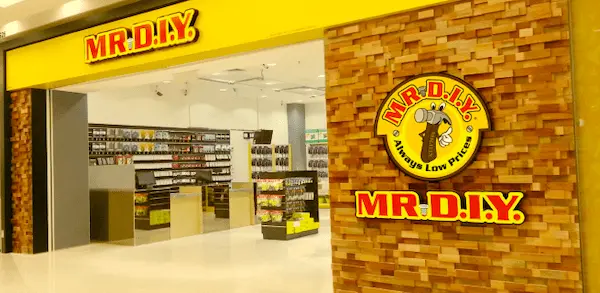
The Retail Model: Direct Corporate Management vs. Retail Franchises
Many first-time entrepreneurs mistake MR. DIY for a standard franchise chain where an applicant pays a brand fee, purchases stock, and manages the billing counter. However, variety retail depends on managing massive inventory catalogs—often exceeding 15,000 to 18,000 distinct Stock Keeping Units (SKUs) across categories like hardware, electricals, car accessories, furnishing, toys, and stationery.
To control global supply chain logistics, direct vendor pricing, and standardized merchandise displays, Dua Lima Retail centrally finances, fits out, inventories, and staffs every outlet.
Independent investors cannot buy a standalone store license to operate as a self-managed franchisee. Rather than selling retail franchise certificates to the public, the company’s expansion strategy is anchored in long-term commercial property leasing with prominent mall operators and commercial space owners.
Commercial Property Leasing: The Legitimate Partnership Model
For individuals, family offices, and commercial developers who own premium commercial real estate, partnering with MR. DIY as a corporate landlord represents a secure, high-yield revenue opportunity.
Because MR. DIY formats emphasize broad aisles and extensive wall display systems, company real estate executives evaluate properties against strict technical parameters:
- Carpet Area Requirements: An expansive floor plate typically ranging between 5,000 and 10,000 square feet on a single level (ground, upper ground, or primary retail levels in shopping malls).
- Store Frontage & Ceiling Height: A minimum of 30 to 40 feet of clear, unobstructed glass frontage for seasonal visual merchandising, accompanied by clear ceiling heights of at least 10 to 12 feet.
- Infrastructure Provisions: High-capacity commercial 3-phase electrical connections (typically 40 kVA to 80 kVA), centralized HVAC integration or heavy air-conditioning provisions, loading docks for container delivery, and passenger lift access.
- Catchment Demographics: High-density urban catchments, prime commercial high streets, or established regional shopping malls with verified daily footfall.
Commercial Lease Structures and Landlord Return Models
When Dua Lima Retail Private Limited approves a commercial site, agreements are structured as long-term corporate leases, typically spanning 9 to 15 years with standard 3- to 5-year lock-in terms.
| Lease Structure | Typical Commercial Terms | Best Suited Real Estate |
|---|---|---|
| Fixed Monthly Rental | Agreed base rental per sq. ft. featuring standard 12% to 15% escalation clauses every 3 years. | Prime high-street properties where property owners prioritize predictable corporate cash flows. |
| Revenue Share Model | Typically ranges between 5% and 8% of the store’s net monthly sales turnover. | Grade-A shopping malls and premium entertainment corridors with massive pedestrian footfall. |
| Hybrid Commercial Model | A lower guaranteed minimum monthly rent combined with a small percentage of quarterly net sales. | Developing suburban shopping centers where footfalls and retail spending will mature over time. |
Behind the Scenes: What a Mega-Store Costs to Set Up (Internal CapEx)
While an individual cannot launch an outlet as a private franchisee, understanding the underlying economics highlights why the brand avoids fragmented sub-franchising.
Setting up a standard 6,000 to 8,000 sq. ft. MR. DIY departmental showroom requires an internal capital expenditure between ₹2.5 Crore and ₹4.5 Crore.
A substantial portion of this capital is allocated to opening inventory, which requires ₹80 Lakh to ₹1.4 Crore to stock over 15,000 unique SKUs across hardware, household goods, tools, and personal care. The balance covers high-grade modular retail racking, commercial LED architectural lighting, centralized point-of-sale server grids, anti-theft RFID detection gates, and comprehensive HVAC installations.
Consumer Advisory: Beware of MR. DIY Franchise Scams
Because of the brand’s rapid retail visibility across India, online cybercrime syndicates routinely launch deceptive portals mimicking official corporate branding.
Fraudulent entities purchase domains resembling the company’s trademark, publish fake dealership application forms, and issue forged Letters of Intent (LOIs).
Victims are instructed to deposit “franchise registration fees,” “site inspection charges,” or “state distributorship deposits” ranging from ₹50,000 to ₹5,00,000 directly into private bank accounts via UPI or NEFT.
Dua Lima Retail Private Limited and MR. DIY never demand upfront franchise fees or registration charges into personal accounts. All legitimate property proposals and commercial retail alliances are processed exclusively through authorized corporate personnel.
Legitimate Variety Retail & Departmental Alternatives (Active FOFO Models)
Entrepreneurs who possess investment capital and wish to operate an active, hands-on lifestyle or variety retail showroom can evaluate established brands that operate genuine Franchise-Owned, Franchise-Operated (FOFO) systems:
Market99: A popular Indian value-retail and departmental store concept offering home decor, kitchenware, and lifestyle products, typically requiring an investment of ₹40 Lakh to ₹80 Lakh for 1,500 to 3,000 sq. ft. spaces.
Miniso India: The Japanese-inspired lifestyle product designer operates structured franchise and partnership models across Tier 1 and Tier 2 cities, typically requiring ₹50 Lakh to ₹1.2 Crore in initial capital.
Usupso / Ximi Vogue: International fast-fashion and lifestyle variety chains offering standardized franchise models designed for 800 to 1,500 sq. ft. retail stores.
To explore other retail and institutional business formats, check out our detailed guide on the Arvind Store Franchise Cost or review commercial requirements in our DMart Store Analysis.
How to Legally Submit Real Estate Proposals to MR. DIY
- Access the Official Portal: Visit MR. DIY India’s official corporate website and navigate to the corporate leasing or contact section.
- Prepare Property Documentation: Compile detailed architectural floor plans, carpet area dimensions, clear ceiling heights, building occupancy certificates, and street frontage photographs.
- Commercial Assessment: The business development team at Dua Lima Retail audits the location, studying pedestrian catchment, proximity to competitors, and demographic purchasing power.
- Site Inspection & Corporate Lease: If shortlisted, corporate real estate heads inspect the space in person to negotiate long-term commercial lease terms and finalize fit-out schedules.
Disclaimer: Cost Guide India is an independent research and financial publishing platform. We are not officially affiliated with, sponsored by, or associated with MR. DIY Group, MR. D.I.Y. (India), or Dua Lima Retail Private Limited. Setup benchmarks, leasing models, and operational figures discussed here are synthesized from corporate disclosures and retail industry standards for educational analysis.