Starting an Apsara Ice Cream franchise in India in 2026 requires a total investment of ₹12 lakh to ₹25 lakh depending on city tier, store size, and mall vs high-street location. The brand does not charge a very high royalty compared to premium dessert chains, making it attractive for first-time entrepreneurs. Typical store size ranges from 150–350 sq ft, and monthly operating expenses average ₹1.2–₹2.4 lakh.
With good footfall, average monthly revenue reaches ₹3–₹6 lakh and expected profit margin is around 18%–28%. Most outlets recover the initial cost within 14–24 months if location selection and operations are handled properly. Apsara Ice Cream franchise cost in India 2026 ranges ₹12–₹25 lakh. Monthly profit ₹60k–₹1.6 lakh with 14–24 month ROI depending on rent, city tier, and customer footfall.
Apsara Ice Cream Brand Overview
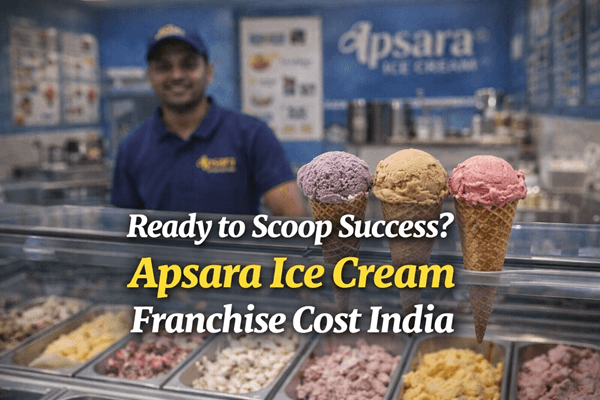
Apsara Ice Cream is a Mumbai-origin natural ice cream brand known for real fruit flavors like Sitaphal, Tender Coconut, and Guava Chili. Unlike typical soft-serve or premix dessert brands, it focuses on preservative-free handcrafted ice cream, which positions it as a premium yet affordable dessert outlet.
The brand has expanded rapidly across metro and Tier-2 cities due to strong repeat customers and evening family crowd appeal. Because of the simple menu and minimal kitchen complexity, it is considered beginner-friendly. Most franchise partners operate with small teams, making operating costs manageable while maintaining consistent product quality across locations.
A major advantage of this franchise is brand recall without extremely high entry barriers. Compared to international dessert chains, the investment cost remains relatively accessible, yet customers perceive it as a premium product. This balance is why many mall kiosks and high-street dessert corners prefer this brand over generic ice cream parlors.
Apsara Ice Cream Franchise Cost Breakdown
Understanding the complete franchise cost helps avoid financial surprises after signing the agreement. The total startup expense depends heavily on whether you open a kiosk, small shop, or flagship outlet. Interior branding and refrigeration equipment are the largest expenses because the brand maintains strict display standards to preserve product quality and visual identity.
The initial investment generally includes franchise fee, interior setup, deep freezers, display units, billing system, and initial stock. Rent deposit also forms a significant portion in metro cities. A mall location increases setup cost but also improves revenue potential.
A high-street store reduces setup expense but depends more on local visibility and marketing. Overall, entrepreneurs should plan an additional working capital reserve for the first three months because dessert businesses build regular customers gradually rather than instantly.
Space Requirement and Location Selection
The brand operates successfully in compact spaces, which reduces rental burden compared to restaurants. A typical outlet needs around 150 to 350 square feet. However, the ideal location matters more than size because dessert demand depends heavily on walk-in customers rather than delivery alone.
High-footfall areas such as near colleges, shopping streets, food courts, and residential clusters perform best. Evening crowd and weekend family visitors generate most revenue. Avoid office-only areas because demand drops sharply after working hours.
A visible storefront and good lighting significantly increase impulse purchases. Since customers often visit specifically for unique flavors, accessibility and parking availability also influence repeat visits more than décor luxury.
Royalty, Profit Margin and Monthly Expenses
The brand typically charges a moderate royalty percentage rather than a fixed heavy fee. This structure supports franchise owners during low-season months like monsoon when ice cream demand drops slightly. Operating expenses include rent, electricity for freezers, staff salaries, and ingredient replenishment.
Monthly expenses vary widely depending on city category. Metro cities have higher rent but stronger revenue, while Tier-2 cities show slower sales but better net margins due to lower overheads.
The profit margin usually remains stable because product cost is predictable and wastage is minimal if stock rotation is handled properly. Shops located near tuition hubs or family neighborhoods see consistent evening sales, stabilizing monthly income across seasons.
Revenue Potential and Return on Investment
A well-located store can generate daily sales from ₹10,000 to ₹25,000 depending on weather and footfall. Summer months often double revenue, significantly improving yearly averages. Most franchise partners report stable demand because the brand attracts repeat customers rather than only occasional buyers.
The average monthly profit ranges from ₹60,000 to ₹1.6 lakh after expenses. Break-even typically occurs within 14 to 24 months. Faster recovery happens in dense residential areas where families visit frequently. Malls provide higher revenue but longer ROI due to high rent and revenue sharing. Consistent product taste and friendly service play a major role in achieving quicker recovery of initial investment cost.
Support, Training and Supply System
The company provides operational training covering storage, hygiene, serving techniques, and POS handling. Because the menu is limited, staff training is completed quickly compared to cafes or restaurants. This reduces employee dependency and staff turnover issues.
Centralized supply ensures flavor consistency across outlets. The brand manages production and distribution, so franchisees mainly focus on customer service and cleanliness. Marketing support is mostly digital and word-of-mouth driven rather than heavy advertising.
The company encourages local promotion like school tie-ups and festival offers, which usually produce better results than expensive marketing campaigns.
Is Apsara Ice Cream Franchise Profitable in 2026?
In 2026, dessert consumption in India continues growing due to rising disposable income and youth-driven eating habits. Natural fruit-based ice creams have stronger demand compared to artificial flavored products. This positions the brand favorably against traditional parlors and frozen yogurt outlets.
Profitability depends mainly on location and evening crowd density rather than competition. Even areas with multiple dessert shops can perform well because customers treat ice cream as a frequent treat rather than an occasional luxury. Compared to restaurant franchises, risk is lower because staffing, cooking complexity, and food wastage remain minimal. For entrepreneurs seeking manageable operations and stable monthly profit, this franchise is considered a relatively safe food business option.
FAQ about Apsara Ice Cream Franchise Cost in India
Q. What is the minimum investment for Apsara Ice Cream franchise in India?
A. The minimum cost usually starts around ₹12 lakh for a small high-street outlet in Tier-2 cities, while metro mall stores can reach ₹25 lakh.
Q. Does the brand charge royalty?
A. Yes, but it is moderate compared to premium dessert chains and is structured to keep operations profitable even during slower months.
Q. How much profit can an owner earn monthly?
A. Average monthly profit ranges between ₹60,000 and ₹1.6 lakh depending on location, rent, and customer traffic.
Q. Is previous food business experience required?
A. No, the company provides training and the business model is simple enough for beginners to manage efficiently.
Q. How long does it take to recover the investment?
A. Most stores achieve break-even within 14–24 months with a good location and consistent operations.
Q. Is it better to open in a mall or high street?
A. Malls generate higher sales but higher rent, while high-street stores offer better margins and faster ROI.
Q. Is the business seasonal?
A. Sales peak in summer but remain stable year-round due to evening family visits and repeat customers.