The competitive test preparation sector in India represents one of the most lucrative verticals in the private education market, driven by millions of medical and engineering aspirants appearing each year for NEET, JEE Main, and JEE Advanced. Aakash Educational Services Limited (AESL) stands at the forefront of this sector, maintaining an extensive national footprint of more than 300 classroom centers. Because of this brand dominance, educational entrepreneurs and commercial property owners frequently search for the process and capital outlay required to establish an Aakash Institute center.
Before allocating startup capital, prospective operators must understand the structural reality of how Aakash expands its academic network. The organization relies heavily on centralized control to safeguard its academic reputation, making the distinction between corporate hubs, institutional partnerships, and regional setups critical for any investor.
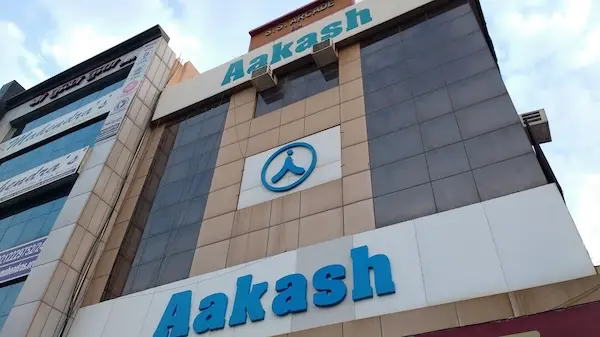
The Operating Model: Corporate Hubs vs. Regional Expansion
Unlike retail franchises that sell standardized territory licenses to the general public, AESL maintains a controlled expansion strategy to protect its curriculum delivery and exam result integrity. In metropolitan areas, state capitals, and premier coaching clusters, Aakash operates strictly through Company-Owned, Company-Operated (COCO) flagship facilities. In these tier-1 cities, the company directly recruits corporate faculty, funds store-level fit-outs, and manages operations from its headquarters. Individual investors in these markets participate almost exclusively as commercial real estate partners rather than academic franchise operators.
In selective tier-2 and tier-3 expansion territories, AESL occasionally collaborates with regional partners or deploys asset-light digital information hubs. Under these arrangements, local partners supply compliant commercial premises, local administrative support, and front-desk counseling. AESL retains full authority over teacher certification, proprietary curriculum distribution, test series management, and centralized examination scoring such as the national ANTHE scholarship drive.
Estimated Capital Outlay & Infrastructure Setup
Setting up an institutional coaching facility requires substantial upfront capital. Establishing an operational branch with four to eight standard classrooms generally demands a total investment between ₹52 Lakh and ₹1.26 Crore, depending on local municipal clearances, real estate scale, and audio-visual fit-out requirements.
| Expense Component | Estimated Outlay (INR) | Operational Scope & Deliverables |
|---|---|---|
| Brand License / Collaboration Fee | ₹5,00,000 – ₹15,00,000 | Territorial mapping, central LMS access, initial academic enablement, and brand onboarding |
| Classroom Civil Fit-Out & Furniture | ₹20,00,000 – ₹45,00,000 | Acoustic wall treatment, ergonomic study benches, faculty podiums, reception, and counseling areas |
| Smart Audio-Visual & IT Systems | ₹8,00,000 – ₹20,00,000 | Interactive touch displays, high-lumen projectors, CCTV coverage, biometric attendance, and local servers |
| Curriculum Modules & Test Kits | ₹2,00,000 – ₹6,00,000 | Initial batch study material, standardized assessment papers, and student portal access licenses |
| Statutory Compliances & Fire Safety | ₹2,00,000 – ₹5,00,000 | Commercial building occupancy certificates, fire hydrants, dual stairwell safety, and NOCs |
| Operating Contingency Fund | ₹15,00,000 – ₹35,00,000 | Six months of faculty payroll, electricity reserves, and local facility management |
| Total Initial Investment | ₹52 Lakh – ₹1.26 Crore | Excludes commercial property rental advances paid to landlords |
Facility Space and Regulatory Prerequisites
Education facilities are subject to strict municipal building regulations and safety standards. A viable center requires between 3,000 and 5,000 square feet of contiguous commercial carpet area. This footprint allows sufficient square footage for at least four to eight lecture halls, parent counseling rooms, administrative workstations, and dedicated faculty preparation cabins.
Building safety is a primary hurdle during site approval. Local urban bodies and fire departments mandate wide dual-exit staircases, dedicated emergency egress routes, automatic sprinkler installations, and certified fire hydrant setups. In addition, centers must maintain a dedicated electrical substation or high-capacity silent diesel generator (25 to 40 kVA) to support intensive air conditioning and continuous digital smart-board operations without lecture interruptions.
Unit Economics, Fee Royalties & Cash Flow Dynamics
Revenue in competitive test prep is seasonal, following the academic calendar. The bulk of student enrollments and fee collections occur between March and August, coinciding with board exam completions and the rollout of foundation scholarship tests. In regional partner models, the parent organization typically levies a central royalty or service revenue share ranging from 20% to 30% of gross tuition receipts. This contribution funds continuous course upgrades, national advertising campaigns, centralized mock tests, and faculty enablement.
Monthly recurring expenses are heavily weighted toward high-caliber faculty payroll, as experienced NEET and JEE instructors command competitive market salaries. After accounting for corporate royalties, commercial lease costs, utility bills, and seasonal local marketing, a mature center enrolling between 250 and 500 students generally achieves a net operating margin of 15% to 22%. Because upfront capital expenditure is substantial, typical return on investment spans 24 to 36 months.
Commercial Property Leasing: The Preferred Landlord Route
For investors who own commercial premises but lack background in academic management, leasing property directly to AESL under a corporate lease is frequently the safer, more passive investment channel.
| Lease Structure | Standard Commercial Terms | Ideal Property Profile |
|---|---|---|
| Fixed Monthly Rent | Agreed commercial rate per sq. ft. with standard 12% to 15% rent escalation every 3 years | High-street commercial buildings where the owner wants stable, long-term corporate rental yields |
| Revenue Share Model | Typically 7% to 11% of gross tuition fee collections generated by the branch | Prime properties situated directly within dense school zones and established student tuition markets |
| Hybrid Commercial Model | Lower guaranteed base rent combined with a small percentage of quarterly center revenue | Developing suburban hubs where student enrollments are projected to scale over several academic sessions |
Consumer Advisory: Protecting Yourself from Education Licensing Scams
Due to the prestige associated with national test prep brands, cyber syndicates frequently set up deceptive portals targeting unsuspecting investors. Fraudulent operators launch websites displaying official logos, run search engine campaigns, and distribute forged Letters of Intent (LOIs). These entities demand upfront “verification deposits,” “territory reservation fees,” or “document processing charges” ranging from ₹50,000 to ₹5,00,000, directing funds to personal savings accounts or through UPI.
Aakash Educational Services Limited never conducts business partnership approvals over social messaging channels or solicits fees into private personal bank accounts. All corporate lease agreements and academic tie-ups are executed through formal institutional review processes directly with authorized personnel from the corporate office.
Established Coaching Alternatives with Active Partner Networks
If an Aakash center is not feasible or your target pin code already has a corporate branch, several established test-prep and tutoring networks operate transparent, partner-led franchise structures across India:
Motion Education (Kota): Well-known for its Kota-based JEE and NEET coaching systems, Motion provides tiered franchise agreements for regional operators, typically requiring an initial investment between ₹30 Lakh and ₹60 Lakh depending on center scale.
Career Launcher: A pioneer in aptitude and law entrance training, Career Launcher offers established partner models covering CLAT, IPMAT, CAT, and civil services coaching, with setup capital typically ranging between ₹20 Lakh and ₹40 Lakh.
T.I.M.E. (Triumphant Institute of Management Education): With decades of presence across tier-1 and tier-2 markets, T.I.M.E. maintains structured regional franchise agreements for management, bank exam, and overseas test preparation.
To evaluate other service-based business models, explore our detailed analysis of the DHL Courier Franchise Model or examine retail opportunities in our Arvind Store Investment Guide.
Step-by-Step Guide to Inquire Officially
- Access Verified Channels: Navigate to AESL’s official corporate website and locate the corporate contact, institutional tie-up, or real estate acquisition portal.
- Submit Property & Profile Documentation: Provide complete architectural floor plans, municipal commercial clearance certificates, building safety documents, and exterior frontage photographs.
- Catchment Feasibility Study: The corporate business development team evaluates the territory’s school density, local student demographics, and travel connectivity relative to existing centers.
- Formal Agreement Execution: Following on-site inspection and corporate approval, both parties finalize the long-term commercial lease or institutional agreement, establishing construction and academic launch timelines.
Disclaimer: Cost Guide India is an independent educational and research publisher. We are not affiliated with, authorized by, or associated with Aakash Educational Services Limited (AESL). Financial figures, leasing benchmarks, and operational estimates discussed in this guide are synthesized from corporate disclosures, property standards, and industry reports for educational purposes.