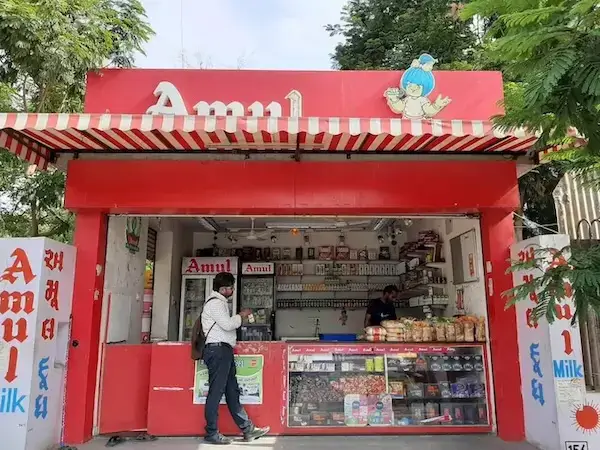
The cost to open an Amul franchise in India in 2026 ranges ₹2,00,000–₹6,00,000, depending on whether you start a small Amul Preferred Outlet/Kiosk or a full Ice-Cream Scooping Parlour. The kiosk model typically costs around ₹2 lakh, while a larger scooping parlour with seating and a full dessert menu costs around ₹6 lakh. Amul does not charge any royalty, and franchise owners earn profit entirely from retail margins on dairy and ice-cream products. Additional costs include rent, electricity, initial stock, staff salaries, and monthly working capital.
Amul franchise cost in India (2026) is ₹2–6 lakh depending on outlet type. Learn cost breakdown for kiosks, scooping parlours, equipment, security deposit, interiors, and expected profits.
Total Cost Breakdown of Amul Franchise in India
Starting an Amul franchise involves an initial investment that varies depending on format type, shop size, interiors, and equipment requirements. Amul offers a low-investment franchise model where you earn from margins rather than paying royalties. The total franchise investment typically falls between ₹2 lakh and ₹6 lakh, with additional monthly expenses for rent, electricity and staff. Entrepreneurs can choose between a small kiosk model or a full Amul Ice-Cream Parlour depending on budget and location demand.
• Small outlets or kiosks require around ₹2 lakh for setup, equipment and security deposit.
• Full scooping parlours require around ₹6 lakh, including seating, counters, branding and kitchen equipment.
Cost for Amul Preferred Outlet / Kiosk / Small Shop
The Amul Preferred Outlet or Kiosk model is the most affordable option, making it ideal for new entrepreneurs or those starting with limited capital. These compact units are suitable for market areas, residential zones, bus stands, small commercial hubs and roadside setups. The model focuses on selling packaged dairy products, beverages and ice-creams without requiring elaborate infrastructure.
• Shop space needed is 100–150 sq ft, either owned or rented.
• Total setup investment is ₹2,00,000, including deposit, interiors and refrigeration.
• Expense breakdown typically includes a refundable security deposit, basic interior branding, and equipment such as a deep freezer and a visi-cooler.
• The kiosk format is easy to operate, requires minimal staffing, and is best for areas with regular dairy demand and medium footfall.
Cost of an Amul Ice-Cream Scooping Parlour
For entrepreneurs targeting higher footfall and a full-service dessert experience, the Ice-Cream Scooping Parlour is the premium franchise option. This format offers ice-cream scoops, sundaes, thick shakes, brownies, waffle products (optional), sandwiches and a wide dairy assortment. The shop provides seating and a more café-like environment, which increases both cost and profitability potential.
• Recommended shop size is 300 sq ft or more in a high-visibility location.
• Total investment averages ₹6,00,000, covering deposit, renovation and professional equipment.
• Setup includes a higher-grade freezer, scooping cabinets, blenders, display counters, signage and seating arrangements.
• With a full dessert menu, margins are significantly higher than selling only packaged dairy products, making this format suitable for malls, high streets and student zones.
Key Additional Costs & Operational Expenses
Beyond the main franchise setup, there are monthly and operational costs required to keep the outlet running smoothly. These expenses vary by city, customer footfall, shop size and product range. Managing these effectively determines long-term profitability and cash flow stability.
• Working capital for inventory is needed for milk, curd, cheese, butter, beverages and ice-creams.
• Rent varies widely based on location and contributes significantly to monthly expenses.
• Electricity charges are considerable because freezers, coolers and air-conditioning run continuously.
• Staff salaries depend on outlet size — kiosks may need only one helper, while parlours may need 2–4 staff members.
• Maintenance and spoilage control are essential since dairy and ice-cream are perishable and require strict temperature management.
Expected Returns & Profitability
Amul’s franchise model is profitable because there is no royalty or revenue sharing, allowing the owner to earn from product margins. Profit potential depends on product mix, footfall, operational efficiency and local demand. Larger parlours generally earn higher margins due to premium dessert items.
• Packaged milk offers low margins, but high daily turnover keeps cash flowing.
• Dairy products like cheese, paneer, butter and beverages offer moderate margins.
• Ice-cream scoops, sundaes and shakes in parlours provide the highest margins, especially on recipe-based items.
• A well-run outlet can achieve strong monthly revenue provided it has good visibility, consistent supply and strong local demand for dairy and desserts.
Cost Differences by Location and City Tier
Franchise setup costs remain the same across India, but ongoing operating costs differ sharply by location. This affects break-even time and profitability. Urban centres tend to attract more footfall but also come with higher expenses.
• Metro cities like Mumbai, Bangalore, Delhi typically have higher rent and electricity, increasing monthly operating cost.
• Tier-2 cities like Pune, Jaipur, Lucknow and Coimbatore offer balanced rents and steady demand for dairy and ice-cream.
• Tier-3 towns and semi-urban areas provide low rental cost, making kiosks extremely profitable with the right location.
• Profit margins often increase outside metros because operational expenses are lower even with moderate footfall.
What You Can Sell in Each Franchise Format
Different franchise formats allow different product mixes, which influence daily sales and profit margins. A wider menu usually leads to higher earnings but requires higher investment and staff involvement.
• Kiosks and Preferred Outlets sell packaged milk, paneer, cheese, curd, butter, buttermilk, flavoured milk, kulfi and pre-packed ice-cream.
• Scooping Parlours offer all kiosk items plus scoops, cones, sundaes, shakes, floats, brownies and other value-added preparations.
• Recipe-based items create higher customer engagement and repeat visits, especially in young and urban areas.
• Choosing the right product mix based on locality ensures consistent monthly revenue.
One-Time Investment vs Monthly Running Cost
Understanding both upfront investment and recurring expenses is crucial when planning an Amul franchise. The one-time franchise cost is only part of the financial picture — monthly commitments determine whether the business is sustainable.
• One-time costs include security deposit, interiors, branding, freezers, display counters and setup.
• Monthly recurring costs include rent, electricity, salaries, restocking and minor maintenance.
• Seasonal variations — especially summer — bring higher sales, boosting cash flow.
• Low-performing months require proper working capital management to maintain stability.
Break-Even Timeline for Amul Franchise
Break-even depends on outlet type, monthly expenses, sales volume and product focus. Ice-cream parlours usually recover investment faster due to higher margins.
• Kiosks typically break even in 9–15 months, depending on footfall and rental cost.
• Scooping parlours can break even within 6–12 months during strong seasons.
• Locations near schools, colleges, commercial markets or transport hubs recover investment quicker.
• Sustained local marketing and product variety improve customer retention and accelerate break-even.
Summary of Amul Franchise Cost in India
| Franchise Format | Investment Required (2026) | Major Cost Components | Space Needed |
|---|---|---|---|
| Amul Preferred Outlet / Kiosk | ₹2,00,000 | Deposit, basic interiors, branding, freezers | 100–150 sq ft |
| Amul Ice-Cream Scooping Parlour | ₹6,00,000 | Deposit, full interiors, seating, scooping equipment | 300+ sq ft |
Source: Amul India