Executive Overview: Distribution vs. Franchise
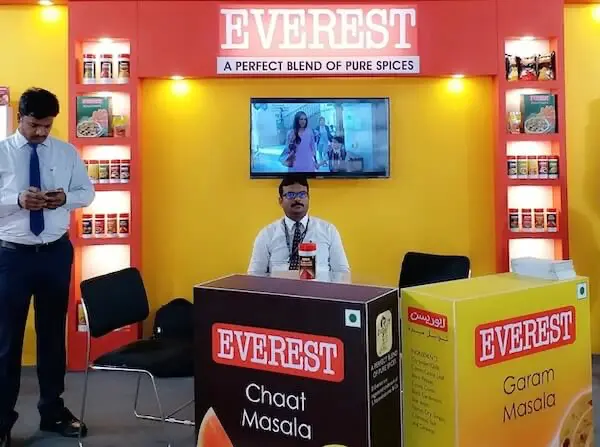
Prospective entrepreneurs searching for an Everest Masala franchise cost in India often encounter misleading claims. Everest Food Products Pvt. Ltd. does not operate a consumer-facing retail franchise system. Instead, the brand operates strictly on an FMCG trade channel structure comprising carrying and forwarding agents (CFAs), super stockists, and traditional urban/rural distributors. You are not buying a storefront franchise license; you are securing wholesale distribution rights to service general trade, kirana stores, and modern retail formats.
Capital Breakdown: Total Investment and Working Capital Realities
Entering an authorized Everest spice dealership demands between ₹8 lakh and ₹20 lakh in total initial deployment, depending heavily on territory tiering (metro, Tier 2, or semi-rural blocks). Unlike retail outlets with heavy interior decoration costs, spice distribution capital goes directly into trade liquidity and logistics.
The foundational commitment involves an initial stock inventory purchase spanning ₹4 lakh to ₹10 lakh. Fast-moving SKUs like Everest Tikhalal, Kitchen King, Chhole Masala, and Pav Bhaji Masala turn quickly, but distributors must also carry secondary range products. Working capital is the lifeblood of this business: Indian general trade functions largely on a 7 to 15-day credit cycle. If your retailers take credit while company supply runs on advance or tight trade terms, you will require an unencumbered rolling float of ₹3 lakh to ₹6 lakh to prevent channel dry-out.
Everest requires a commercial security deposit typically set between ₹1 lakh and ₹2.5 lakh. This deposit is fully refundable, interest-free, and held against billing credit, company collateral, or territory non-compete compliance. There is zero franchise licensing fee.
Warehouse Infrastructure, Space, and Fleet Logistics
FMCG spice products are vulnerable to moisture, ambient heat degradation, and aroma contamination. While Everest does not demand a high-street showroom, the local territory sales manager (ASM/TSM) will physically inspect your storage facilities before appointing you as an authorized channel partner.
Distributors generally require 400 to 800 square feet of pest-free, well-ventilated, ground-floor storage to facilitate seamless loading and offloading. Palletization or heavy-duty industrial slotted angle racks are mandatory to keep corrugated boxes off the ground and adhere to FSSAI food warehousing compliances. In terms of field logistics, you will need dedicated intra-city delivery capabilities—typically a three-wheeler cargo vehicle (such as a Piaggio Ape or Bajaj Maxima) or a light commercial vehicle (Tata Ace), combined with two-wheeler salesman beats for daily retail order booking.
Compare Other Opportunities:
How much does an Amruttulya Franchise Cost in India [2026]?
Realistic Profit Margins, Return on Investment, and Working Economics
Online promoters often inflate FMCG wholesale margins up to 15% to 20%, confusing retail markups with wholesale distribution gains. In FMCG bulk distribution, gross product margins for tier-one brands generally sit between 4.5% and 7% on billing value.
While a net margin of 2% to 4% after deducting salesman salaries, fuel, shop rent, shrinkage, and market returns may seem conservative, the true engine of profitability is high inventory velocity. A well-placed Everest distributor in an active urban territory rotates stock 2 to 3 times per month. When annual inventory turns exceed 24 cycles, capital yields an annualized Return on Capital Employed (ROCE) hovering between 18% and 28%. Typical capital breakeven stabilizes between 9 and 15 months once retail route density is established.
FMCG Spice Distribution: Everest vs. Competing Brands
Choosing a brand partner depends on whether your target territory prefers established brand pull or higher margin push. The table below outlines how Everest compares with leading category rivals across the Indian spice trade.
| Brand & Trade Profile | Typical Investment Range | Gross Distributor Margin | Primary Market Strength | Stock Rotation Speed |
|---|---|---|---|---|
| Everest Spices (Everest Food Products) | ₹8 Lakh – ₹20 Lakh | 4.5% – 7.0% | Pan-India household pull; blended spice dominance | Very Fast (10–14 days) |
| MDH Masala (Mahashian Di Hatti) | ₹7 Lakh – ₹18 Lakh | 5.0% – 7.5% | Deep North/Central India traditional channel loyalty | Fast (12–16 days) |
| Catch Spices (DS Group) | ₹6 Lakh – ₹15 Lakh | 6.0% – 9.0% | Modern retail reach, tabletop sprinkler segment | Moderate (15–22 days) |
| Tata Sampann (Tata Consumer Products) | ₹10 Lakh – ₹22 Lakh | 5.5% – 8.0% | Premium unpolished health positioning; urban reach | Moderate to Fast (14–20 days) |
Important Warning: FMCG Distributorship Cyber Scams
The Indian FMCG sector has seen a surge in predatory “franchise portal” rackets that create counterfeit lookalike websites targeting Everest, Amul, Haldiram’s, and Britannia. Scammers deploy Google Search Ads targeting keywords like “Everest Masala franchise online apply” or “dealership application form.”
These fraudulent portals generate fabricated allotment letters, demanding “registration fees,” “territory lock fees,” or “NOC documentation deposits” ranging from ₹25,000 to ₹2,00,000 sent via UPI or individual savings bank accounts.
How to verify authentic channels: Everest Food Products does not charge upfront online application fees or issue retail dealership certificates via automated forms. Distributorship vacancies open exclusively when an existing territory is vacant, bifurcated, or underperforming. Verification must always take place through direct contact with regional sales managers (RSM) or company sales representatives (TSI/SO) at local depot offices, verified through the corporate headquarters in Mumbai. Never transfer funds to personal savings accounts.
Regulatory Formalities and How to Apply Legally
To secure an appointment, an enterprise must have a legitimate business entity (Proprietorship, Partnership, or Private Limited), an active GST registration, and a mandatory FSSAI State Food License for wholesale distribution.
Prospective candidates should initiate contact through the official corporate portal or reach out directly to the commercial depot located in their state capital. Once your commercial solvency, warehouse readiness, and local market contacts pass evaluation by the area sales manager, formal documentation and inventory allocation begin.