GSRTC Franchise Overview: Quick Facts
The term GSRTC Franchise is a common industry misnomer. Gujarat State Road Transport Corporation (GSRTC) does not grant commercial franchises, brand licenses, or operational equity. Instead, it appoints Authorized Ticket Booking Agents (Franchisee Agents) and e-ticketing partners via divisional tenders and departmental security deposits.
The total setup investment typically ranges from ₹35,000 to ₹1,20,000—primarily covering IT hardware, broadband, and a refundable security deposit—with zero non-refundable franchise fees.
Business Model Reality: Agency License vs. Traditional Franchise
Prospective entrepreneurs frequently stumble into the “franchise fee” trap when researching state transport undertakings. GSRTC is a statutory state corporation operating under public welfare mandates, not a retail chain expanding via standard Business Format Franchising.
As an authorized agent, you are essentially functioning as an external e-reservation kiosk. The corporation provides secured access to its Online Passenger Reservation System (OPRS) portal, but does not offer retail interior fit-outs, territorial exclusivity, or dedicated local marketing spend.
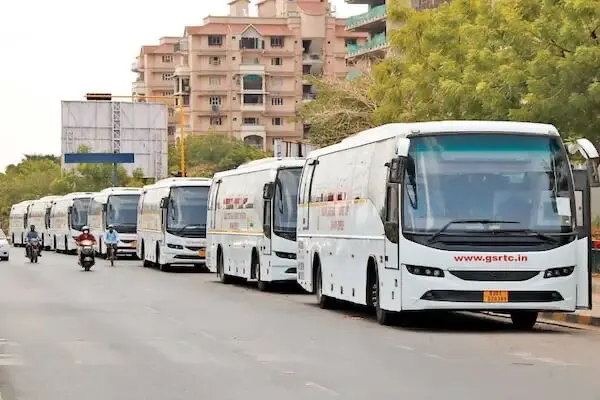
Because bus fare tariffs and reservation charges are statutory and strictly capped by the Gujarat state government, ticket agents cannot charge ancillary premiums or convenience surcharges over the official counter ticket face value. Consequently, operating a GSRTC booking counter as a standalone brick-and-mortar storefront is financially unsustainable; it thrives primarily when integrated into pre-existing retail businesses such as cybercafés, Xerox shops, stationary stores, CSC/Jan Seva Kendras, or travel desks.
Realistic CapEx & Working Capital Requirements
Setting up an authorized ticketing desk requires basic, durable infrastructure rather than expensive commercial renovations. The primary capital expenditure comprises reliable office automation hardware and the mandatory departmental security deposit or bank guarantee submitted to the respective GSRTC Divisional Controller.
| Expense Category | Estimated Cost Range (₹) | Commercial Purpose & Recurring Nature |
|---|---|---|
| GSRTC Franchise Fee | ₹0 (Zero) | Government state transport undertakings do not charge brand purchase fees. |
| Divisional Security Deposit | ₹10,000 – ₹25,000 | Refundable deposit / Bank Guarantee held by the divisional office against booking settlement defaults. |
| IT Infrastructure & Printer | ₹20,000 – ₹45,000 | Desktop computer/laptop, high-duty thermal or laser printer, UPS power backup. |
| Broadband & Biometrics/Peripherals | ₹3,000 – ₹8,000 | Stable internet connectivity and basic desk peripherals. |
| Initial Rolling Working Capital | ₹15,000 – ₹50,000 | Pre-loaded wallet balance or credit limit required to issue tickets instantaneously. |
| Total Realistic Outlay | ₹48,000 – ₹1,28,000 | Significantly lower if running from an existing commercial counter. |
Revenue Economics: GSRTC Margins vs. Private Operators
Earnings from state-run bus reservations are volume-driven with low individual ticket margins. GSRTC generally operates on a fixed reservation commission framework, netting agents roughly 3% to 6% per seat (or a fixed statutory booking fee per passenger ticket), contrasting sharply with the dynamic pricing and yield management models employed by private interstate fleet operators.
| Comparison Factor | GSRTC Authorized Agent | Private Fleet Operators / OTA Consolidators |
|---|---|---|
| Commission Rate | 3% – 6% (or fixed nominal fee per passenger) | 8% – 15% (fluctuates during peak festive surges) |
| Fare Elasticity | Strictly fixed by Gujarat Government tariffs | Dynamic pricing driven by route demand and seasonality |
| Ticket Volume & Demand | Very high, reliable daily rural and intercity footfall | Moderate to high, focused primarily on commercial corridors |
| Payment Cycle | Structured settlement via automated portal account | Real-time wallet deductions or bi-weekly aggregations |
| Primary Risk | Server downtime, user shift to native mobile apps | Operator cancellations, route discontinuations, dispute handling |
Consumer & Entrepreneur Alert: Beware GSRTC Franchise Scams
A widespread online scam involves fraudulent websites and fake Google Ads soliciting applications for “GSRTC Dealerships,” “Exclusive Bus Depot Kiosks,” or “GSRTC Parcel Franchise Contracts” demanding non-refundable processing fees via UPI or personal accounts.
How to Protect Yourself: GSRTC never collects franchise licensing fees through private payment links, personal QR codes, or unsolicited phone calls. Legitimate empanelment of booking agents, parcel transport agency rights, and canteen or stall leases occurs strictly through transparent departmental tenders published on official state e-procurement portals or via public notices issued by local Divisional Offices (e.g., Ahmedabad, Vadodara, Rajkot, Surat). Always verify credentials directly at a GSRTC Divisional Depot before parting with funds.
How to Apply for an Authorized Agent License
Securing approval as an authorized agent follows a verified administrative pathway rather than an instant retail checkout.
Applicants can either monitor the official GSRTC official portal for active agent empannelment notices or visit the Commercial Department of the nearest GSRTC Divisional Office in person. The standard documentation requires individual KYC verification (such as government-issued identity documents and PAN), firm registration or shop establishment certificates (Gumasta license in Gujarat), bank account credentials with cancelled cheque, and verification of commercial retail premises.
Once your application clears scrutiny, you execute an agency agreement, submit the designated security deposit/bank guarantee, and undergo administrative credential generation to access the official OPRS agent portal.
You Might Also Like:
Akbar Travels Franchise & B2B Partner Cost (2026)
Key Operational Challenges & Strategic Recommendation
The greatest headwind for a modern GSRTC ticketing agency in 2026 is digital disintermediation. The ubiquity of smartphone-based reservations, direct UPI payments, and GSRTC’s official mobile booking application has substantially reduced passenger reliance on local ticket booking kiosks. Additionally, occasional server latency during festival peak hours (such as Diwali or Chhath Puja rush) can disrupt real-time seat locks and create inventory reconciliation friction.
For viable returns, do not establish a standalone commercial shop solely for state bus ticketing. The most profitable strategy is bundling: operate the GSRTC agent terminal alongside private fleet aggregators, railway ticketing (IRCTC authorized agent), utility bill payment centers, and parcel logistics. This diversified footfall ensures steady daily revenue while insulating your business against the margin constraints of a single government booking service.