Prospective entrepreneurs often search for an “HDFC Bank franchise” expecting a traditional retail franchise model. Under Reserve Bank of India (RBI) regulations, scheduled commercial banks do not issue commercial branch franchises. Instead, HDFC Bank expands its retail reach through authorized partner channels: Direct Selling Agents (DSAs) for loans and credit cards, Business Correspondents (BCs) / Customer Service Points (CSPs) for financial inclusion, and commercial site leases for ATM deployments.
Understanding the distinction between a corporate franchise and an agency partnership protects entrepreneurs from widespread licensing scams while presenting a clear picture of capital expenditure and commission structures.
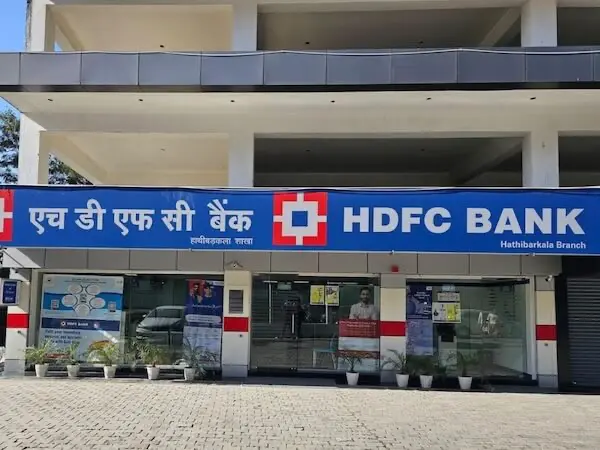
HDFC Loan & Credit Card DSA Partnership: CapEx and Revenue Model
The HDFC Direct Selling Agent model allows individuals, financial advisors, and consultancy firms to source retail assets—including home loans, personal loans, business loans, auto finance, and credit cards. Because the bank levies no mandatory license fee, the real cost of establishing an agency lies in working capital, compliance infrastructure, and customer acquisition.
A functional DSA setup requires an operational capital investment typically ranging from ₹60,000 to ₹1,80,000. These funds cover rented office desk space, dedicated computing and printing devices, broadband connectivity, secure document storage for customer KYC paperwork, and initial legal registration (such as GST filing and proprietary firm incorporation).
Loan distribution generates revenue strictly on commission per disbursed file: unsecured personal loans yield gross commissions between 1.0% and 2.0% of the disbursed principal, while home loans generally yield 0.30% to 0.50%. Credit card sourcing pays a fixed incentive varying between ₹800 and ₹2,500 per activated card, contingent on card tier and applicant profile. Profit margins average 35% to 50% after accounting for telecaller salaries and field verification travel.
HDFC Customer Service Point (CSP) / Bank Mitra Model
Entrepreneurs looking to offer basic banking services—such as savings account opening, Aadhaar-enabled cash withdrawals (AePS), domestic money transfers, and fixed deposit sourcing in semi-urban or rural catchments—can apply for an HDFC Customer Service Point. These operations do not run as direct franchises; they operate under the RBI’s Business Correspondent framework.
Setting up a CSP requires an upfront equipment expenditure of approximately ₹40,000 to ₹90,000. Essential investments include a certified biometric fingerprint/iris scanner, a micro-ATM terminal, a thermal receipt printer, and an active retail counter. Additionally, the operator must maintain ₹25,000 to ₹1,00,000 in a settlement account as rolling liquidity (cash-in-hand float) to honor daily cash disbursements.
Earnings depend on per-transaction charges: cash handling through AePS yields nominal commissions (typically 0.20% to 0.40%, often capped at ₹15 to ₹25 per transaction), while new basic savings accounts yield ₹15 to ₹30 per onboarded user. CSPs primarily succeed when bundled with existing grocery, digital service, or telecom recharge retail shops.
HDFC ATM Space Leasing vs. White Label ATM Partnerships
Individual property owners cannot purchase an “HDFC ATM Franchise.” HDFC Bank sources ATM locations either by leasing commercial space directly under a corporate tenancy agreement or by partnering with third-party ATM deployers. For commercial landlords with 50 to 100 square feet of high-visibility commercial frontage, HDFC Bank periodically releases public tenders to lease sites, offering a stable monthly commercial rent without equipment purchase obligations.
Entrepreneurs seeking transaction-based passive income must instead explore White Label ATM (WLA) operations authorized by the RBI, managed by licensed non-bank entities like Tata Communications Payment Solutions (Indicash), India1 Payments, or Hitachi Money Spot. Under the WLA model, the franchise partner invests ₹2,50,000 to ₹5,00,000 (encompassing security deposits, site civil works, power backup, and interior fixtures) and keeps ₹1,50,000 to ₹3,00,000 in rolling cash float.
Revenue stems from interchange fees: typically ₹8 to ₹11 for financial transactions (cash withdrawals) and ₹2 to ₹3 for non-financial operations (PIN changes, balance inquiries). Commercial viability demands sustained transaction volumes exceeding 90 to 120 withdrawals daily to cover operating power, network connectivity, and cash replenishment overhead.
Related Article:
Starting an ANZ Bank Franchise in India [2026]
HDFC Life Insurance Agency Channel
Agency operations for life insurance fall under HDFC Life Insurance Company Limited, governed directly by the Insurance Regulatory and Development Authority of India (IRDAI). There is no commercial franchise overhead. Mandatory capital outlay remains minimal (₹3,000 to ₹7,000), covering the mandated IRDAI pre-licensing training program, the IC-38 certification examination, and agent identity credentialing. Income consists entirely of first-year policy commissions (regulated by IRDAI caps and policy tenure) alongside recurring renewal trails, rewarding long-term policy persistence rather than upfront infrastructure investment.
Business Model Comparison: HDFC Distribution Channels
| Model / Partnership | Official Partner Type | Realistic CapEx Setup Cost | Brand / License Fee | Primary Revenue Stream | Key Regulatory Requirement |
|---|---|---|---|---|---|
| HDFC Retail Asset DSA | Direct Selling Agent (DSA) | ₹60,000 – ₹1,80,000 (Office, CRM, IT) | ₹0 (No franchise fee) | 0.30%–2.0% on loan disbursal; ₹800–₹2,500 per credit card | Bank KYC, clean CIBIL, DSA Agreement |
| HDFC Bank Mitra / CSP | Business Correspondent Agent | ₹40,000 – ₹90,000 (Hardware) + Working Float | ₹0 (Authorized BC vetting) | ₹15–₹30 per account; 0.20%–0.40% per cash transaction | IIBF BC/BF Certification, Police Clearance |
| Bank ATM Space | Commercial Property Lease | ₹0 (Borne by bank / MSP) | ₹0 | Fixed monthly commercial lease rent | Commercial property title, commercial power load |
| White Label ATM (WLA) | Independent WLA Franchise | ₹2,50,000 – ₹5,00,000 + Cash Float | Security deposit to WLA company | ₹8–₹11 per financial txn; ₹2–₹3 per non-financial txn | RBI WLA Guidelines, site footfall approval |
| HDFC Life Agency | Point of Sales / Insurance Advisor | ₹3,000 – ₹7,000 (Exam & training) | ₹0 | First-year premium slabs + renewal trails | IRDAI IC-38 Examination pass certificate |
Application Protocols and Official Verification Steps
To establish an authentic partnership with HDFC Bank’s retail or financial inclusion networks, avoid unverified aggregators and follow official onboarding paths:
For loan and credit card distribution, applications should be submitted directly via the corporate portal of HDFC Bank or presented in person to the Retail Asset Branch Manager or Regional Head of Mortgages and Retail Lending. Aspiring CSP operators must apply through national Business Correspondent aggregators that maintain corporate agreements with HDFC Bank (such as CSC e-Governance Services or authorized corporate BCs), avoiding third-party middlemen.
Property owners wishing to propose an ATM site should monitor national newspaper tenders or register their commercial premises through the bank’s official property leasing desk. Verifying all communications through official bank email domains guarantees legitimate onboarding without risking capital to fraudulent franchise offers.