Investment Overview and Commercial Reality
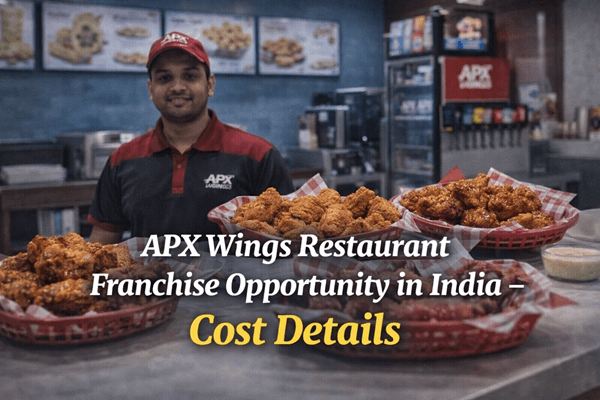
Launching an APX Wings franchise outlet in India involves an all-inclusive initial capital expenditure ranging between ₹15 Lakh and ₹32 Lakh, influenced primarily by unit format, physical floor area, and municipal tier. The concept operates within the high-velocity Quick Service Restaurant (QSR) segment, focusing on fried chicken wings, burgers, wraps, and finger food. While promotional materials often cite lower entry figures, practical restaurant commissioning requires factoring in mandatory costs such as commercial kitchen ventilation, three-phase electrical loads, municipal trade licensing, and at least three months of operational working capital.
The business model primarily runs under the Franchise Owned, Franchise Operated (FOFO) structure. Unlike FMCG distributorships or fuel station Company Owned Company Operated (COCO) land leases, a FOFO restaurant model leaves complete operating responsibility, store lease obligations, staffing payroll, and local wastage liabilities in the hands of the franchise partner. Brand support covers trademark licensing, proprietary sauce formulations, standardised central supply chains, and staff onboarding protocols.
Detailed Capital Expenditure (CapEx) Breakdown
Prospective food entrepreneurs must differentiate between fixed brand fees and physical store commissioning. Turnkey outlet costs vary widely based on property conditions, civil modifications, and the grade of commercial kitchen equipment installed.
| Expense Head | Takeaway / Kiosk (200–350 sq ft) | Dine-in / QSR (500–850 sq ft) | Financial Purpose & Scope |
|---|---|---|---|
| Franchise License Fee | ₹2,50,000 – ₹3,50,000 | ₹4,00,000 – ₹5,50,000 | Non-refundable brand rights, territory reservation, and initial standard operating procedure manuals (exclusive of 18% GST). |
| Kitchen Equipment & Extraction | ₹4,50,000 – ₹6,50,000 | ₹7,50,000 – ₹10,50,000 | Commercial deep pressure fryers, deep freezers, stainless steel prep tables, heavy-duty exhaust ducting, and cold storage units. |
| Interior Fit-Outs & Branding | ₹2,00,000 – ₹3,50,000 | ₹4,50,000 – ₹7,00,000 | Customer ordering counters, LED fascia signage, menu displays, acoustic panelling, floor tiles, and dining seating arrangements. |
| IT, POS, & Statutory Licenses | ₹1,00,000 – ₹1,50,000 | ₹1,20,000 – ₹1,80,000 | Billing hardware, cloud POS integration, FSSAI central/state licenses, local municipality trade permits, and fire NOC. |
| Initial Inventory & Packaging | ₹1,20,000 – ₹1,80,000 | ₹2,00,000 – ₹3,00,000 | Opening raw poultry supplies, proprietary marinades, sauces, branded takeout cartons, wrappers, and cleaning chemicals. |
| Contingency & Working Capital | ₹1,50,000 – ₹2,50,000 | ₹2,50,000 – ₹4,00,000 | Reserve liquidity covering staff payroll, utility bills, and supply restocking during the initial 90-day gestation ramp. |
| Total Estimated Outlay | ₹12,70,000 – ₹19,30,000 | ₹21,70,000 – ₹31,80,000 | Excludes commercial property security deposits (typically 3–6 months’ rent advance payable to the landlord). |
Realistic Unit Economics, Margins, and Net Profitability
A frequent error made by first-time food operators is conflating gross kitchen margin with actual net profitability. While chicken wings, fried sides, and carbonated beverages yield an attractive gross margin of 50% to 62% on ingredient costs, significant operational outflows reduce the bottom line.
Online aggregator delivery platforms (such as Swiggy and Zomato) capture 18% to 26% of gross order values through commissions, delivery fees, and platform advertising discounts. In high-density retail zones, commercial property rent often commands 10% to 14% of monthly turnover. When combined with monthly brand royalties (commonly 4% to 7% of gross sales), staff payroll for a 3- to 5-member team, and heavy commercial electricity consumption from constant deep fryers and refrigeration, the realistic net profit margin settles between 12% and 18% under steady trading conditions.
| Performance Metric | Low Footfall / Early Phase | Balanced Suburban Store | Prime Food Court / College Hub |
|---|---|---|---|
| Average Monthly Turnover | ₹2,80,000 – ₹3,80,000 | ₹4,50,000 – ₹6,50,000 | ₹7,50,000 – ₹11,00,000+ |
| Cost of Goods Sold (COGS ~38%) | ₹1,06,400 – ₹1,44,400 | ₹1,71,000 – ₹2,47,000 | ₹2,85,000 – ₹4,18,000 |
| Operating Expenses (Rent, Staff, Power, Royalties) | ₹1,40,000 – ₹1,85,000 | ₹2,10,000 – ₹2,80,000 | ₹3,30,000 – ₹4,60,000 |
| Estimated Monthly Net Profit | ₹33,600 – ₹50,600 | ₹69,000 – ₹1,23,000 | ₹1,35,000 – ₹2,22,000 |
| Estimated Payback Window | 22 – 28 Months | 15 – 20 Months | 12 – 16 Months |
Scam Alert and Due Diligence Warning
The Indian fast-food licensing sector is experiencing a rise in deceptive marketing, fake brand intermediaries, and phantom franchise brokerages. Unscrupulous websites frequently clone corporate assets, posing as franchise development officers to extract preliminary “allotment fees,” “site verification charges,” or “advance franchise booking deposits” via personal UPI IDs and non-corporate accounts.
Legitimate franchisors never demand registration charges prior to signing a formal non-disclosure agreement (NDA) and presenting an official Franchise Disclosure Document or commercial franchise draft. Always verify corporate entity credentials via the Ministry of Corporate Affairs (MCA) portal to confirm incorporation details and active directorships. Never transfer capital to savings accounts; all payments must clear through registered corporate current accounts bearing the verified business trade entity name. Furthermore, independently inspect at least two currently operational franchise stores without the presence of the sales representative to verify actual supply-chain reliability, daily customer counts, and prompt product dispatch.
Operational Risk Factors and Site Selection Rules
Achieving sustained operational profitability in the QSR space requires navigating strict inventory and operational hurdles. Poultry-focused brands face sharp wholesale price volatility, where seasonal broiler price spikes can erode gross margins by 400 to 700 basis points if menu adjustments cannot be enacted rapidly. Additionally, raw material wastage, oil quality degradation, and strict shelf-life limitations on marinated chicken require seasoned operational oversight.
Location selection dictates whether an outlet thrives or struggles. Outlets situated in dense evening retail zones, university corridors, and commercial corporate parks capture substantial dine-in and counter footfall, whereas deep-residential properties rely almost exclusively on app delivery orders, where steep platform commissions significantly compress net margins. A balanced floor plan requires at least 250 square feet with dedicated frontage for standalone counters, increasing to 600–850 square feet when dedicated indoor seating is planned.
Next Steps in Your Research:
Beijing Bites Restaurant Franchise in India [2026]
Frequently Asked Questions
What is the minimum working capital needed to run an APX Wings outlet safely?
Beyond capital expenditure for equipment and interiors, an operator should retain an unencumbered liquid buffer of ₹2.5 Lakh to ₹4 Lakh. This buffer covers ongoing rent, utility tariffs, commercial gas refills, and staff payroll during the initial operational quarter before sales volumes achieve steady breakeven velocity.
Can this business run entirely under an absentee-owner model?
Running a single-unit QSR franchise in an absentee capacity rarely yields optimal results. Direct owner supervision is vital during the opening months to supervise inventory portion control, minimise fryer oil wastage, ensure strict hygiene standards, and eliminate cash slippage at the billing counter.
What mandatory statutory licenses are required before serving customers?
Operating an APX Wings outlet requires a state or central FSSAI food hygiene license, local Municipal Corporation Health Trade License, an official Shop and Establishment Registration, a GSTIN for tax collection, and a Fire Safety No-Objection Certificate (NOC) depending on commercial premises size and municipal guidelines.