Bombay Burger (also operating as Bombay Burger’s in Mumbai and Maharashtra) is a quick-service restaurant (QSR) brand built around Indianized burgers, wraps, and shakes. While third-party franchise portals frequently advertise compact kiosk setups starting around ₹7 lakh to ₹8 lakh, launching a fully compliant, commercially viable Bombay Burger outlet in India typically requires a total capital expenditure (CapEx) of ₹10 lakh to ₹25 lakh.
The exact figure depends heavily on your chosen store format, commercial rental deposits, and city tier.For prospective food-business investors, evaluating this opportunity requires looking past headline promotional brochures. Many emerging Indian burger brands market “zero franchise fee” or low-entry kiosk packages while recovering margins through mandatory kitchen equipment bundles, branding charges, and centralized raw material supply.
Below is a realistic financial audit of the Bombay Burger franchise model, unit economics, city-wise setup budgets, and due diligence checks for 2026.
Bombay Burger Franchise Cost Breakdown (CapEx & Working Capital)
A common mistake among first-time QSR investors is equating the initial brand fee with the total launch budget. Even if a brand waives or discounts its upfront licensing fee, civil interiors, commercial kitchen fabrication, FSSAI and municipal licensing, and security deposits consume the bulk of your capital.
Furthermore, an outlet rarely breaks even in its first 60 days, making an unallocated working capital buffer essential.
| Expense Head | Express / Takeaway Kiosk (250–350 sq. ft.) | Casual Dine-In / High-Street Outlet (500–800 sq. ft.) | Notes & Industry Reality |
|---|---|---|---|
| Franchise / Brand Licensing Fee | ₹0 – ₹2,00,000 | ₹2,00,000 – ₹4,00,000 | Some broker decks list zero franchise fees by bundling margins into equipment/branding packages. |
| Commercial Kitchen Equipment | ₹3,50,000 – ₹5,00,000 | ₹5,50,000 – ₹8,50,000 | Includes deep fryers, flat-top griddles, vertical chillers, deep freezers, exhaust hoods, and POS hardware. |
| Civil Work, Interiors & Signage | ₹2,50,000 – ₹4,50,000 | ₹5,00,000 – ₹8,00,000 | Covers flooring, electrical load upgrades, plumbing, digital menu boards, and exterior glow signage. |
| Opening Raw Material & Packaging | ₹75,000 – ₹1,25,000 | ₹1,25,000 – ₹2,00,000 | Initial frozen patties, buns, sauces, beverages, and custom-printed delivery packaging. |
| Licences & Pre-Opening Compliance | ₹35,000 – ₹60,000 | ₹50,000 – ₹1,00,000 | FSSAI registration/state license, GST, Shop & Establishment Act, fire NOC, and municipal trade license. |
| Working Capital Reserve (3 Months) | ₹2,00,000 – ₹3,00,000 | ₹3,50,000 – ₹5,00,000 | Covers early staff payroll, electricity, commercial LPG, and aggregator onboarding discounts. |
| Estimated Total Investment (Excl. Rent Deposit) | ₹9.10 Lakh – ₹16.35 Lakh | ₹17.75 Lakh – ₹28.50 Lakh | Property security deposits (typically 3–6 months’ rent) will add ₹1.5 lakh to ₹6 lakh depending on the city. |
Store Format, Area Requirement & Kitchen Infrastructure
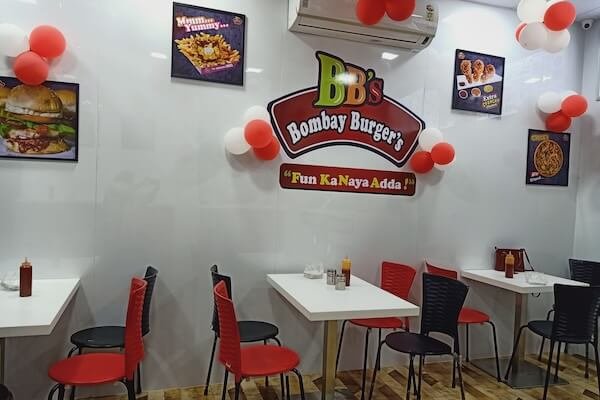
Bombay Burger operates primarily across compact takeaway counters, cloud-plus-pickup kitchens, and neighborhood casual dining formats. A delivery-and-takeaway unit requires between 250 and 350 square feet, keeping fixed occupancy costs manageable while capturing Swiggy and Zomato order volume.
Conversely, a dine-in format with seating for 16 to 24 guests requires 500 to 800 square feet along with customer washroom access and higher air-conditioning tonnage.
From an operational standpoint, kitchen efficiency dictates ticket times during peak evening hours. Standard equipment includes commercial induction or gas fryers, contact grills, refrigerated prep counters, under-counter chillers, stainless-steel worktables, and heavy-duty ducting.
Before signing any memorandum of understanding (MoU), verify whether the brand mandates purchasing equipment directly through its vendor network at fixed package rates or allows third-party procurement against approved technical specifications.
City-Wise Bombay Burger Franchise Investment Estimates
Because commercial real estate deposits, local contractor labor rates, and utility load sanctions vary sharply across Indian metros, your actual cash outlay will fluctuate based on geography. The table below outlines realistic all-in project budgets—inclusive of typical commercial property deposits and initial working capital—across key urban markets.
| City / Market | Estimated Total Budget (All-In) | Recommended Format | Primary Cost Driver & Micro-Market Strategy |
|---|---|---|---|
| Mumbai & MMR | ₹16 Lakh – ₹25 Lakh+ | Compact Takeaway / High-Footfall Station Road | High commercial deposits and steep per-sq.-ft. rentals in suburbs like Bandra, Andheri, Powai, and Thane favor 250–350 sq. ft. grab-and-go units. |
| Delhi NCR | ₹13 Lakh – ₹22 Lakh | Takeaway or Compact QSR | High-street markets command hefty rents, whereas college hubs and secondary residential markets allow balanced dine-in economics. |
| Bengaluru | ₹13 Lakh – ₹22 Lakh | Cloud-First / Hybrid Delivery Outlet | Strong late-night online delivery demand around IT corridors reduces the need for expensive main-road frontage. |
| Hyderabad | ₹11 Lakh – ₹21 Lakh | Express Kiosk or Neighborhood QSR | Lower interior fit-out costs and competitive commercial leases near educational and IT clusters improve early cash retention. |
| Pune | ₹10 Lakh – ₹20 Lakh | Compact QSR / College-Area Outlet | Student-dense zones (Viman Nagar, Kothrud, Hinjawadi) generate high order frequency at accessible entry budgets. |
Profit Margin, Unit Economics & ROI Reality
In the Indian QSR burger segment, average menu pricing typically sits between ₹90 and ₹220 per item, with an average order value (AOV) of ₹220 to ₹350.
While gross food margins on burgers, fries, and thickshakes look attractive on paper—often ranging between 60% and 68% before overheads—net store-level profitability is heavily influenced by aggregator commissions and fixed occupancy costs.
For a well-managed outlet generating ₹4.5 lakh to ₹6.5 lakh in monthly gross sales, raw material costs (COGS) generally account for 32% to 38% of revenue. Online delivery platforms (Swiggy and Zomato) typically deduct 22% to 28% in commissions, payment gateway fees, and ad-spend on delivery orders.
After accounting for store rent (ideally capped under 12% to 15% of revenue), staff salaries (15% to 18%), electricity, packaging, and any ongoing brand royalty (typically 4% to 6% if applicable), realistic net operating margins (EBITDA) settle between 14% and 20%. Under steady execution, capital payback (ROI) generally takes 18 to 30 months.
Essential Guide:
Awkward Burger Franchise Cost in India (2026)
Franchise Due Diligence & Scam Alert Checklist
Because “Bombay Burger” is a descriptive name used by multiple independent eateries alongside the Mumbai-based QSR chain, prospective investors must exercise strict legal and financial verification before transferring any token deposit.
Verify Trademark & Legal Entity Ownership: Confirm the exact registered corporate name (such as the Mumbai-based proprietorship/LLP entity operating the chain) and cross-check its trademark registration status on the IP India portal. Never pay franchise fees to unverified third-party lead brokers who claim exclusive master-franchise rights without written authorization from the brand founder.
Demand an Itemized Cost Sheet & Supply Agreement: Insist on a written Franchise Disclosure Document or itemized CapEx annexure that separates brand fees from equipment markups. Clarify whether frozen patties, sauces, and buns must be purchased exclusively from the franchisor’s central commissary and verify wholesale landed prices so your food cost does not exceed 38%.
Audit Existing Operational Outlets: Visit at least two or three active outlets—not just flagship company-owned stores—during weekday afternoons and weekend evenings. Speak directly with current franchise partners about supply chain consistency, shelf-life wastage, and actual post-commission net profits before signing a binding 3-to-5-year lock-in agreement.