Contrary to claims on third-party franchise directories, Bolas (Bolas Agro Private Limited) does not operate a public FOFO (Franchise-Owned, Franchise-Operated) retail franchise model in India. The Karnataka-based dry fruits, nuts, edible oils, and coffee major operates over 100 retail stores predominantly under a Company-Owned, Company-Operated (COCO) model while expanding commercially through B2B wholesale distributorships, super-stockist networks, and commercial property leasing.
For entrepreneurs seeking a Bolas dealership or wholesale distributorship in 2026, realistic working capital and inventory investment ranges between ₹10 lakh and ₹50 lakh depending on territory size and warehouse capacity.
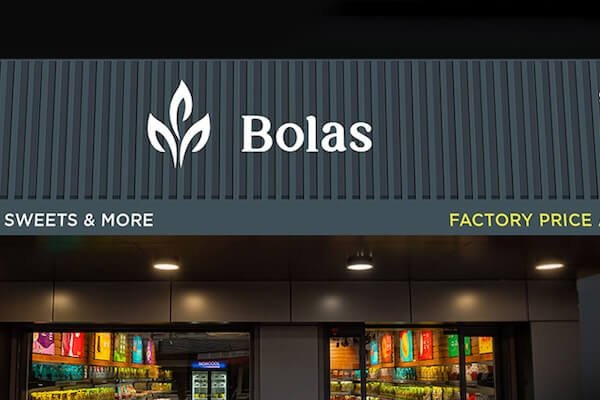
Understanding the Bolas Business Model: Avoid the “Franchise Fee” Trap
Founded by the Kamath family in Udupi, Karnataka (operating under Bola Surendra Kamath & Sons and Bolas Agro Private Limited), Bolas has grown into a multi-thousand-crore agribusiness powerhouse processing over 200 metric tonnes of cashews daily alongside almonds, dates, seeds, edible oils, and coffee. Many generic business portals mistakenly publish “Bolas Franchise Fee” articles quoting arbitrary store setup numbers.
In reality, Bolas maintains strict control over product grading, freshness, and pricing by running its flagship retail outlets directly rather than selling retail store franchises to individual applicants.
If you are an investor or commercial property owner looking to partner with Bolas in 2026, there are three legitimate pathways available. First, high-street or mall landlords in Karnataka, Maharashtra, Telangana, and Tamil Nadu can pitch ground-floor retail spaces (typically 400 to 1,200 sq. ft.) to Bolas for long-term corporate leasing.
Second, established FMCG traders can apply for authorized wholesale distributorship or institutional supply (HORECA and corporate gifting). Third, independent retail entrepreneurs can stock packaged Bolas products (such as R-U Nutz, Molsi’s, and Bolas retail packs) within an existing multi-brand gourmet or dry fruit store without paying any brand franchise fee.
Bolas Partnership & Investment Structure Comparison (2026)
Because Bolas does not charge an upfront franchise fee, capital allocation shifts entirely toward inventory procurement, warehouse infrastructure, and trade credit. The table below outlines the realistic financial requirements across legitimate partnership avenues in India.
| Partnership Model | Upfront Brand / Franchise Fee | Estimated Capital / CapEx | Space & Infrastructure Needed | Primary Revenue Mechanism |
|---|---|---|---|---|
| Bolas Retail Store (COCO Model) | Not Applicable (Company-Owned) | ₹0 (Landlord provides shell; Bolas funds fit-out) | 400–1,200 sq. ft. high-street or mall frontage | Fixed monthly commercial lease + escalation |
| Regional Wholesale Distributorship | ₹0 (Security deposit may apply) | ₹15 Lakh – ₹50 Lakh | 800–2,000 sq. ft. dry, pest-free godown + delivery van | Wholesale trade margin (8%–14% on turnover) |
| Sub-Stockist / Local Retailer Supply | ₹0 | ₹10 Lakh – ₹15 Lakh | 300–600 sq. ft. storage + basic billing setup | Retail/B2B margin (15%–25% on MRP) |
| Corporate & Festive Gifting Partner | ₹0 | ₹10 Lakh – ₹20 Lakh (Seasonal stock) | Small commercial office / order fulfillment space | Bulk order markup (12%–20% per hamper) |
Realistic CapEx & Working Capital Breakdown for Bolas Distributors
Setting up a dry fruit and FMCG distributorship requires disciplined working capital management rather than expensive retail showroom interiors. Dry fruits, cashews, and edible oils are high-value commodities with seasonal price fluctuations—particularly around Diwali, wedding seasons, and Q3/Q4 festive demand.
Spending excessive capital on non-essential office decor can starve your business of the liquidity needed to rotate stock rapidly.
For a mid-sized territory requiring a total outlay of ₹25 lakh, roughly 60% to 70% (₹15 lakh to ₹17.5 lakh) must be reserved strictly for opening inventory across fast-moving SKUs like W240/W320 cashews, California almonds, dates, and roasted seed mixes. Warehouse racking, moisture-control pallets, FSSAI compliance, GST registration, and billing ERP software typically consume ₹2 lakh to ₹4 lakh.
The remaining ₹4 lakh to ₹6 lakh serves as an operational buffer to cover delivery vehicle fuel, two to three sales executives, and short-term credit cycles extended to local kirana stores and supermarkets.
Profit Margins, Turnover & ROI Expectations
Dry fruit and agricultural commodity distribution operates on a high-volume, moderate-margin model. Unlike quick-service restaurants that advertise 50% gross margins, packaged nuts and edible oils carry tighter distributor spreads due to transparent commodity pricing and intense competition from unorganized wholesale markets.
An authorized distributor generally earns between 8% and 14% gross margin on wholesale billing, while direct B2B or retail-facing sub-dealers can achieve 15% to 25% depending on pack sizes and festive gift box customization. If a distributor invests ₹25 lakh and achieves a healthy stock rotation of 1.2x per month (generating ₹30 lakh in monthly wholesale billing at a 10% gross margin), gross monthly income reaches ₹3 lakh.
After deducting roughly ₹1.2 lakh to ₹1.6 lakh toward warehouse rent, staff salaries, logistics, and shrinkage, net monthly profit stabilizes around ₹1.4 lakh to ₹1.8 lakh, yielding an realistic payback period of 14 to 20 months.
City-Wise Investment & Operational Benchmarks (2026)
Because real estate rentals, warehouse deposits, and logistics costs differ sharply across Indian metros, your capital requirement depends heavily on where you operate. While Bolas has its strongest retail footprint in Bengaluru, Mangaluru, Udupi, Mysuru, and Hubballi-Belagavi, its packaged FMCG and B2B distribution channels span major metros via regional depots.
| Metro / Region | Estimated Distributorship Budget | Warehouse & Deposit Share | Opening Inventory & Trade Credit | Key Market Focus |
|---|---|---|---|---|
| Mumbai & MMR | ₹25 Lakh – ₹50 Lakh | ₹6 Lakh – ₹12 Lakh (High deposit) | ₹16 Lakh – ₹32 Lakh | Modern trade, corporate gifting, gourmet retail |
| Delhi NCR | ₹20 Lakh – ₹45 Lakh | ₹4 Lakh – ₹9 Lakh | ₹14 Lakh – ₹30 Lakh | NCR supermarkets, HORECA, festive bulk supply |
| Bengaluru | ₹18 Lakh – ₹40 Lakh | ₹4 Lakh – ₹8 Lakh | ₹12 Lakh – ₹28 Lakh | B2B institutional supply & commercial property leasing |
| Hyderabad | ₹15 Lakh – ₹35 Lakh | ₹3 Lakh – ₹7 Lakh | ₹10 Lakh – ₹24 Lakh | Residential retail chains, IT corporate gifting |
| Chennai | ₹12 Lakh – ₹32 Lakh | ₹2.5 Lakh – ₹6 Lakh | ₹8 Lakh – ₹22 Lakh | General trade distribution, bakery & sweet manufacturers |
Scam Alert: How to Verify Genuine Bolas Business Inquiries
Fraud Warning for Investors: Fake franchise portals and social media ads frequently impersonate established South Indian FMCG brands to collect “registration fees,” “territory booking charges,” or “LOI deposits” ranging from ₹50,000 to ₹5 lakh. Bolas Agro Private Limited does not authorize third-party brokers to collect franchise fees on personal UPI IDs or unverified bank accounts.
Before sharing KYC documents or transferring any money, verify that all email communication originates strictly from the official corporate domain. Never pay an upfront fee just to receive a brochure or schedule a meeting.
Legitimate FMCG distributorship onboarding involves physical warehouse verification by a regional sales manager, GST and FSSAI license validation, and direct RTGS/NEFT billing strictly to Bolas Agro Private Limited’s verified corporate bank account against a formal tax invoice.
Further Due Diligence:
The Belgian Waffle Franchise Cost in India (2026 Audit)
How to Legitimately Partner with Bolas in 2026
If you want to work with Bolas either as a wholesale distributor or by offering a commercial retail property for their COCO expansion, reach out directly through their official website (bolas.co.in) or corporate headquarters in Kedinje, Karkala Taluk (Udupi District, Karnataka). When submitting a distributorship inquiry, include your existing FMCG distribution profile, GST number, warehouse square footage, current retail coverage count, and available working capital.
Property owners pitching a retail storefront should share exact carpet area, frontage width, Google Maps pin, and expected monthly rent so the company’s real estate team can evaluate footfall feasibility.