Executive Snapshot: FirstCry Retail Franchise
Commercial Entity: Brainbees Solutions Limited (operating FirstCry, Babyhug, and Pine Kids retail networks).
Business Models: Franchise Owned, Franchise Operated (FOFO) and select Company Owned, Franchise Operated (COFO) property leasing partnerships.
Realistic Setup CapEx: ₹40 Lakh – ₹65 Lakh for a standard high-street store (1,000 – 1,500 sq. ft.); ₹70 Lakh – ₹1.1 Crore for flagship large-format outlets (2,000+ sq. ft. in prime malls).
Operating Gross Margins: 30% – 42% on private-label apparel and nursery accessories (e.g., Babyhug); 12% – 18% on branded fast-moving consumables (packaged diapers and baby food).
Official Application Portal: Directly through corporate channels at firstcry.com. FirstCry does not charge preliminary application or interview fees via third-party websites or personal digital payment handles.
Business Model Classification: Franchise Structure and Corporate Network
A frequent error among business aggregators is underestimating the operational scale of FirstCry’s physical network. Operated by Brainbees Solutions Limited, FirstCry transitioned from a pure e-commerce platform into an omni-channel retailer.
The physical store network supports the brand’s digital presence by handling local order fulfillment, processing customer returns, and showcasing high-ticket items like strollers, baby cots, and nursery furniture that consumers prefer to inspect in person.
Prospective investors primarily engage through a Franchise Owned, Franchise Operated (FOFO) structure. Under this model, the franchisee funds the civil fit-out, secures commercial lease rights, and purchases inventory from the parent company’s centralized distribution centers.
Store operations follow strict corporate visual merchandising, point-of-sale (POS) systems, and inventory tracking guidelines. In certain Tier-1 commercial markets, the brand also evaluates property owners for structured commercial leases, operating corporate stores under a Company Owned, Company Operated (COCO) arrangement with long-term rental payouts.
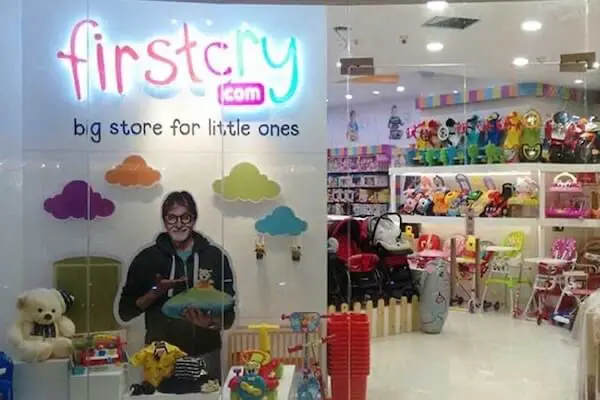
Capital Expenditure (CapEx) Breakdown: Setup Costs and Real Outlays
Opening a FirstCry retail outlet requires capital distribution across prime real estate deposits, custom store display infrastructure, technology assets, and initial stock depth. Because children’s products span numerous size options, baby age groups, and product varieties, holding adequate inventory depth is a major capital commitment.
| Investment Category | Standard High-Street Store (1,000 – 1,500 sq. ft.) | Flagship Experience Center (2,000 – 3,000 sq. ft.) | Allocation Details & Terms |
|---|---|---|---|
| Initial Franchise Fee | ₹4,00,000 – ₹5,00,000 | ₹5,00,000 – ₹8,00,000 | Non-refundable brand licensing fee for an initial 5-year operating term. |
| Refundable Security Deposit | ₹3,00,000 – ₹5,00,000 | ₹5,00,000 – ₹10,00,000 | Maintained with Brainbees Solutions Limited against rolling stock allocations; returned upon contract conclusion. |
| Civil Interiors & Fit-Out | ₹12,00,000 – ₹18,00,000 | ₹25,00,000 – ₹40,00,000 | Corporate-standard fixtures, modular shelving, nursery display suites, LED architectural lighting, and air-conditioning. |
| Initial Inventory Stock | ₹18,00,000 – ₹28,00,000 | ₹35,00,000 – ₹55,00,000 | Balanced opening stock across private-label apparel (Babyhug), global toys, baby gear, and wellness products. |
| Hardware, POS & Security | ₹2,50,000 – ₹3,50,000 | ₹4,00,000 – ₹6,00,000 | Barcoding terminals, cloud-connected ERP billing stations, and mandatory 24/7 CCTV loss-prevention setups. |
| Working Capital Reserve (90 Days) | ₹4,50,000 – ₹7,00,000 | ₹8,00,000 – ₹15,00,000 | Buffer funds dedicated to commercial rent, staff wages, utilities, and stock replenishment before local break-even. |
| Total Estimated Outlay | ₹44,00,000 – ₹66,50,000 | ₹82,00,000 – ₹1,34,00,000 | Excludes commercial property acquisition; assumes leased real estate with 3–6 months advance rental deposit. |
Financial feasibility relies heavily on controlling commercial lease expenses. Prime retail rents in Grade-A shopping malls or high-street markets can exceed ₹150 to ₹250 per square foot. If base rent and common area maintenance (CAM) charges surpass 15% of gross monthly sales, operational margins narrow significantly, extending the break-even horizon past 36 months.
Operating Margins and Revenue Mix Dynamics
The financial health of a FirstCry franchise depends on the store’s product category sales mix. Selling third-party branded diapers, baby wipes, and baby food generates customer footfall, but these items carry thin trade margins of 10% to 15%. Relying primarily on FMCG baby care can result in operating shortfalls after paying staff and retail rent.
Overall profitability is driven by higher-margin retail segments. Private-label apparel brands (such as Babyhug and Pine Kids), specialty footwear, and nursery items yield gross margins ranging from 32% to 42%. Stores that balance their merchandise mix to maintain a 50:50 ratio between high-margin softlines (apparel) and high-velocity consumables (diapers and feeding essentials) achieve healthy blended gross margins of 26% to 32%.
After deducting staff salaries, retail leases, electricity, local marketing contributions, and logistics reconciliation fees, an efficiently managed store typically nets a pre-tax profit margin of 8% to 14% on monthly revenue. This allows viable locations to reach full capital recovery within 28 to 36 months.
Fraud Advisory: Avoiding Fake FirstCry Franchise Portals and Advance Fee Schemes
Because of FirstCry’s strong brand recognition and search demand, cybercrime networks set up fake websites mimicking the brand’s corporate look.
These schemes usually begin with an applicant submitting contact information on an unverified online lead form.
The applicant is then contacted via phone or messaging apps by individuals posing as corporate expansion managers. The scammers present fake Letters of Intent (LOIs) complete with forged corporate seals and demand upfront “registration charges,” “state licensing bonds,” or “territory reservation fees” ranging from ₹25,000 to ₹2,00,000.
Crucial Verification Safeguards:
1. Verify the Corporate Beneficiary: All official payments are made exclusively to bank accounts registered under Brainbees Solutions Limited. The brand does not collect franchise funds, refundable security deposits, or evaluation fees through personal bank accounts, third-party payment gateways, or individual digital wallet addresses.
2. Check the Email Domain: Official business communications come exclusively from addresses on the @firstcry.com domain. Emails from free webmail providers (like Gmail, Yahoo, or Outlook) are unauthorized.
3. Require On-Site Physical Audits: FirstCry’s regional retail expansion team always conducts in-person physical inspections of the proposed commercial location before issuing formal agreements. A commercial contract is never granted through online forms alone without prior site visits.
Official Onboarding: Step-by-Step Application Protocol
Partnering with Brainbees Solutions requires working directly through corporate channels rather than third-party listing platforms. The formal onboarding process follows these steps:
Phase 1: Location Identification and Initial Corporate Inquiry
Begin by securing commercial property options in prime shopping areas, high-street retail zones, or prominent shopping malls with at least 1,000 square feet of ground-floor retail space. Submit an official partnership inquiry through the dedicated partner form on firstcry.com, providing location details, city tier, available working capital, and relevant commercial background.
Phase 2: Corporate Review and Physical Site Audit
FirstCry’s regional business development manager evaluates the submitted trade catchment area. An on-site visit inspects vehicle access, parking availability, nearby residential developments, and distance from existing company-owned and franchised locations to prevent territory cannibalization.
Phase 3: Business Documentation & Regulatory Compliance
After passing the location audit, the applicant provides necessary corporate and tax documentation, including an active GST registration certificate classified under retail apparel and childcare goods, proof of business registration (Sole Proprietorship, LLP, or Private Limited), three years of audited tax returns, and a commercial lease agreement running at least 3 to 5 years.
Phase 4: Agreement Execution and Infrastructure Build-Out
The parties sign the formal franchise agreement, and the partner transfers the required security deposit to Brainbees Solutions Limited. FirstCry’s architecture and visual merchandising team supplies approved floor layouts, shelving designs, and lighting blueprints. The franchisee completes the fit-out using approved vendors or following corporate technical standards.
Phase 5: Staff Training, Stock Delivery, and Launch
Store employees undergo comprehensive training covering inventory categorization, billing software, customer service protocols, and omni-channel order handling. The initial stock inventory is delivered and arranged, leading to a coordinated regional launch supported by company-directed marketing.
Comparative Analysis: FirstCry vs. Major Retail Franchises
Evaluating an investment in the baby care sector requires comparing FirstCry against alternative organized retail opportunities in India.
| Business Metric | FirstCry (Brainbees) | Mothercare (Reliance Retail) | Hamleys (Reliance Brands) |
|---|---|---|---|
| Primary Focus Area | Integrated mother, baby, and kids’ products (0–12 years) across value and mid-premium segments. | Premium maternity essentials and infant apparel. | High-end experiential toy retailing and branded entertainment merchandise. |
| Store Footprint Required | 1,000 – 2,500 sq. ft. | 800 – 1,800 sq. ft. | 2,000 – 5,000+ sq. ft. |
| Initial CapEx Requirement | ₹45 Lakh – ₹75 Lakh | ₹40 Lakh – ₹65 Lakh | ₹1 Crore – ₹2.5 Crore+ |
| Target Market | Tier 1, Tier 2, and Tier 3 cities (Broad mass-market reach). | Tier 1 metropolitan centers and affluent urban pockets. | Metropolitan shopping centers and major international airports. |
| Omni-Channel Integration | Full system integration (store pickups, web returns, localized dispatches). | Limited; primarily physical boutique presence. | Focused on experiential physical retail. |
FAQs About the FirstCry Franchise
What is the total investment needed to open a FirstCry franchise?
A standard FirstCry retail store of 1,000 to 1,500 square feet requires a realistic initial capital outlay of ₹44 Lakh to ₹66.5 Lakh. This includes a ₹4 Lakh to ₹5 Lakh franchise fee, ₹3 Lakh to ₹5 Lakh in refundable security deposits, ₹12 Lakh to ₹18 Lakh for store interiors, and an initial stock purchase of ₹18 Lakh to ₹28 Lakh, plus working capital reserves.
What are the typical profit margins for a FirstCry store owner?
Gross margins vary significantly by category: 32% to 42% on private-label clothing and accessories (like Babyhug), and 10% to 15% on FMCG baby care items (diapers, baby wipes, formula). Blended gross margins generally hover around 28%, resulting in an estimated 8% to 14% net operating profit after rent, staff wages, and operational overheads.
How much commercial space is required for a FirstCry franchise?
A standard high-street FirstCry franchise requires 1,000 to 1,500 square feet of commercial carpet area with prominent frontage. Flagship locations showcasing large-format nursery items and complete gear collections require 2,000 to 3,000 square feet.
How do I check if a FirstCry franchise offer is authentic?
Confirm that all correspondence originates from an official @firstcry.com corporate email domain. Check that any security deposits are deposited directly to accounts registered to Brainbees Solutions Limited, and ensure a regional manager performs an in-person physical inspection of your proposed site before entering into any financial commitments.