Business Model Classification: Dispelling the “Retail Franchise” Fallacy
A prevalent misconception in the logistics sector is treating Ekart Logistics (operated by Instakart Services Private Limited, a subsidiary of Flipkart Group) as a conventional turn-key retail courier shop. Traditional courier brands monetize by charging customer-facing storefront fees to send individual letters and parcels. In contrast, Ekart operates primarily as an enterprise-level captive supply chain and third-party logistics (3PL) fulfillment network.
When an entrepreneur partners with Ekart, they are essentially entering a Delivery Service Partner (DSP) or commercial contractor agreement. The partner does not purchase a licensed storefront to book ad-hoc walk-in retail parcels; rather, they deploy dedicated logistics infrastructure, management staff, and transport assets to receive, sort, and execute last-mile deliveries within assigned geographical pin codes.
The Three Primary Operating Formats in 2026
Depending on working capital, managerial scale, and infrastructure capabilities, the Ekart ecosystem bifurcates into three distinctive engagement models:
1. The Individual Delivery Associate (“Wishmaster” Model): Designed for individual operators with two-wheelers or three-wheelers. This format carries minimal entry barriers. The associate uses the dedicated driver app to deliver packages on flexible shifts, earning per completed drop and reverse pickup, accompanied by attendance incentives and medical insurance coverage provided under corporate partner policies.
2. Standard Delivery Station (Pin Code / Channel Partner): The most common commercial franchise format. The business owner leases a ground-level commercial facility (400 to 1,000 square feet) to manage daily inbound parcel dispatches for 1 to 3 postal codes. The partner employs a fleet of 5 to 15 delivery drivers, oversees cash-on-delivery (COD) reconciliation, manages return-to-origin (RTO) processing, and maintains strict delivery delivery-attempt ratios.
3. Regional Hub-and-Spoke Logistics Center: Geared towards experienced logistics operators with significant balance sheet capacity. These larger facilities (1,500 to 3,000+ square feet) act as sorting and transit nodes that connect regional fulfillment centers (FCs) to multiple peripheral delivery spokes. This format commands high initial CapEx but generates revenue across multiple handling, sorting, and line-haul distribution channels.
Executive Snapshot: Ekart Partner Network
Commercial Model: B2B Delivery Service Partner (DSP) / Last-Mile Channel Partner (Not a traditional brand royalty franchise).
Total CapEx Requirement: ₹50,000 – ₹1.5 Lakh for individual gig delivery; ₹6 Lakh – ₹12 Lakh for a standard delivery hub; ₹18 Lakh – ₹30 Lakh+ for regional Hub-and-Spoke centres.
Space Requirement: Nil for individual riders; 400 – 1,000 sq. ft. for urban pin code hubs; 1,500 – 3,000+ sq. ft. for master/regional sorting facilities.
Earning Potential: ₹18,000 – ₹35,000/month for individual delivery personnel (Wishmasters); ₹60,000 – ₹2,20,000+ net monthly operating profit for hub operators, depending on parcel density and service level agreements (SLAs).
Official Application Portal: Authorized Flipkart Supply Chain portal. Ekart does not collect application fees via third-party websites or individual UPI handles.
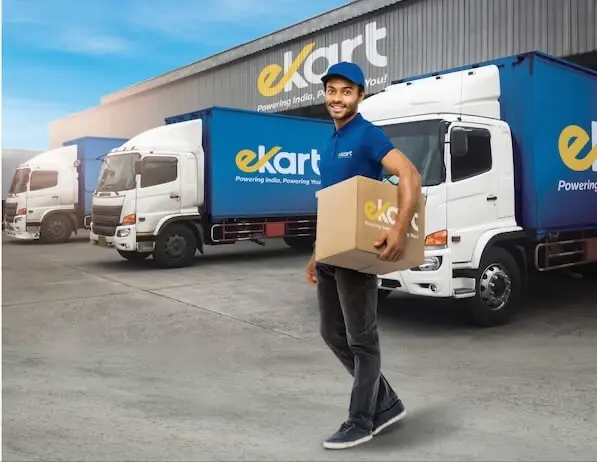
Ekart Franchise Cost: Detailed Capital Expenditure (CapEx) Breakdown
Starting an authorized standard delivery hub requires transparent financial planning across real estate, material-handling hardware, technology, security deposits, and operational liquidity buffers. Many new ventures falter because they account for initial set-up expenses but fail to retain a mandatory 60-day operational cash runway.
| Investment Component | Micro Delivery Hub (Tier 2/3 Town) | Standard Urban Station (Metropolitan) | Commercial Purpose & Terms |
|---|---|---|---|
| Refundable Security Deposit | ₹1,00,000 – ₹2,00,000 | ₹2,50,000 – ₹5,00,000 | Held by Instakart Services against COD collections and freight indemnity; refundable upon contract termination. |
| Facility Lease Advance | ₹60,000 – ₹1,50,000 | ₹2,00,000 – ₹4,50,000 | Commercial advance for ground-floor godown/office space (3 to 6 months rent equivalent). |
| Warehouse Fit-Out & Furniture | ₹1,50,000 – ₹2,50,000 | ₹3,00,000 – ₹5,00,000 | Heavy-duty sorting racks, roller conveyors, dispatch tables, parcel bins, fire extinguishers, and ergonomic packing setups. |
| IT & Surveillance Hardware | ₹1,00,000 – ₹1,80,000 | ₹2,00,000 – ₹3,50,000 | Industrial barcode handheld terminals, certified weight scales, desktop computers, thermal printers, and continuous 24/7 CCTV surveillance with 30-day cloud backup. |
| Working Capital Reserve (60 Days) | ₹2,50,000 – ₹4,00,000 | ₹6,00,000 – ₹10,00,000 | Crucial liquidity buffer to cover fuel reimbursements, driver wages, vehicle maintenance, and software licenses before monthly settlement disbursements. |
| Total Estimated Initial Outlay | ₹6,60,000 – ₹11,80,000 | ₹15,50,000 – ₹28,00,000 | Excludes outright vehicle purchases; assumes contracted or lease-based delivery vehicles. |
A vital operational reality to note is that Ekart does not demand recurring percentage-based franchise royalty fees. Unlike food and beverage franchises that collect 4% to 8% of gross revenues, logistics channel models focus on operational efficiency: your profit corresponds to margin retention after fixed warehouse rent, driver compensation, and vehicle running expenses are cleared.
Eligibility Criteria & Regulatory Document Checklist
Before submitting an application, prospective channel partners must clear operational, technical, and regulatory vetting to verify their ability to handle institutional parcel volumes.
1. Infrastructure & Location Suitability
The proposed hub property must be situated on a commercial or industrial street offering unhindered access for light commercial vehicles (such as Tata Ace, Mahindra Bolero Maxi Truck, or electric delivery vans). Facilities must offer a minimum carpet area of 500 to 1,000 square feet, clear loading/unloading docking frontage, reliable three-phase electrical connections with power inverter backup, and high-speed broadband connections capable of synchronizing live package tracking.
2. Business Entity and Legal Verification
While individuals can sign up as delivery riders, operating a standard delivery franchise requires a formal corporate structure. Ekart typically registers agreements under registered Sole Proprietorships, Limited Liability Partnerships (LLP), or Private Limited companies. Crucial statutory documentation includes:
- Identity & Address Verification: Valid PAN Card and Aadhaar Card of the proprietor, partners, or directors.
- Taxation & Enterprise Proof: Active GST Registration Certificate classified under freight handling, courier, or transport services, along with an MSME/Udyam Certificate.
- Financial Records: Audited balance sheets and Income Tax Returns (ITR) for the preceding 2 to 3 financial years, accompanied by the latest 6 months of current bank account statements validating liquid working capital.
- Premises Documentation: Registered commercial lease deed (valid for a minimum term of 24 to 36 months) or property ownership deed, accompanied by a dedicated commercial No Objection Certificate (NOC) from the landlord.
- Background Verification: Clean local police clearance certificates (PCC) for the primary applicant and key operational managers to safeguard consignment security.
Step-by-Step Guide: How to Apply for an Ekart Logistics Partnership in 2026
Navigating the onboarding procedure requires strict adherence to authentic corporate communication channels to avoid third-party brokers and unverified lead-capture pages.
Step 1: Determine Your Operating Model and Territory Feasibility
Assess logistics demand in your municipal district. Identify pin codes experiencing high eCommerce sales volume that may be underserved by existing fulfillment hubs. Determine whether you are registering as an individual delivery partner (Wishmaster) or applying with commercial warehouse infrastructure as a Channel Partner.
Step 2: Submit an Official Application via Authorized Portals
Access the authorized partner registration gateway through or the corporate partnership division at ekartlogistics.com. Select the relevant classification (“Channel Partner” or “Delivery Partner”). Submit business registration numbers, proposed warehouse geographic coordinates, warehouse square footage, and current balance sheet highlights.
Step 3: Preliminary Screening and Field Verification
Ekart’s regional network management team evaluates regional shipping density against existing infrastructure. If the requested pin codes demonstrate routing requirements, an area operations manager conducts an on-site audit of the commercial premises to assess road clearance, security features, fire safety compliance, and power infrastructure.
Step 4: Commercial Terms Agreement & Legal Signing
Upon site approval, applicants receive a formal Letter of Intent (LOI) delineating service scope, target parcel quotas, per-shipment commercial rates, and required refundable security deposit values. Legal franchise agreements are executed, and statutory documentation is filed with Instakart Services Pvt. Ltd.
Step 5: System Integration, Infrastructure Fit-Out, and Launch
The partner equips the facility with standardized IT hardware, barcoding scanners, and continuous CCTV coverage. Ekart provides access to its proprietary Enterprise Resource Planning (ERP) and logistics management systems. Staff members complete structured operational training covering scan-in workflows, delivery app protocols, dynamic route sequencing, and non-delivery reason (NDR) tracking, after which parcel dispatches commence.
Profit Margins, Commission Structures, and Earning Potential
Logistics earnings are determined strictly by consignment velocity, delivery success rates, and cost containment. Ekart pays channel partners on a structured per-packet performance matrix rather than providing a fixed monthly grant.
Per-Shipment Revenue Framework
Contractual payout matrices vary by regional terrain and density, but standard commercial benchmarks align with the following metrics:
- Standard Last-Mile Forward Delivery: ₹14 – ₹22 per successfully delivered parcel.
- Customer Return / Reverse Pickup: ₹10 – ₹18 per collected and verified consignment.
- Cash on Delivery (COD) Handling: Additional processing margin (typically 0.2% – 0.5% of COD value collected, or a fixed incentive per successful reconciliation).
- Heavy/Bulky Shipments: Specialized pricing models based on gross weight/volumetric weight, generating higher absolute handling payouts.
Monthly Income Scenarios: Net Operating Margins
For an individual Wishmaster Delivery Partner completing 60 to 90 parcels per working day, monthly gross collections typically amount to ₹28,000 to ₹42,000. After personal vehicle fuel and basic smartphone data maintenance (averaging ₹8,000 to ₹12,000 monthly), the net monthly take-home income ranges between ₹20,000 and ₹32,000, complemented by quarterly performance incentives during peak festive sales.
For a Standard Channel Hub Partner processing 1,200 to 2,000 packages daily across 2 assigned urban pin codes, the financial dynamic scales substantially:
Illustrative Monthly Hub P&L (1,500 Parcels/Day at 26 Days = 39,000 Parcels):
• Gross Operating Billing (@ Average ₹18/parcel): ₹7,02,000
• Delivery Staff Salaries & Fuel Allowances (14 Riders @ ₹22,000): (₹3,08,000)
• Facility Warehouse Rent & Commercial Utilities: (₹65,000)
• Station Supervisor & Data-Entry Operators (2 Staff): (₹40,000)
• Packaging, RTO Losses, Network Infrastructure, & Contingencies: (₹45,000)
• Estimated Net Monthly Operating Income (Pre-Tax): ~₹2,44,000
It is critical to note that net profit margins average between 10% to 15%. Maintaining this margin requires vigilant cost controls: high rider attrition, fuel price spikes without corresponding contractual escalation clauses, and package mishandling penalties can swiftly depress earnings.
Ekart Logistics vs Competitor Courier Franchises
Selecting the ideal logistics franchise requires matching your local geography and operational background against the primary supply chain players in the Indian market. While Ekart excels in guaranteed parcel density from the Flipkart marketplace, competing logistics providers operate under distinct commercial architectures.
| Evaluation Metric | Ekart Logistics | Delhivery Constellation | DTDC Courier & Cargo | Blue Dart Express |
|---|---|---|---|---|
| Core Operational Focus | Captive eCommerce distribution & last-mile fulfillment. | Open multi-client B2B/B2C freight and parcel delivery. | Broad-spectrum retail, domestic parcels, and document courier. | High-value enterprise express cargo, documents, and BFSI dispatches. |
| Demand Generation | Completely captive; system-assigned orders. | Mixed; system-assigned plus local client onboarding. | Independent; relies on local retail bookings and corporate tie-ups. | Brand-driven corporate accounts and retail walk-in dispatch counters. |
| Franchise Fee / Royalty | Zero royalty; performance deposit only. | Low upfront partner costs; transaction-based. | Upfront franchise fees apply (₹50k – ₹2 Lakh); setup royalties. | High initial security deposit and brand association fees. |
| Estimated Initial CapEx | ₹6 Lakh – ₹15 Lakh | ₹5 Lakh – ₹12 Lakh | ₹2 Lakh – ₹7 Lakh | ₹12 Lakh – ₹25 Lakh+ |
| Diversification Profile | Tied heavily to regional retail and platform shopping trends. | Highly diversified across external enterprise clients. | High diversification; less dependent on single marketplaces. | Resilient corporate demand; consistent premium margins. |
| Suitability | Volume-oriented fleet managers and supply-chain operators. | Entrepreneurs scaling regional parcel hubs with multiple service lines. | Small business owners seeking simple storefront counter setups. | Well-capitalized investors targeting premier corporate logistics. |
Scam Alert: Identifying Fake Ekart Franchise Portals and Fraudulent Fees
Due to the high search visibility and demand surrounding Ekart and Flipkart franchises, cyber fraud rings systematically launch fraudulent lead-capture domains mimicking genuine brand aesthetics. Prospective franchise partners routinely lose non-refundable sums ranging from ₹25,000 to over ₹2,00,000 to fraudulent recruitment operations.
Common Fraud Schemes to Recognize
- Phishing Domains with Lookalike URLs: Fraudsters register domains containing variations. The genuine corporate sites operate strictly under verified parent domains.
- Advance “Document Processing” & “Allotment” Fees: Unofficial brokers provide authentic-looking approval certificates and fake GST-stamped allotment letters, demanding quick payments via Google Pay, PhonePe, or personal savings bank accounts for “software registration” or “territory locking.”
- Guaranteed Fixed Monthly Rents: Scammers often approach commercial real estate owners with false guarantees of ₹60,000 to ₹1,50,000 per month in fixed lease income for their property if they pay an upfront security deposit.
Standard Corporate Verification Safeguards
Genuine corporate relationships adhere to strict compliance checks. Instakart Services never requests security deposit remittances prior to in-person physical premises audits, document vetting, and contract execution. Furthermore, official security deposits are payable strictly into verified corporate accounts bearing the official corporate registration details (CIN and verified entity name)—never into personal accounts or third-party payment links.
FAQs About the Ekart Franchise
Is Ekart a franchise or a delivery service partnership?
Ekart operates primarily on a Delivery Service Partner (DSP) and B2B vendor model rather than a traditional franchise. Commercial partners do not purchase brand licensing rights to service retail walk-in bookings; instead, they provide sorting infrastructure, management, and fleets to handle last-mile deliveries across assigned postal pin codes.
What is the minimum space required for an Ekart delivery hub?
A standard delivery hub requires between 500 and 1,000 square feet of ground-floor commercial space featuring unobstructed access for delivery vehicles, ample loading zones, and secure parcel storage facilities. Regional sorting hubs typically require 1,500 to 3,000+ square feet.
Does Ekart charge a franchise fee or royalty?
No, Ekart does not charge ongoing percentage-based royalty fees. The primary direct outlay paid to the parent entity is a refundable performance security deposit (ranging from ₹1 Lakh to ₹5 Lakh, depending on delivery volume). Capital is primarily deployed into warehouse infrastructure, IT hardware, and operational working capital.
How much does an Ekart delivery partner earn per month?
Individual delivery riders (Wishmasters) earn roughly ₹20,000 to ₹35,000 per month after deducting personal vehicle fuel expenses. Standard hub franchise owners who run team fleets typically clear net operating profits ranging from ₹60,000 to ₹2,20,000 monthly, depending on territory parcel density, fuel optimization, and delivery success rates.
How can I verify if an Ekart franchise allotment letter is genuine?
Verify whether communications originate exclusively from official email addresses (e.g., @ekartlogistics.com or @flipkart.com) rather than Gmail, Yahoo, or Outlook addresses. Cross-check your designated field executive at an operating regional Flipkart fulfillment hub, and never transfer money to individual bank accounts or third-party payment gateways.