Commercial Executive Summary
Eureka Forbes Limited does not operate a traditional business-format franchise that charges an upfront brand licensing fee or extracts ongoing revenue royalties. Instead, independent entrepreneurs partner with the brand through three distinct commercial channels: Authorized Retail Dealerships (Experience Centers), Authorized Service Partnerships (Customer Response Centers/ASPs), or Regional Institutional Distributorships.
Depending on the model, initial capital expenditure ranges from ₹6.5 Lakh for a localized service center to upwards of ₹30 Lakh for an exclusive brand showroom with stock inventory. Gross appliance margins sit between 12% and 22%, but the primary recurring driver of business value is water purifier consumable replacements (sediment filters, activated carbon, RO membranes) and Annual Maintenance Contracts (AMCs), which deliver gross margins of 25% to 35%.
Deconstructing the Eureka Forbes Commercial Model
Across Indian business listing portals, Eureka Forbes is frequently mislabeled as an “open franchise opportunity” alongside fast-food chains or retail courier desks. This classification is fundamentally inaccurate.
For over four decades, Eureka Forbes pioneered direct-to-consumer sales in India through direct sales agents—famously known as the “Eurochamp” network—before evolving into a modern omni-channel organization spanning modern retail, eCommerce, and decentralized regional service networks.
When an entrepreneur seeks to partner with Eureka Forbes today, they do not buy a turn-key franchise license. The commercial contract is governed by an authorized agency, dealership, or service vendor agreement. The brand’s revenue model does not rely on selling territory licenses to franchisees; rather, it depends on product throughput and service coverage to maintain brand loyalty against competitors like Kent RO, Livpure, and Havells.
Prospective partners must align their business strategy with one of three primary corporate verticals:
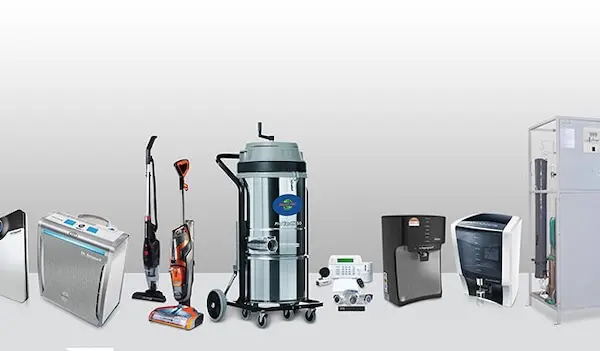
1. Authorized Retail Dealerships (Brand Experience Stores): These operators establish brick-and-mortar storefronts dedicated to displaying and demonstrating consumer goods—principally the Aquaguard water purification range, Forbes vacuum cleaners, and domestic air purifiers. Dealership revenue is derived strictly from trading margins: purchasing products at wholesale distributor transfer pricing and selling at consumer retail prices or institutional contract rates.
2. Authorized Service Partners (ASP / Customer Response Centers): This model represents a hybrid technical service agency. Instead of focusing on retail walk-in footfall, the partner manages a hub responsible for installing newly purchased machines, addressing service tickets assigned by Eureka Forbes’ centralized customer service systems, and conducting scheduled filter replacements. Service partners earn fixed labor ticket payouts, commissions on AMC policy sales, and margins on authorized consumable spares.
3. Regional Stockists and Institutional Supply Partners: Targeted at high-capital operators, this B2B format supplies regional multi-brand electronics outlets, hardware merchants, and commercial entities (hospitals, schools, offices) with water filtration plants and commercial hygiene equipment under the Forbes Pro division.
Capital Expenditure (CapEx) and Setup Economics
Launching a dedicated Eureka Forbes center requires careful allocation between fixed infrastructure assets and working liquidity. A critical error among first-time operators is committing their entire capital pool to showroom aesthetics, leaving insufficient working capital to bridge the 60-to-90-day cash flow gap inherent in consumable inventory turns and technician payroll.
| Capital Outlay Category | Authorized Service Hub (ASP) | Exclusive Retail Dealership | Operational Scope & Terms |
|---|---|---|---|
| Refundable Security Deposit | ₹1,00,000 – ₹2,00,000 | ₹3,00,000 – ₹5,00,000 | Paid directly to Eureka Forbes Limited to secure credit lines and spare part allocations. Fully refundable upon contract exit. |
| Storefront & Interior Fit-Out | ₹1,50,000 – ₹2,50,000 | ₹6,00,000 – ₹10,00,000 | Showroom branding, certified water demonstration stations, plumbing intake lines, storage racking, and customer seating. |
| Initial Stock / Inventory Purchase | ₹1,80,000 – ₹3,00,000 | ₹8,00,000 – ₹14,00,000 | Spares, filters, sediment cartridges, and membranes for ASPs; boxed consumer appliances for dealerships. |
| Diagnostic & IT Infrastructure | ₹80,000 – ₹1,20,000 | ₹1,20,000 – ₹2,00,000 | Digital pressure gauges, TDS meters, electronic water testing equipment, desktop terminals, barcode scanners, and CRM software. |
| Working Capital Reserve (90 Days) | ₹2,00,000 – ₹3,50,000 | ₹4,00,000 – ₹7,00,000 | Mandatory cash buffer for commercial rent, technician travel allowances, and bridging credit cycles before billing settlements. |
| Total Estimated Investment | ₹7,10,000 – ₹12,20,000 | ₹22,20,000 – ₹38,00,000 | Excludes commercial property purchase; assumes leased premises with 3 to 6 months advance rental deposit. |
Eureka Forbes does not charge a recurring franchise royalty percentage. Profitability is entirely dependent on operating efficiency: the spread between wholesale inventory cost and retail billing, minus warehouse rent, technician compensation, and local delivery transit costs.
Operating Unit Economics: Product Margins vs. AMC Annuity
Many prospective investors assume that selling new water purifiers is where the bulk of a dealership’s profits are generated. In practice, appliance retail margins are heavily compressed by competitive pressure from modern trade and eCommerce platforms such as Amazon and Flipkart. An exclusive dealer typically clears a gross margin of 14% to 20% on entry-level to mid-tier domestic purifiers, and up to 22% on premium alkaline and UV/UF units.
The true long-term enterprise value of a Eureka Forbes partnership lies in the aftermarket service ecosystem. Water purification is not a one-time consumer purchase; it is a lifecycle-dependent utility. A residential reverse osmosis system requires periodic consumable replacement every 9 to 12 months, including pre-sediment filters, activated carbon cartridges, and mineral enrichers, alongside membrane replacements every 24 to 36 months.
Authorized Service Partners capitalize on this cycle through two primary revenue engines:
1. Annual Maintenance Contracts (AMCs): Service hubs actively renew customer AMCs across their assigned territory. Standard annual consumer contracts range between ₹2,200 and ₹5,500 depending on coverage level (comprehensive vs. basic service). The partner earns commission allocations on the contract sale, combined with contracted fees for fulfilling scheduled preventive maintenance visits.
2. Spare Part Markups and Service Visit Fees: On out-of-warranty customer calls, service partners generate margins of 25% to 35% on genuine OEM replacement cartridges and electronic components (solenoid valves, booster pumps, SMPS adapters), in addition to fixed corporate-reimbursed labor fees for warranty jobs.
An authorized service center managing a base of 3,500 active household units across two municipal wards can generate a predictable, recurring monthly net operating profit of ₹75,000 to ₹1,80,000, provided technician attrition and call-escalation rates remain tightly managed.
Real-World Operational Pitfalls: Where Partners Struggle
Logistics and service audits reveal that unprofitable Eureka Forbes partnerships rarely fail due to lack of consumer brand awareness. Instead, failure typically stems from three specific operational blind spots:
Technician Attrition and Route Efficiency: A service partner’s margins are tied directly to technician productivity. If a field service technician completes only 3 to 4 home visits per day due to inefficient route planning or traffic congestion, the partner operates at a net loss on that wage head. Top-tier hubs group service tickets into tight geographic clusters, enabling technicians to complete 7 to 9 calls daily.
Parallel Market Counterfeit Parts: Authorized hubs face intense price competition from unorganized local repair shops selling counterfeit filter cartridges and generic membranes at half the cost of genuine Aquaguard parts. Successful partners retain customers by emphasizing certified water-purity testing, OEM warranty retention, and digital compliance logging via the brand’s official service portal.
Working Capital Exhaustion on Warranty Claims: Warranty repairs require replacing customer parts immediately using hub inventory, with reimbursement processed through corporate billing cycles. If an operator lacks the working capital to carry 45 to 60 days of parts inventory, their stock depletes, service turnaround times spike, customer dissatisfaction rises, and the brand reallocates service pin codes to competing centers.
Official Application Protocol: Step-by-Step Onboarding
Securing an authorized dealership or service agency requires navigating formal corporate verification rather than submitting open self-serve web forms.
Step 1: Territory Feasibility and Demand Mapping
Begin by evaluating existing market saturation in your targeted municipal district. Identify pin codes with newly developed residential communities, apartment complexes, and commercial offices that are currently underserved by existing authorized service providers.
Step 2: Formal Outreach via Corporate Channels
Submit an institutional business proposal directly through the corporate channel portal or present your portfolio in person at the nearest regional branch office. Avoid generic business broker directories. Key information required includes proposed showroom/hub square footage, financial solvency statements, and past experience in consumer electronics or service management.
Step 3: Territory Sales Manager (TSM) Field Audit
An assigned regional Territory Sales Manager (TSM) or Branch Service Manager will conduct an on-site physical evaluation of your proposed property. The audit inspects commercial zoning status, customer parking accessibility, street visibility, power backup reliability, and distance from existing authorized centers.
Step 4: Statutory Document Submission
Following site clearance, submit your compliance portfolio, including business registration papers (Sole Proprietorship, LLP, or Private Limited), active GSTIN certificate under retail or repair services, PAN details, three years of audited ITR statements, commercial lease deeds, and bank solvency references.
Step 5: Commercial Agreement Execution and System Integration
Upon commercial approval, the applicant executes the standard Dealership or Service Partner Agreement and deposits the refundable security fee directly into Eureka Forbes Limited’s corporate bank account. Field technicians and staff then complete mandatory product and water chemistry training, the hub is integrated into the central CRM ticketing network, and regional inventory is dispatched.
Investigative Fraud Alert: Unmasking Fake Dealership Syndicates
Due to Aquaguard’s high search volume, cyber syndicates run sophisticated fraud operations targeting prospective business owners. These bad actors set up search ads directing users to deceptive domain names.
The fraudulent funnel typically works as follows:
1. The applicant submits their contact details on an official-looking registration form featuring stolen corporate logos, executive signatures, and real company addresses.
2. Within 24 hours, a scammer calling from a virtual VOIP or personal mobile number poses as an “Executive Director” or “Territory Manager,” congratulating the applicant on territory pre-approval.
3. The applicant receives a forged Letter of Intent (LOI) bearing fake corporate seals, accompanied by an urgent request to pay a “Registration Processing Fee” or “Territory Reservation Bond” ranging from ₹25,000 to ₹1,50,000.
4. Once this initial payment is sent, the scammers demand further transfers for “Product Demo Units” or “GST Clearance Certificates” before severing all communication.
Don’t forget to check out other business opportunity: Adidas Franchise Cost in India
Mandatory Anti-Fraud Safeguards:
1. Verify the Beneficiary Account Name: Eureka Forbes Limited accepts commercial payments exclusively into verified corporate accounts bearing the company’s exact legal corporate name. The brand never accepts deposits via personal savings accounts, individual UPI handles, or payment links.
2. Check Email Domain Authenticity: Legitimate correspondence originates solely from corporate email addresses ending in @eurekaforbes.com. Communications from Gmail, Yahoo, or Outlook addresses are fraudulent.
3. Require In-Person Field Audits: Eureka Forbes never issues territory allotments or LOIs entirely over the internet without an in-person physical inspection of the commercial property by an authorized corporate representative.
FAQs About Eureka Forbes Dealership
Does Eureka Forbes offer an open franchise model in India?
No. Eureka Forbes does not operate a traditional business-format franchise model with upfront franchise fees and ongoing royalties. Commercial partnerships are structured as Authorized Retail Dealerships (Brand Experience Stores), Authorized Service Partnerships (ASPs), or Regional Stockist/Distributorships.
What is the minimum investment required to open an Authorized Service Center?
A standard Authorized Service Partner (ASP) center requires an initial capital outlay of ₹7 Lakh to ₹12 Lakh. This covers the refundable security deposit, commercial premises advance, basic service tooling and diagnostic equipment, initial spare parts inventory, and a 90-day working capital buffer for technician payroll.
How much profit margin can an authorized dealer expect?
Gross margins on new water purifiers and home appliances range between 14% and 22%. In contrast, margins on service calls, genuine consumable replacements (filters and membranes), and Annual Maintenance Contracts (AMCs) sit significantly higher at 25% to 35%.
What are the commercial space requirements for a dealership?
An Exclusive Retail Experience Store requires 250 to 500 square feet of prime ground-floor commercial frontage with adequate customer parking and high footfall. A dedicated Authorized Service Hub requires 400 to 800 square feet, prioritizing secure inventory storage, technical testing areas, and convenient vehicle access for service staff.