Commercial Summary: Balaji Wafers Dealership at a Glance
| Parameter | Commercial Requirement / Benchmark |
|---|---|
| Business Model | Traditional FMCG Stockist / Wholesale Distributorship (Non-Franchise) |
| Total Initial Capital Required | ₹12 Lakh to ₹25 Lakh (Varies by territory classification) |
| Security Deposit (Refundable) | ₹2 Lakh to ₹5 Lakh (Directly to Balaji Wafers Pvt. Ltd.) |
| Gross Trade Margin | 5% to 8% on billing value |
| Estimated Net Profit Margin | 2.5% to 4.5% (After fuel, labor, storage, and shrinkage) |
| Storage Space Requirement | 600 to 1,200 sq. ft. covered, moisture-free warehouse |
| Dedicated Logistics Setup | 1 to 2 light commercial delivery vehicles (e.g., Tata Ace / 3-Wheeler) |
| Estimated Break-Even / Payback | 18 to 30 Months (Volume and route dependent) |
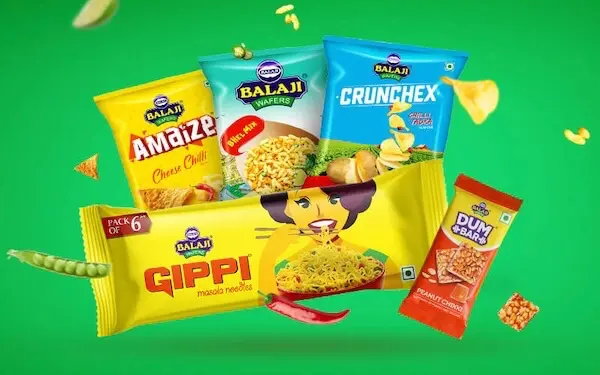
Distributorship vs. Franchise: Avoiding the Capital Classification Trap
Prospective entrepreneurs frequently confuse fast-moving consumer goods (FMCG) distribution networks with retail franchises. Balaji Wafers does not operate an outlet franchise system, nor does it collect royalty fees or marketing levies from distributors. Instead, the commercial arrangement functions on an authorized wholesale dealership structure.
In this framework, the distributor acts as an independent channel partner purchasing stock in bulk directly from manufacturing mother hubs or clearing and forwarding (C&F) agents. The primary economic objective is rapid inventory turnover across designated territory routes (kirana stores, supermarkets, and local bakeries), relying on steady gross margins and continuous cash flow rather than walk-in retail markups.
Keep Reading:
Gopal Namkeen Distributorship & Dealership Cost
Comprehensive Investment Breakdown and Working Capital Requirements
Securing a Balaji Wafers distribution route typically requires a total capital deployment ranging between ₹12 lakh and ₹25 lakh. The capital expenditure is heavily weighted toward operational assets and rotational inventory rather than real estate fit-outs.
A foundational portion of your capital (₹2 lakh to ₹5 lakh) is placed as a refundable security deposit with the parent company upon agreement execution. Physical infrastructure accounts for ₹3 lakh to ₹6 lakh, which includes acquiring or modifying a dry warehouse (600 to 1,200 sq. ft.) with adequate pallet racking, pest insulation, and billing workstations.
Logistics requires dedicated capital; an urban or semi-urban delivery route necessitates at least one commercial light vehicle, representing ₹3 lakh to ₹5 lakh in initial down payment or vehicle acquisition costs.
Working capital remains the lifeblood of snack distribution. Packaged snacks are high-velocity, bulky items with strict shelf-life tracking. A distributor must retain ₹6 lakh to ₹12 lakh in active liquid capital to maintain 7 to 10 days of rolling stock while absorbing common retail credit cycles of 3 to 7 days extended to high-volume kirana accounts.
Realistic Profit Margins, Operating Expenses, and ROI
While inflated marketing brochures often cite margins of 12% to 15%, the operational reality of the Indian FMCG sector dictates that branded snack distributor gross margins hover between 5% and 8%. Balaji Wafers maintains an aggressive value-pricing strategy—offering higher consumer quantity per price point compared to multinational competitors—which translates to high turnover velocity rather than wide percentage spreads.
Net margins typically settle between 2.5% and 4.5% after deducting vehicle diesel, driver and loader wages, warehouse rent, transit shrinkage, and occasional retail payment delays. Success in this category depends entirely on volume: a distributor turning over ₹25 lakh to ₹35 lakh per month generates steady net cash flows of ₹70,000 to ₹1,40,000 monthly, enabling a realistic payback period of 1.5 to 2.5 years.
Scam Advisory: Beware of Fraudulent Dealership Websites
Due to the high demand for FMCG distributorships, cyber syndicates frequently set up fraudulent domains impersonating Balaji Wafers Pvt. Ltd. These rogue websites feature fake application forms, issue forged allotment certificates, and demand registration or processing fees ranging from ₹25,000 to ₹2,00,000 via individual UPI IDs or personal savings accounts.
Official Protocol: Balaji Wafers never collects application processing fees through personal accounts or upfront digital transfers prior to physical field verification. All official communications, verification of godown premises, and agreements occur through regional sales officers and company-owned commercial banking channels. The only authentic portal for business communication.
Step-by-Step Distributorship Onboarding Process
Securing an authorized route follows a formal corporate verification process tailored to evaluate your local logistics capacity and financial solvency:
- Territory Feasibility and Gap Assessment: FMCG territories are strictly demarcated to prevent route cannibalization. Contact the regional Balaji Wafers Area Sales Manager (ASM) or submit the distributor inquiry form through their official website to identify vacant distributor beats.
- Statutory Compliance Verification: Prospective channel partners must possess a valid Goods and Services Tax (GST) registration, an active Food Safety and Standards Authority of India (FSSAI) state license, business entity registration (Firm/LLP/Pvt Ltd), MSME registration, and commercial bank statements spanning at least 12 months.
- Infrastructure and Vehicle Audit: Company sales executives conduct a physical inspection of your proposed godown space, assessing fire safety, flood risk, pest resistance, and vehicle loading/unloading clearance.
- Commercial Agreement and Security Deposit: Once vetted, the distributor signs the official trade contract, deposits the designated refundable security amount via direct RTGS to the corporate bank account, and places the opening stock order.
Competitive Benchmarking: Balaji Wafers vs. Major Snack Brands
Selecting the right distribution partner requires weighing working capital requirements against velocity and market penetration:
| Evaluation Metric | Balaji Wafers | PepsiCo (Lay’s / Kurkure) | ITC Ltd. (Bingo) | Haldiram’s |
|---|---|---|---|---|
| Total Initial Capital | ₹12 Lakh – ₹25 Lakh | ₹25 Lakh – ₹55 Lakh | ₹18 Lakh – ₹40 Lakh | ₹15 Lakh – ₹30 Lakh |
| Gross Distributor Margin | 5% – 8% | 4.5% – 7% | 5.5% – 8.5% | 7% – 11% |
| Territory Stronghold | Dominant in West & Central India; expanding North | Pan-India distribution dominance | Pan-India urban and rural footprint | Dominant North & West India presence |
| Product Velocity Focus | High-volume value pricing (larger packet grammage) | High pull via heavy media advertising | Broad institutional and retail reach | Diverse portfolio (namkeen, sweets, chips) |
| Warehouse Threshold | 600 – 1,200 sq. ft. | 1,000 – 2,000 sq. ft. | 800 – 1,500 sq. ft. | 700 – 1,200 sq. ft. |
| Working Capital Stress | Moderate; high local cash retail settlement | High; strict credit terms from institutional accounts | Moderate to High; multi-SKU management | Moderate; seasonal peaks during festivals |