Commercial Viability and Brand Overview
Founded in Surat, Gujarat, Atul Bakery has grown from a regional artisanal bakery into a prominent Western India quick-service baked goods brand. The network thrives on centralized manufacturing and daily cold-chain delivery of eggless cakes, savory snacks, artisan breads, and packaged confectionery.
For commercial retail investors evaluating the bakery sector in 2026, Atul Bakery functions primarily through a Franchise Owned Franchise Operated (FOFO) or hybrid retail dealership model, rather than an expensive on-site production setup.
Unlike full-scale production bakeries that mandate heavy baking machinery and master pastry chefs on the payroll, an Atul Bakery franchise outlet operates primarily as a finished-goods retail dispensary and light finishing counter.
This architectural setup substantially lowers setup complexity and equipment CapEx. However, profitability hinges entirely on territorial sales density, daily footfall conversion, inventory turnover, and strict mitigation of short-shelf-life pastry shrinkage.
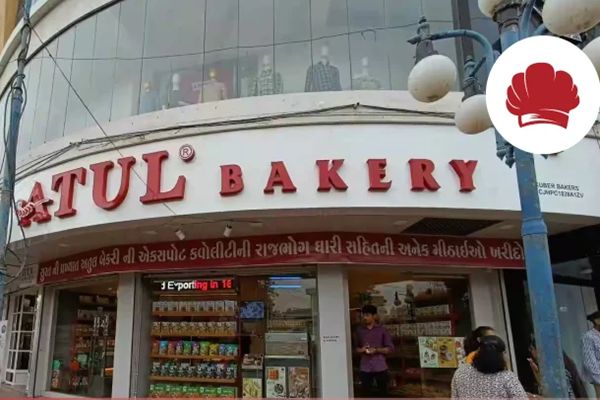
Atul Bakery Franchise Cost Breakdown (CapEx)
Prospective investors should anticipate an all-in capital expenditure between ₹15,00,000 and ₹22,00,000 for a standard 300 to 500 sq. ft. high-street unit. This estimate includes upfront brand licensing fees, architectural fit-outs, display refrigeration, point-of-sale hardware, commercial security deposits, and opening inventory.
In Tier-1 metro high streets or shopping mall kiosks, rental security deposits alone can push the required capitalization toward ₹25,00,000.
Below is a structured breakdown reflecting verified 2026 commercial retail figures, verified against standard industry fit-out expenses across Indian Tier-1 and Tier-2 retail corridors.
| Investment Component | Estimated Capital Requirement | Operational Terms & Nature |
|---|---|---|
| Brand Franchise Fee | ₹2,00,000 – ₹3,00,000 (+18% GST) | One-time, non-refundable licensing fee for 3–5 year operational rights. |
| Refundable Security Deposit | ₹1,50,000 – ₹2,00,000 | Paid to the franchisor/master distributor against inventory supply credit. |
| Commercial Interiors & Signage | ₹5,50,000 – ₹8,00,000 | HVAC, acrylic display counters, LED fascia, flooring, electrical load, and modular wall bays. |
| Commercial Refrigeration & Equipment | ₹3,00,000 – ₹4,50,000 | Pastry chillers, deep freezers, beverage coolers, commercial microwave/convection re-heaters, and billing hardware. |
| Initial Stock & Opening Packaging | ₹1,50,000 – ₹2,50,000 | Ambient dry bakes, frozen cake bases, dairy creams, packaged savories, and branded boxes. |
| Commercial Rental Deposit & Working Capital | ₹2,00,000 – ₹4,00,000 | Location-dependent landlord advance plus 60 days of operational liquidity buffer. |
| Total Initial Investment Outlay | ₹15,50,000 – ₹24,00,000 | All-in turnkey deployment for a 300–500 sq. ft. commercial storefront. |
Revenue Model, Gross Margins, and Monthly P&L
The unit economics of an Atul Bakery store rely on product-category tiering. Fresh cream cakes, customized birthday cakes, and impulse cold beverages offer healthy retail margins ranging from 30% to 35% on landed distributor cost.
Conversely, ambient daily essentials such as sliced sandwich breads, burger buns, and packaged cookies typically carry tighter wholesale discounts between 18% and 22%. A blended retail gross profit margin across all SKUs generally hovers around 28%.
Managing operational expenditure (OpEx) requires tight controls on store staffing and utility consumption. Modern display chillers and constant air conditioning run continuously during retail operating hours, generating monthly electricity bills between ₹18,000 and ₹35,000.
Under prudent owner-managed operations generating average daily sales of ₹18,000 to ₹25,000 (translating to ₹5.4 lakh to ₹7.5 lakh monthly gross revenue), the net operational profit margin stabilizes at 12% to 18%, translating to ₹65,000 to ₹1,20,000 in monthly net pre-tax cash flow.
| Metric (Monthly Projections) | Conservative Performance | Optimal Performance |
|---|---|---|
| Gross Monthly Sales | ₹4,50,000 (₹15,000/day) | ₹7,50,000 (₹25,000/day) |
| Cost of Goods Sold (COGS at ~72%) | ₹3,24,000 | ₹5,40,000 |
| Gross Operational Margin (~28%) | ₹1,26,000 | ₹2,10,000 |
| Store Rent (350 sq. ft. Prime Corner) | ₹45,000 | ₹65,000 |
| Staff Salaries (2–3 Counter Sales Executives) | ₹30,000 | ₹42,000 |
| Electricity & Refrigeration Power Costs | ₹18,000 | ₹26,000 |
| Product Expiry, Damaged Stock & Shrinkage | ₹10,000 | ₹14,000 |
| Local Marketing, Royalties & Sundries | ₹7,000 | ₹11,000 |
| Estimated Net Pre-Tax Monthly Profit | ₹16,000 (Break-even cushion) | ₹52,000 – ₹72,000 |
| Estimated Payback Period | 28 – 36 Months | 18 – 24 Months |
Scam Alert: Preventing Fraudulent Online Franchise Portals
A growing risk in India’s retail franchising sector is the proliferation of cyber syndicates creating spoofed brand websites, fake “Get a Franchise” application forms, and deceptive social media marketing funnels. Scammers often target inquiries around high-demand bakery names like Atul Bakery, Monginis, and Mio Amore, issuing fake allotment letters on fabricated letterheads and requesting quick UPI transfers or RTGS deposits for “site inspection fees,” “refundable brand security,” or “GST clearance.”
Legitimate franchisors never issue formal territorial approvals or demand non-refundable registration payments over WhatsApp or unverified bank accounts. Inquiries must always be conducted directly through verified corporate registrations, authenticated company domains, and in-person meetings at corporate headquarters in Surat or regional distribution hubs.
Prospective partners should cross-verify the bank beneficiary name against the registered business entity—Atul Bakery Private Limited or its legally designated regional master franchisee—before releasing any capital.
Critical Risk Factors: Shelf Life and Cold Chain Logistics
The primary pitfall in retail bakery franchising lies in perishable stock management. Because fresh cream pastries, puffs, and bread products have strict shelf lives ranging from 24 to 72 hours, inaccurate demand forecasting directly erodes bottom-line margins. While dry cookies, toasts, and packed snacks can stay on the shelf for weeks, a significant percentage of retail floor space is devoted to fresh bakes.
If inventory does not sell before its expiry date, the loss is absorbed either entirely by the franchisee or shared under strict return-of-damage (ROD) caps.
Before entering an agreement, evaluate the logistical proximity between your proposed retail outlet and the regional central commissary or primary warehouse. If the delivery van arrives late during peak morning hours, morning bread commuters turn elsewhere; if the cold chain is broken in transit during hot summer months, whipped dairy creams risk spoiling, hurting customer retention.
A franchise location located more than a two-hour delivery radius from the central production kitchen carries materially higher logistical vulnerability.
Explore Further:
Bakery Franchise Cost in India: CapEx, Margins, Model Comparison & Scam Alerts
Final Assessment: Is an Atul Bakery Franchise Right for You?
An Atul Bakery outlet is best suited for hands-on, owner-operator retail entrepreneurs with commercial storefronts in high-density residential nodes, university corridors, or commercial transit hubs. Given its lower entry CapEx compared to full-format cafés like Cafe Coffee Day or fast-food franchises like Subway, it offers a pragmatic, lower-risk entry into retail food service. Success, however, demands constant inventory discipline, proactive festive order marketing, and realistic net margin expectations that factor in utility overheads and product perishability from day one.