Starting a Bajaj Bike franchise or dealership is a popular choice for entrepreneurs who want to enter India’s rapidly growing automobile sector. Bajaj Auto is one of the country’s largest two-wheeler manufacturers, known for motorcycles such as the Pulsar, Platina, Dominar, Avenger, and CT series, along with commercial three-wheelers. Since Bajaj Auto primarily operates through an authorized dealership model rather than a traditional franchise system, the investment requirements vary according to the dealership format, city, showroom size, and workshop facilities.
Based on industry estimates, the Bajaj Bike franchise cost in India generally ranges from ₹50 lakh to ₹2 crore. This estimated investment includes the showroom setup, workshop equipment, security deposits, initial inventory, office infrastructure, branding, and working capital.
Entrepreneurs planning to establish a dealership in major metropolitan cities should expect investment requirements closer to ₹1.5 crore to ₹2 crore, while dealerships in smaller cities may be established with investments beginning around ₹50 lakh to ₹80 lakh. Since Bajaj Auto does not publicly publish a fixed dealership investment, applicants should always confirm the latest financial requirements directly with the company before making any commitments.
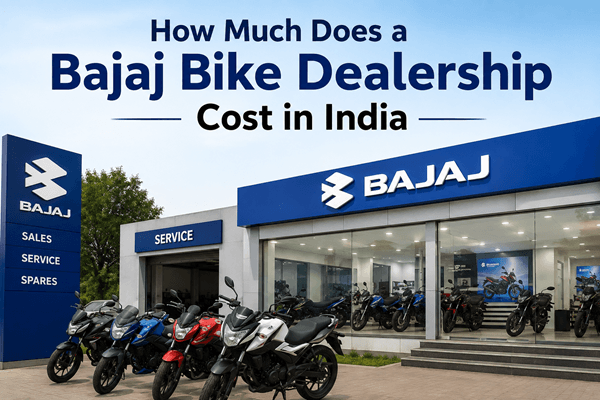
Bajaj Bike Franchise Cost Breakdown and Initial Investment
The overall Bajaj Bike franchise cost in India consists of multiple investment components rather than a single franchise payment. The largest expense is usually constructing and furnishing the showroom according to Bajaj Auto’s branding standards. Interior development, customer waiting areas, office cabins, display sections, signage, lighting, flooring, and digital infrastructure may require approximately ₹15 lakh to ₹40 lakh.
Workshop construction, diagnostic equipment, service tools, lifts, washing facilities, spare parts storage, and machinery may add another ₹20 lakh to ₹60 lakh depending on the dealership category. Initial motorcycle inventory generally represents the biggest investment, often ranging from ₹20 lakh to ₹80 lakh, depending on the number of models displayed and available for delivery.
Security deposits for commercial property may cost between ₹5 lakh and ₹30 lakh, while licenses, registration, insurance, computers, billing systems, and miscellaneous expenses may require another ₹3 lakh to ₹10 lakh. Collectively, these costs explain why the estimated Bajaj Bike franchise cost generally falls between ₹50 lakh and ₹2 crore.
Land, Showroom, and Workshop Requirements with Cost Considerations
One of the most important factors affecting the Bajaj Bike franchise cost in India is the availability of suitable land and infrastructure. Bajaj Auto generally prefers dealerships that include a dedicated showroom, customer parking, administrative office, spare parts section, and an authorized service workshop.
Depending on the dealership category and local market, entrepreneurs may require approximately 2,000 to 8,000 square feet of commercial space. Purchasing land can significantly increase the total investment, while leasing commercial property reduces the initial capital requirement but introduces recurring rental expenses.
Monthly rent for an appropriate dealership location may range from ₹1 lakh to ₹8 lakh, depending on the city and visibility of the property. Security deposits may require an additional ₹5 lakh to ₹30 lakh, increasing the initial Bajaj Bike franchise cost. Choosing a strategic location on a busy highway, major commercial road, or automobile hub can improve customer traffic and long-term profitability despite the higher property expenses.
Monthly Operating Costs and Business Expenses
After establishing the dealership, owners must prepare for ongoing operating expenses in addition to the initial Bajaj Bike franchise cost in India. Employee salaries for sales consultants, workshop technicians, accountants, service advisors, and management staff may range between ₹2 lakh and ₹8 lakh per month, depending on dealership size.
Monthly showroom rent, where applicable, may cost between ₹1 lakh and ₹8 lakh, while electricity, internet, security, maintenance, insurance, and software systems may require another ₹50,000 to ₹2 lakh every month. Marketing campaigns, customer events, promotional activities, and local advertising may add ₹50,000 to ₹3 lakh monthly.
Spare parts inventory replenishment, workshop consumables, and demonstration vehicle maintenance create additional operational expenses that vary with business volume. Altogether, monthly operating costs may range from approximately ₹5 lakh to ₹20 lakh, making proper financial planning essential for sustaining profitable dealership operations.
Profit Potential and Return on Investment
Many entrepreneurs evaluate the Bajaj Bike franchise cost in India by comparing it with the dealership’s long-term earning potential. Bajaj motorcycles enjoy strong demand across rural and urban markets due to their reliability, fuel efficiency, competitive pricing, and extensive service network. Revenue comes not only from motorcycle sales but also from spare parts, servicing, accessories, insurance commissions, financing partnerships, and extended warranty products.
A successful dealership located in a high-demand market may generate monthly sales worth ₹50 lakh to several crores, depending on customer demand and seasonal factors. Net profitability depends on vehicle margins, workshop income, operating expenses, and financing incentives.
Under favorable business conditions, many dealerships may recover their initial investment of ₹50 lakh to ₹2 crore within approximately four to seven years, although actual returns vary based on location, dealership performance, competition, and economic conditions. Investors should prepare detailed financial projections before making any investment decisions.
Hidden Costs and Financial Planning Before Opening a Bajaj Bike Dealership
Many aspiring entrepreneurs focus only on the advertised Bajaj Bike franchise cost in India, but successful dealership owners know that several additional expenses can influence the total investment. While the estimated startup requirement generally falls between ₹50 lakh and ₹2 crore, investors should also reserve extra funds for costs that are often overlooked during the planning stage.
For example, employee recruitment and training, showroom inauguration events, local promotional campaigns, demo motorcycles, insurance premiums, security systems, CCTV installation, computer hardware upgrades, and emergency repairs can together add ₹5 lakh to ₹15 lakh to the overall project budget.
Dealers should also maintain sufficient working capital of at least ₹10 lakh to ₹30 lakh to comfortably manage salaries, utility bills, spare parts procurement, and day-to-day operating expenses during the initial months when sales may still be growing. Businesses that underestimate these ongoing financial commitments often face unnecessary cash flow challenges despite having a strong brand partnership.
Before applying for dealership approval, entrepreneurs should prepare a detailed financial forecast covering both one-time and recurring expenses for at least the first twelve months. Proper budgeting ensures that the Bajaj Bike franchise cost remains manageable while providing enough financial flexibility to deliver excellent customer service, maintain adequate inventory, and support long-term business growth in an increasingly competitive two-wheeler market.
Is a Bajaj Bike Franchise Worth the Investment?
For entrepreneurs interested in India’s automobile industry, the estimated Bajaj Bike franchise cost in India of ₹50 lakh to ₹2 crore represents a significant but potentially rewarding investment. Bajaj Auto’s established reputation, nationwide customer base, wide motorcycle portfolio, and extensive service network make it one of India’s strongest automobile brands.
However, because dealership approval depends on multiple business criteria, interested applicants should verify the latest dealership policies, investment requirements, infrastructure standards, financial eligibility, and operational guidelines directly with Bajaj Auto.
They should also carefully evaluate expected land costs, showroom development expenses, workshop setup costs, staffing requirements, and monthly operating expenses before committing capital. A comprehensive business plan supported by realistic sales projections and sufficient working capital can improve the likelihood of building a successful Bajaj dealership capable of generating sustainable long-term returns.