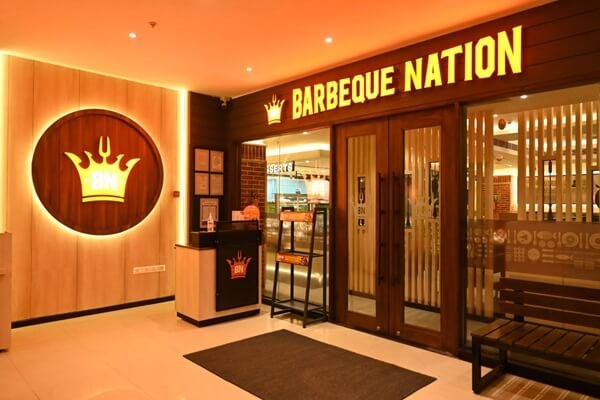
A widespread assumption among prospective restaurateurs and commercial property owners is that Barbeque Nation expands via traditional third-party franchises (FOFO/FOCO). However, Barbeque-Nation Hospitality Limited operates almost exclusively on a Company-Owned Company-Operated (COCO) framework across India.
The company funds, builds, and manages its own restaurants directly. Consequently, claims offering a turnkey “Barbeque Nation franchise” for a fixed fee are misleading, and aspiring restaurateurs must understand how the brand actually expands before committing capital.
Critical Advisory: Franchise Scam Warning
Several fraudulent websites, fake brokers, and social media campaigns circulate fraudulent forms demanding upfront “franchise approval fees,” security deposits, or documentation charges ranging from ₹2 lakh to ₹15 lakh under the guise of an allotment letter. Barbeque-Nation Hospitality Limited does not solicit or sell third-party franchise units to individuals in India.
Any website claiming to offer an open application portal for a Barbeque Nation dealership or retail franchise agreement is illegitimate. Any financial transaction or legal vetting should be verified solely through official corporate channels.
The Corporate Expansion Strategy: Property Leasing vs. Franchising
Rather than seeking franchisee-operators, the brand pursues aggressive real estate partnerships. Institutional developers and commercial retail property owners can partner with the company primarily through long-term commercial lease agreements or revenue-sharing arrangements.
In this arrangement, the property owner provides prime retail space—typically requiring between 4,000 and 7,500 square feet—while the company undertakes interior design, kitchen engineering, regulatory compliance, and staffing directly.
For independent entrepreneurs looking to launch a comparable live-grill or buffet concept under their own private label, setting up a casual dining buffet restaurant of this scale does indeed demand an outlay between ₹2.5 crore and ₹5 crore.
The capital expenditure is heavily front-loaded due to ventilation engineering, commercial refrigeration, exhaust scrubbing systems, and custom table-embedded pit infrastructure.
Independent Buffet Restaurant CapEx Breakdown
When engineering an independent buffet dining space with table-side live grills, commercial kitchen fit-outs and HVAC installations account for the highest expenditure line items. The table below outlines realistic capital allocation for launching a 5,000 sq. ft. casual dining buffet establishment.
| Investment Category | Estimated Outlay (₹) | Financial & Technical Description |
|---|---|---|
| Civil & Interior Fit-Outs | ₹80 Lakh – ₹1.40 Crore | Dining furniture, acoustic paneling, flooring, ambient lighting, and buffet counter construction. |
| Kitchen & Live-Grill Setup | ₹55 Lakh – ₹90 Lakh | Commercial combi-ovens, cold rooms, table-embedded induction/charcoal grill units, and stainless steel fabrication. |
| HVAC & Exhaust Systems | ₹30 Lakh – ₹60 Lakh | Heavy-duty kitchen hood exhausts, electrostatic precipitators (air scrubbers), fresh-air ducting, and central AC. |
| Statutory Compliance & Licensing | ₹5 Lakh – ₹25 Lakh | FSSAI central license, municipal health trade license, fire safety NOC, state pollution control clearance, and liquor licensing (state-dependent). |
| Initial Inventory & Buffer | ₹15 Lakh – ₹25 Lakh | Direct procurement of meat, dairy, dry groceries, beverages, tableware, and uniform consignments. |
| Operational Working Capital | ₹35 Lakh – ₹60 Lakh | Liquidity reserve for 3 to 6 months of utility bills, staff payroll, and facility maintenance reserves. |
| Total Estimated Capital Outlay | ₹2.20 Crore – ₹4.00 Crore | Excludes commercial real estate purchase or multi-month security deposits. |
Realistic Operating Margins and Unit Economics
Buffet dining models operate on high volume and inventory turnover. Unlike à la carte formats, raw material costs (COGS) are tightly managed through bulk institutional buying, though they remain substantial due to unlimited protein offerings. Cost of goods sold generally absorbs 32% to 38% of top-line revenue.
Manpower requirements are extensive because live grills require steady floor service, frequent skewer replenishment, and active buffet replenishment. Payroll typically accounts for 18% to 22% of revenue. When factoring in prime commercial rentals (12% to 15%), continuous high-capacity utilities (5% to 8%), and localized marketing, healthy casual dining buffet concepts achieve store-level EBITDA margins in the range of 14% to 20%.
Sustained weekday lunch occupancy via corporate group bookings remains the decisive factor between break-even operations and healthy net profitability.
Explore Further:
Bastian Franchise Cost in India: Reality Check, Ownership Model, and Luxury F&B Unit Economics
Alternative Casual Dining Investment Models
Investors seeking exposure to the Indian food and beverage landscape without developing an unbranded concept have several operational pathways to consider:
| Model Type | Control Level | Capital Risk | Viable Brand Examples |
|---|---|---|---|
| COCO Property Lease | Landlord / Passive | Low (Tenant absorbed) | Barbeque Nation, McDonald’s (Hardcastle/Westlife), Starbucks (Tata) |
| FOCO Franchise | Investor capital, brand managed | Moderate | Select regional casual dining and café chains |
| FOFO Franchise | Full operational responsibility | High | Specialty casual dining brands, multi-cuisine restaurant franchises |
| Independent Brand Launch | Complete autonomy & equity | High (Market dependent) | Proprietary live-grill buffet or cloud-kitchen enterprise |
Final Verdict for Serious Investors
Before preparing balance sheets or transferring funds to third-party intermediaries, prospective entrepreneurs must recognise that Barbeque Nation is not a retail franchise business in India. Commercial property holders should pitch site profiles exclusively to corporate acquisition teams for lease consideration.
Meanwhile, hospitality entrepreneurs with equivalent capital reserves should evaluate independent brand creation or established FOFO/FOCO casual dining networks that possess registered legal disclosure documents and verified franchisee networks.