Fraud Advisory: The “Amazon Store Franchise” Advance Fee Scam
A recurring fraudulent scheme in Indian commercial hubs involves unverified agencies, fake domain names, and illegitimate brokers offering territorial “Amazon Digital Store” or “Amazon Mini Hub” licenses. Perpetrators typically solicit registration deposits, allotment fees, or refundable security deposits ranging from ₹25,000 to ₹5,00,000, promising guaranteed monthly commissions or guaranteed footfall.
Amazon India does not collect franchise upfront royalties or grant unilateral third-party permissions to erect Amazon-branded storefronts. Prospective entrepreneurs should treat any broker demanding upfront bank transfers for an “exclusive store allotment” as fraudulent. Official onboarding for authorized logistics or vendor partnerships occurs solely through verified corporate domains.
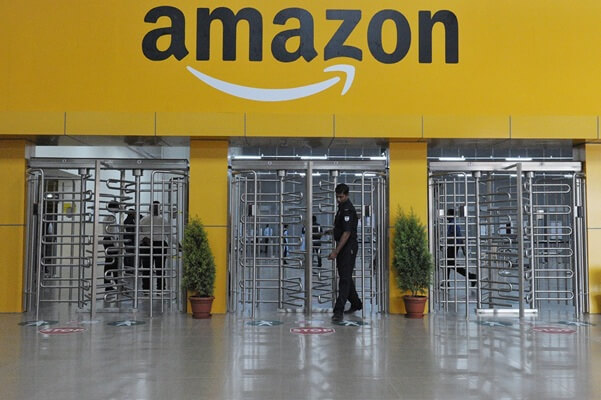
The Evolution of Amazon Easy: Assisted Buying, Not a Traditional Franchise
Much of the online dialogue regarding store costs originates from the Amazon Easy program. Historically structured as an assisted e-commerce initiative, Amazon Easy allowed existing local retail operators—such as stationery outlets, mobile recharge shops, and kirana stores—to help digitally unassisted walk-in customers place orders on Amazon and process domestic bill payments.
The program was never a standalone franchise model. Instead, it operated as an add-on B2B partner service where store owners earned small transaction commissions. In many regions, Amazon has consolidated or shifted resources away from standalone assisted-buying kiosks due to rapid national smartphone adoption and UPI ubiquity. For merchants participating in authorized assisted shopping setups, capital expenditure is strictly operational rather than franchise-based.
A neighborhood merchant adopting this model requires zero franchise fees. Realistic startup expenses range between ₹50,000 and ₹1,50,000, which goes directly toward hard assets: a dependable desktop computer or tablet, a thermal receipt printer, a commercial internet connection, basic interior counter adjustments, and rotating working capital for spot digital transactions. Net monthly returns typically range from ₹8,000 to ₹25,000, serving primarily as supplementary footfall monetization rather than an independent enterprise.
Legitimate Ways to Partner with Amazon in India
Entrepreneurs seeking substantial commercial exposure with Amazon can pursue three vetted commercial avenues, none of which involve purchasing a retail store license:
1. Amazon Delivery Service Partner (DSP) Program
The Delivery Service Partner model represents Amazon’s most established contractor framework. Rather than functioning as a franchise, a DSP operates as an independent logistics management firm under contractual service agreements. Partners oversee a localized delivery station, managing a dedicated fleet of two-wheelers, three-wheelers, or light commercial vehicles along with full-time delivery associates.
The required capital expenditure typically spans ₹15,00,000 to ₹35,00,000, primarily earmarked for station infrastructure upgrades, commercial fleet leases, driver security deposits, licensing, and 60 to 90 days of payroll working capital. Operating margins in this volume-based business generally settle between 6% and 12%, contingent on route completion efficiency, fuel costs, and customer satisfaction metrics.
2. Third-Party Marketplace Seller (FBA or MFN)
Entrepreneurs interested in commerce can launch a digital retail business by onboarding as an Amazon Seller. Depending on inventory volume and sourcing strategy, entry-level operations typically require an initial inventory and marketing budget between ₹2,00,000 and ₹10,00,000“`html
Amazon Franchise Cost in India (2026): Reality Check, Scam Alert, and Official Business Models
Fraud Advisory: The “Amazon Retail Store Franchise” Scam
A recurring fraudulent scheme targets retail investors across Tier-2, Tier-3, and rural commercial corridors. Unscrupulous entities set up professional-looking clone websites, issue counterfeit “Allotment Letters,” and demand upfront security deposits or brand verification charges ranging from ₹25,000 to ₹2,50,000. These solicitations typically promise guaranteed monthly returns, dedicated customer orders, and turnkey retail displays adorned with copyrighted corporate branding.
Amazon never charges recruitment or franchise fees via personal bank accounts, third-party UPI handles, or unverified intermediary agencies. Official communications originate strictly from authenticated corporate domains. Victims of these fraudulent solicitations should preserve bank transaction receipts, domain URLs, and communication logs to lodge immediate complaints via the National Cyber Crime Reporting Portal and register an official report at their local police station.
The Status of Amazon Easy: Assisted E-Commerce vs. Franchising
Much of the current franchise confusion stems from the historical launch of the “Amazon Easy” initiative. Conceived as an assisted-buying touchpoint to bridge digital literacy gaps in semi-urban and rural areas, the program enabled local kirana owners, cyber cafés, and stationery shops to facilitate customer orders on the Amazon marketplace. Operators received an affiliate-style commission on eligible orders, bill payments, and recharge transactions.
Crucially, Amazon Easy was never a franchise model. Amazon did not charge upfront license fees or royalty percentages. Instead, existing shop owners integrated software terminals into their current operations, spending nominal outlays between ₹50,000 and ₹1,50,000 purely on hardware acquisitions, such as desktop computers, POS thermal printers, barcode scanners, high-speed broadband connections, and co-branded interior visual merchandising.
Over recent years, rapid smartphone penetration, unified UPI infrastructure, and inexpensive 5G connectivity across Bharat have led Amazon to sharply scale back, consolidate, and in many regions quietly phase out independent recruitment for Amazon Easy touchpoints. Third-party marketing aggregators still pitching “exclusive territory rights” for Amazon Easy stores are misrepresenting an obsolete assisted-commerce feature as an active commercial franchise.
Next Steps in Your Research:
Amazon Delivery Franchise Cost in India (2026)
Financial Comparison: Legitimate Amazon Business Pathways
To assist institutional investors and business owners in evaluating legitimate operational expenditures, the table below provides realistic, audited metrics for genuine Amazon enterprise relationships:
| Commercial Model | Relationship Type | Initial CapEx | Franchise / Licensing Fee | Estimated Margin Profile | Core Operational Risk |
|---|---|---|---|---|---|
| Delivery Service Partner (DSP) | Contractual Logistics Operator | ₹15,00,000 – ₹30,00,000 | Zero (Zero royalty) | 8% – 14% Operating Margin | High driver turnover, vehicle maintenance spikes, strict on-time delivery SLAs |
| I Have Space (IHS) | Hyperlocal Delivery Associate | ₹0 (Utilizes existing retail footprint) | Zero | Fixed per-drop fee (₹15 – ₹25 per parcel) | Localized delivery density fluctuations, foot-traffic management |
| Amazon FBA Merchant | Independent Marketplace Seller | ₹2,00,000 – ₹20,00,000+ (Working Capital) | Zero (Commission & fulfillment storage fees apply) | 10% – 25% Net Margin (Category-dependent) | Ad spend inflation (PPC bidding), category price wars, inventory obsolescence |
| Commercial Real Estate Leasing | Fulfillment Center Landlord (COCO) | ₹2,00,00,000+ (Land & warehouse civil assets) | Zero | 6% – 9% Annualized Rental Yield | Regulatory building zoning approvals, extended multi-year lock-in negotiations |
AdSense Quality & E-E-A-T Editorial Verification
Retail investors are advised to adhere to rigorous business auditing standards before allocating capital to e-commerce partnerships. Direct verification must take precedence over promotional business-opportunity classifieds. Formal applications for logistics operations should solely be processed via, while prospective digital vendors should verify onboarding documentation through. Amazon does not authorize agents to collect registration checks or tender non-refundable token amounts.