Critical Scam Alert: Beware of Fraudulent Petrol Pump Allotment Portals
Neither HPCL nor its marketing representatives ever issue allotment letters via unsolicited emails, WhatsApp messages, or telephonic interviews. The Ministry of Petroleum and Natural Gas (MoPNG) and all state OMCs allocate dealerships exclusively through one unified national portal. Third-party domains imitating HPCL trademarks (such as clone sites demanding direct RTGS/NEFT transfers for “instant allotment approval”) are fraudulent operations. All non-refundable application charges and statutory evaluation fees must be transacted solely through the authenticated gateway on the official Chayan portal.
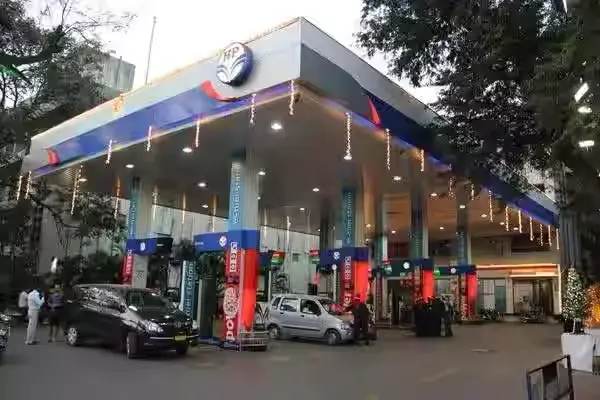
Understanding HPCL Operating Models: Dealership vs. COCO
Your capital expenditure (CapEx) depends almost entirely on the operational site format advertised by HPCL. Rather than a flat franchise royalty model, retail petroleum distribution in India divides capital commitments between the corporation and the dealer based on whether the land and hardware assets are privately provided or corporate-owned.
In a Dealer-Owned, Dealer-Operated (DODO / ‘B’ Site) setup, the applicant offers self-owned or long-term leased commercial land and funds the site development, underground civil structures, and compound boundary work. In contrast, HPCL supplies high-value technical assets—including underground petroleum storage tanks, electronic dispensing units, signages, and automated pump management hardware. The dealer bears the utility setups, administrative rooms, canopy sub-structures, and working capital inventory.
In a Corporation-Owned, Dealer-Operated (CODO / ‘A’ Site or ‘CC’ Site) arrangement, HPCL procures or leases the land and installs the core forecourt infrastructure. The selected dealer operates the asset upon posting a bidding fee, licensing deposit, and working capital cushion. Alternatively, under Company-Owned, Company-Operated (COCO) stations, HPCL retains complete ownership of fuel and civil assets; entrepreneurs enter strictly as outsourced labor and operations service providers via competitive performance tenders, carrying zero fuel inventory price exposure.
| Operating Model | Land Ownership | Underground Hardware & Dispensers | Estimated Dealer Out-of-Pocket CapEx | Working Capital Obligation |
|---|---|---|---|---|
| DODO (‘B’ Site) | Applicant (Freehold or 19+ yr lease) | Provided & maintained by HPCL | ₹45 Lakh – ₹1.2 Crore (Civil, canopy, power) | High (Dealer funds full fuel drops) |
| CODO (‘A’ / ‘CC’ Site) | HPCL (Acquired or direct lease) | Provided & built by HPCL | ₹25 Lakh – ₹50 Lakh (Entry bid + licensing) | Moderate to High |
| CFS (Corpus Fund Scheme) | Reserved Categories (SC/ST/Special) | Fully financed & developed by HPCL | ₹5 Lakh – ₹12 Lakh (Working capital assistance) | Subsidized/Assisted by OMC |
| COCO Service Provider | HPCL | HPCL | Nil (Requires bank guarantee & service deposit) | None (Paid commission on fuel throughput) |
Realistic CapEx Breakdown for 2026 (Excluding Land Purchase)
A frequent error among new investors is conflating initial eligibility funds with complete turnkey commissioning expenses. For regular urban or highway outlets, HPCL guidelines require applicants to demonstrate liquid or unencumbered financial resources of at least ₹25 lakh (₹12 lakh for rural outlets) simply to qualify for the draw of lots or bidding stage.
However, turning a vacant land parcel into a fully operational forecourt compliant with the Petroleum and Explosives Safety Organization (PESO) requires significant, tiered investment.
Keep Reading:
How to Start a Bharat Petroleum Petrol Pump in India [2026]
| Cost Component | Rural RO (Kisan Seva / Rural Outlets) | Regular RO (Urban & National/State Highways) |
|---|---|---|
| Application Fee (Non-refundable) | ₹100 (General/OBC) | ₹50 (SC/ST) | ₹1,000 (General/OBC) | ₹500 (SC/ST) |
| Fixed Non-Refundable Dealership Fee | ₹5,00,000 | ₹15,00,000 |
| Refundable Interest-Free Security Deposit | ₹50,000 – ₹1,50,000 | ₹5,00,000 – ₹10,00,000 |
| Civil Works, Forecourt, Paving & Driveway | ₹12,00,000 – ₹20,00,000 | ₹25,00,000 – ₹55,00,000 |
| Canopy, Electricals, Generator & Automation Room | ₹8,00,000 – ₹14,00,000 | ₹15,00,000 – ₹30,00,000 |
| Licensing & Clearances (PESO, NHAI, Fire NOC, Police) | ₹2,50,000 – ₹5,00,000 | ₹5,00,000 – ₹10,00,000 |
| Initial Rolling Working Capital (Fuel Loads + Lubes) | ₹10,00,000 – ₹15,00,000 | ₹20,00,000 – ₹40,00,000 |
| Total Project Setup Estimate (Excluding Land Cost) | ₹38 Lakh – ₹60 Lakh | ₹86 Lakh – ₹1.6 Crore+ |
Land Specifications and Statutory Clearances
Land acquisition or lease validation represents the most rigorous phase of site commissioning. HPCL advertises exact stretches on road coordinates; your land must strictly fall within the advertised corridor boundaries. A typical Rural Retail Outlet requires a plot size of approximately 800 to 1,200 square meters with a minimum road frontage of 25 to 30 meters.
Conversely, a Regular Retail Outlet on National or State Highways necessitates 1,500 to 3,000 square meters, with road frontage extending up to 35 to 45 meters to support heavy commercial vehicles, deceleration lanes, and adequate turning radiuses.
Before construction can begin, the site must clear extensive inter-departmental scrutiny. Key milestones include obtaining Non-Agricultural (NA) commercial conversion from the District Collector, geometric access approval and acceleration/deceleration lane clearance from the National Highways Authority of India (NHAI) or Public Works Department (PWD), site and layout approvals from the Petroleum and Explosives Safety Organization (PESO), and composite No Objection Certificates (NOCs) from the local fire, police, pollution, and forest departments. Complete clearance timelines typically span 9 to 18 months following the issuance of the Letter of Intent (LOI).
Dealer Margins, Unit Economics, and Payback Timeline
Unlike retail franchises that share gross merchandise value or top-line turnover, petroleum dealers work on a fixed volumetric commission structure mandated through OMC agreements. Profitability relies fundamentally on daily dispensing volume rather than per-litre price fluctuations.
Industry gross dealer commissions standardly yield approximately ₹2.50 to ₹2.65 per litre for Motor Spirit (Petrol) and ₹1.60 to ₹1.70 per litre for High-Speed Diesel (HSD). Additional revenue streams are derived from retail sales of branded automotive lubricants (such as HP Milcy and Racer4), which yield operating margins of 10% to 18%, as well as ancillary forecourt integrations such as automated vehicle washes, EV fast-charging leases, and retail convenience kiosks.
A highway retail outlet dispensing 150 kilolitres (KL) of diesel and 40 KL of petrol each month produces a gross dealer commission of roughly ₹3.5 lakh to ₹4.0 lakh. Operating expenses—including automated delivery losses (evaporation allowances), electricity tariffs for continuous pumping and high-mast illumination, forecourt staff salaries, bank credit processing charges, and site insurance—regularly consume 45% to 55% of gross earnings.
Well-located, high-volume retail locations that dispense upwards of 250 KL across all fuels generally achieve capital payback within 3.5 to 5 years, whereas lower-volume rural sites face operational amortization horizons of 6 to 8 years.
Step-by-Step Official Application Workflow (2026)
Securing an authentic HPCL dealership avoids private negotiations and follows a standardized, public administrative workflow:
1. Identification of Notification: Track published open advertisements in regional newspapers or on the unified portal. The notification details the district, highway coordinates, category reservation (Open, OBC, SC/ST, Defense, PH), and minimum required frontage.
2. Online Submission and Documentation: Register and submit the application during the active 30-day window. Upload verification documents proving Indian citizenship, educational qualification (minimum 10th pass for rural, 12th/Graduate for regular), title deed or notarized long-term registered lease agreement (Category 1: Own Land, Category 2: Firm Offer, or Category 3: Open Site), and bank liquidation certificates.
3. Scrutiny and Transparent Selection: HPCL conducts digital scrutiny of applications. If multiple eligible applicants apply under Category 1 for a single location, selection is decided via an automated, televised draw of lots or transparent electronic bidding for corporate-owned sites.
4. Field Verification of Credentials (FVC): The selected candidate pays a non-refundable verification deposit, after which HPCL’s divisional engineering committee carries out on-site technical inspection of the land, verifying boundary coordinates, overhead electrical line clear heights, and highway buffer zones.
5. Issuance of LOI and Construction: Following successful FVC and statutory clearance fee deposits, HPCL issues the formal Letter of Intent (LOI). The dealer then applies for multi-agency NOCs, PESO explosive licenses, and completes construction strictly in accordance with standardized HPCL engineering drawings prior to final fuel commissioning.