Starting an Arwa Chicken outlet in India generally requires a cost of about ₹7 lakh to ₹18 lakh investment depending on shop size, cold storage setup, and city category. This is a fresh chicken retail model where hygiene and freshness matter most, so the space requirement is usually 150 to 500 sq ft in a residential or market area.
The company provides branding, supply support, and shop design guidance. With steady daily customers, most outlets target break-even within 8 to 16 months. Arwa Chicken franchise cost in India ranges ₹7–18 lakh with 150–500 sq ft space requirement and expected break-even around 8–16 months.
Fresh chicken continues to be one of India’s fastest-growing food retail segments. As consumer demand shifts toward hygienic, professionally processed, and conveniently packaged meat, organized chicken brands are expanding rapidly across cities and towns.
Many aspiring entrepreneurs are searching for the Arwa Chicken franchise cost in India because they want to enter this growing market with an established brand instead of starting independently. Depending on the outlet size, city, and infrastructure, the estimated investment generally falls between ₹7 lakh and ₹18 lakh, making it suitable for both first-time business owners and experienced retailers looking to diversify into food retail.
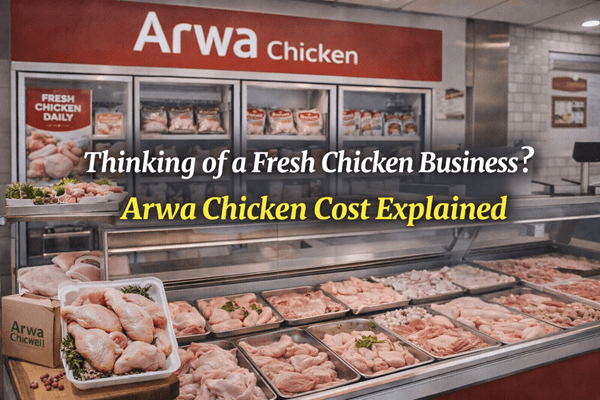
Arwa Chicken Business
Fresh chicken retail has strong daily demand because many households buy meat regularly instead of storing it for long periods. Branded meat outlets are becoming popular since customers trust standardized hygiene and fixed pricing. This makes organized chicken stores more attractive compared to traditional local meat shops.
Starting an Arwa Chicken outlet in India is a small to medium food retail business focused on hygienic fresh chicken sales. The approximate cost to open the store is around ₹7 lakh to ₹18 lakh investment, depending on the city, shop size, and refrigeration equipment.
The main expenses include franchise fee, deep freezers, cutting tables, weighing machine, interior washable walls, and initial stock purchase. You will need a space requirement of about 150 to 500 sq ft in a residential colony, market street, or near vegetable shops where daily grocery buyers visit.
The brand usually provides shop design guidance, branding materials, and product supply support. Basic training is given for cutting methods, hygiene standards, and customer handling. The business works on steady daily demand, so most owners aim to reach break-even within 8 to 16 months if the location has good footfall.
For eligibility, you only need the ability to manage daily operations and maintain cleanliness. Required documents typically include ID proof, address proof, GST registration, shop establishment license, and FSSAI food license. Monthly expenses include rent, electricity for refrigeration, helper salary, and stock replenishment. With proper service and freshness, the outlet can generate stable long-term income because chicken consumption remains consistent throughout the year.
Arwa Chicken Franchise Cost in India
Arwa Chicken outlets usually operate as fresh chicken retail counters or small processed poultry shops supplying cleaned and cut chicken to households, restaurants, and hotels. The business depends heavily on daily demand rather than seasonal sales, which makes it a steady food retail model in most Indian cities. Compared to large restaurant franchises, the investment is moderate because the store focuses on takeaway raw meat rather than dining infrastructure.
In 2026, the Arwa Chicken franchise cost in India typically ranges between ₹6 lakh and ₹18 lakh depending on shop size and storage capacity. The brand generally keeps franchise fees low while requiring proper hygiene setup and cold storage equipment.
Major expenses include refrigerated display counters, deep freezer and cold storage unit, shop interiors with washable walls, cutting equipment, weighing machine, initial stock purchase, and security deposit. A shop size of around 120 to 350 sq ft in a residential or market area is usually sufficient.
Fresh poultry retail operates on 12%–25% profit margins based on daily sales volume and supply rates. Because demand is regular, many owners reach break-even within 8 to 16 months. Overall, Arwa Chicken is considered a medium-investment daily-consumption food franchise suitable for steady monthly income rather than high seasonal profits.
Working capital is another important expense. Most new outlets should keep at least ₹2 lakh to ₹5 lakh available for employee salaries, electricity bills, transportation, packaging materials, marketing activities, and inventory replenishment during the first few months. Entrepreneurs should also prepare for local licensing costs and security deposits for rented commercial properties, as these can increase the total startup budget.
Why Arwa Chicken Is Attracting Entrepreneurs
Arwa Chicken has built its reputation by focusing on fresh poultry products, standardized hygiene practices, and reliable daily supply. Customers increasingly prefer purchasing chicken from organized stores where freshness and cleanliness are maintained consistently. This shift has created business opportunities for entrepreneurs who want to operate under a recognizable name instead of building customer trust from scratch.
The estimated Arwa Chicken franchise cost ranges from ₹7 lakh to ₹18 lakh, depending on store format and location. A compact neighborhood outlet generally requires a lower investment, while a premium retail store with larger display counters, refrigeration systems, and additional inventory can move toward the higher end of the investment range. Metro cities usually demand a larger budget because commercial rentals and interior expenses are significantly higher.
Choosing the Right Location Matters
Location plays a major role in determining whether a chicken retail business succeeds. Residential neighborhoods, busy marketplaces, apartment clusters, and roads with heavy daily traffic generally perform better because customers purchase fresh chicken frequently rather than occasionally. Easy parking, visibility from the main road, and accessibility can significantly improve daily sales.
Location also influences the overall franchise investment, which can range from ₹7 lakh in smaller towns to nearly ₹18 lakh in premium urban markets. Rental costs in metropolitan areas often consume a substantial portion of the startup budget, while Tier-2 and Tier-3 cities may allow entrepreneurs to establish similar outlets with considerably lower investment.
Daily Operating Expenses and Business Management
Running a fresh chicken outlet involves recurring operational costs beyond the initial investment. Electricity expenses remain relatively high because refrigeration equipment operates throughout the day. Employee salaries, inventory purchases, transportation, cleaning supplies, and packaging materials also contribute to monthly operating expenses.
Most business owners should plan a monthly operating budget of approximately ₹1.5 lakh to ₹4 lakh, depending on store size and sales volume. Efficient inventory management becomes essential because fresh poultry products have limited shelf life. Proper stock planning helps reduce wastage and improves profitability over time. Entrepreneurs who maintain excellent hygiene standards and customer service often develop repeat customers, creating more stable monthly revenue.
Total Investment Breakdown
The overall investment includes franchise fee, cold storage freezers, cutting equipment, weighing machines, and interior setup with washable surfaces. Refrigeration is the most important expense because maintaining product freshness is essential. Initial stock purchase and packaging materials also form part of the startup cost.
Space Requirement and Location
The space requirement ranges from 150 sq ft for a compact takeaway counter to about 500 sq ft for a full service shop. Residential colonies, near vegetable markets, and busy local streets work best because customers prefer nearby daily shopping options.
Profit Margin and Earnings
Fresh meat retail usually works on moderate but steady profit margin, typically around 18% to 30% depending on pricing and wastage control. Regular daily sales help maintain consistent monthly income.
Training and Support
The brand provides cutting process training, hygiene guidelines, and branding material support. Proper handling methods help maintain product quality and customer trust.
Eligibility and Documents
Basic eligibility includes maintaining cleanliness and managing daily stock. Required documents generally include ID proof, address proof, GST registration, shop license, and FSSAI registration.
Monthly Expenses
Regular costs include rent, electricity for refrigeration, helper salary, and daily stock replenishment. Power backup is recommended to protect stored products.
Challenges to Consider
Perishable stock requires careful management to avoid wastage. Local competition may affect pricing, and hygiene standards must always be maintained.
Long-Term Business Value
Demand for hygienic meat outlets is increasing in urban areas, and many owners expand into multiple branches once customer trust develops.
FAQ about Arwa Chicken Franchise India
Q. Do I need experience in meat cutting?
A. Not necessary, as training is provided, but understanding hygiene practices helps.
Q. How much monthly profit can I earn?
A. Many outlets aim for ₹40,000 to ₹1,20,000 monthly profit depending on location and demand.
Q. Is refrigeration compulsory?
A. Yes, proper cold storage is essential to maintain freshness and safety.
Q. Can I open in a small town?
A. Yes, daily consumption makes it suitable for both urban and semi-urban areas.
Q. Is demand seasonal?
A. Demand remains regular year-round with slight variation during festivals.