Brand Verification: Does an Official Axis Juice Franchise Exist?
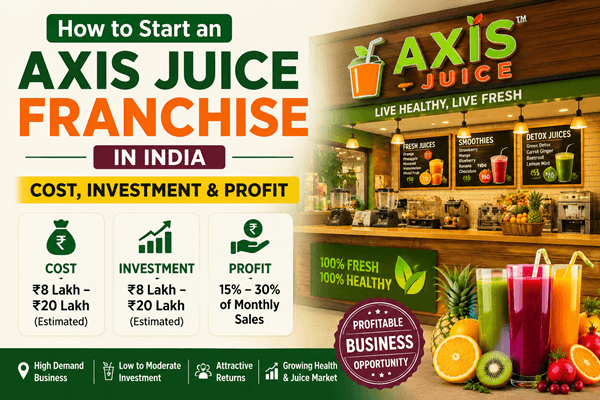
Investor Scam Alert: Protecting Capital from Unauthorized Franchise Brokers
The rapid expansion of the organized beverage segment in Tier-1 and Tier-2 Indian cities has led to a noticeable surge in franchise verification scams. Unaccredited aggregators and rogue middlemen create deceptive landing pages using brand trademarks to solicit digital application forms, upfront processing charges, and non-refundable site inspection fees under the guise of an “official brand allotment.”
Investors must observe strict procedural safeguards: never remit token payments, letter-of-intent (LOI) charges, or security deposits without physical verification at the brand’s registered office, direct verification of their corporate GSTIN and active FSSAI Central/State licenses, and formal legal vetting of a registered franchise agreement.
Any third-party consultant demanding rapid RTGS/NEFT transfers to personal or generic agency bank accounts to “reserve” a territory should be treated as an immediate fraudulent risk.
Realistic CapEx: Setting Up a Commercial Juice & Beverage Outlet
While an official Axis Juice franchise package cannot be verified, an entrepreneur aiming to launch a comparable modern juice and smoothie bar can benchmark setup costs against verified Indian Food and Beverage (F&B) industry standards.
A standard high-street or food-court juice bar spanning 200 to 500 square feet typically requires a total capital expenditure (CapEx) and pre-launch reserve between ₹10 lakh and ₹22 lakh, categorized across core operational buckets.
Heavy-duty commercial preparation machinery forms the technical foundation of a functional juice outlet. Industrial centrifugal extractors, commercial slow cold-press units, heavy-duty commercial blenders, ice flakers, deep freezers, and reach-in stainless steel chillers account for ₹3.5 lakh to ₹6 lakh.
Unlike domestic equipment, commercial-grade machinery must withstand continuous 10-to-12-hour duty cycles and corrosive citric acids without motor burnout or seal failure.
Leasehold improvements and aesthetic build-outs represent another major expenditure. Plumbing upgrades for multi-sink drainage, food-grade counter surfaces, grease traps, adequate electrical load sanctioning (often 10 kW to 15 kW three-phase connections for heavy refrigeration), digital menu boards, and moisture-resistant interiors run between ₹3 lakh and ₹6.5 lakh.
The balance is allocated to regulatory approvals (FSSAI State license, municipal trade license, fire safety compliance, GST registration), enterprise POS and inventory software, packaging and initial raw ingredient inventories, and a mandatory working capital reserve of ₹2 lakh to ₹4 lakh to absorb initial lease and payroll burn during store stabilization.
| Investment Component | Independent Outlet (250–400 sq. ft.) | National Beverage Franchise (Typical Benchmark) | Cost Drivers & Allocation Notes |
|---|---|---|---|
| Franchise / Brand Fee | ₹0 | ₹3,00,000 – ₹6,00,000 | Non-existent for independent setups; standard for licensed national brands. |
| Kitchen & Cold-Chain Equipment | ₹3,50,000 – ₹5,50,000 | ₹4,00,000 – ₹6,50,000 | Commercial blenders, cold-press units, deep chillers, ice machines. |
| Interior Civil & Counter Fit-out | ₹2,50,000 – ₹5,00,000 | ₹4,50,000 – ₹8,00,000 | Food-grade plumbing, electrical load enhancement, signages, customer counter. |
| Compliance, POS & Marketing | ₹75,000 – ₹1,50,000 | ₹1,50,000 – ₹3,00,000 | FSSAI, Trade License, GST, POS billing system, initial localized activation. |
| Initial Stock & Packaging Material | ₹60,000 – ₹1,20,000 | ₹1,00,000 – ₹2,00,000 | Custom printed biodegradable cups, sealing rolls, seasonal bulk fruit stock. |
| Working Capital Reserve (3 Months) | ₹2,00,000 – ₹4,00,000 | ₹2,50,000 – ₹5,00,000 | Rental buffer, staff payroll, utilities, early operational deficits. |
| Total Estimated Outlay | ₹9,35,000 – ₹17,20,000 | ₹16,00,000 – ₹28,50,000 | Subject to local commercial lease deposits and city tier. |
Operating Economics: Unit Margins, Wastage, and ROI Trajectory
The unit economics of a retail juice and smoothie bar present attractive headline gross margins that can mask significant operating risks if unmonitored. While raw ingredient gross margins across standard fruit juices and shakes generally range from 55% to 70%, bottom-line net profit margins in urban locations compress to 14% to 22% once fixed occupancy, energy, and labor overheads are absorbed.
The single greatest operational drain on a juice business is perishable inventory shrinkage. Fruit prices fluctuate sharply due to seasonal variations, heatwave conditions, and supply chain bottlenecks. Without strict daily stock rotation (First In, First Out), monitored cold rooms, and dynamic menu management that features in-season produce, spoilage and prep wastage can quickly surge beyond 10% to 15% of daily purchasing volume, eroding net profit margins.
Furthermore, running multiple high-draw compression refrigeration units alongside air conditioning results in substantial commercial electricity bills, routinely consuming 5% to 8% of monthly gross revenues.
For an efficiently managed store achieving steady monthly revenue between ₹2.5 lakh and ₹5 lakh in a high-footfall micro-market, typical payback periods range between 18 and 30 months. Achieving this break-even schedule requires balancing direct counter sales with off-premise aggregator orders on platforms like Swiggy and Zomato, while actively defending margins against typical 18% to 28% delivery commissions.
Similar Business Breakdowns:
Atti Cafe Franchise Cost in India (2026)
Frequently Asked Questions
Can I buy an Axis Juice franchise online in 2026?
No verifiable online franchise registration or authorized sales portal exists for Axis Juice as of 2026. Any website offering immediate franchise certificates or asking for application processing fees should be flagged as unverified and potentially fraudulent.
What business model does Axis Juice operate?
Available commercial records and outlet footprints indicate that Axis Juice operates direct local retail establishments centered in regional markets like Raipur, avoiding open third-party sub-licensing, multi-unit franchise leasing, or distributor networks.
How much does it cost to start an independent premium juice bar?
Launching an independent branded juice and health beverage bar in India requires a realistic capital outlay of ₹10 lakh to ₹18 lakh, which covers heavy commercial cold-press machinery, counter infrastructure, municipal licensing, and initial operating cash flow.