Executive Overview: Atti Cafe Investment Requirements
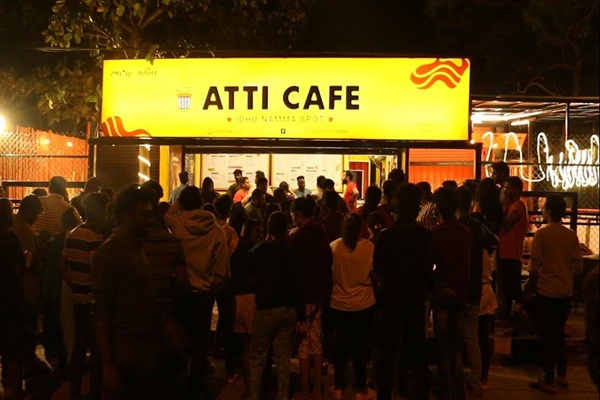
Decoding the Business Model: FOFO vs. The Franchise Fee Trap
Prospective investors frequently stumble into what industry analysts call the “franchise fee trap.” In casual conversation, newcomers often assume that a ₹15 lakh quote covers every operational expense necessary to open the doors. In authentic food and beverage arrangements, the one-time franchise or brand fee merely purchases the intellectual property license, territorial exclusivity, and opening training manuals; it does not finance civil contractor charges, interior woodwork, commercial espresso gear, or commercial property deposits.
Atti Cafe predominantly expands via the Franchise Owned, Franchise Operated (FOFO) system. In this setup, the franchise partner provides the entire capital investment, signs the lease agreement directly with the property owner, and manages day-to-day payroll. Unlike passive Franchise Owned, Company Operated (FOCO) or Company Owned, Company Operated (COCO) corporate leases where corporate headquarters manages store operations in exchange for a fixed dividend, FOFO demands daily oversight from the operator. Investors who treat this as a passive financial instrument without hands-on inventory auditing frequently experience cost overruns and margin erosion within the first six months.
Comprehensive Setup CapEx Breakdown
The table below provides a verified capital expenditure breakdown for prospective franchise owners, categorizing costs across compact express counters and dine-in cafe spaces. These figures incorporate required GST rates and realistic contractor pricing observed across Tier-1 and Tier-2 Indian commercial hubs.
| Investment Component | Express / Kiosk (150–300 sq. ft.) | Full-Service Cafe (400–800 sq. ft.) | Capital Nature |
|---|---|---|---|
| Brand Fee (18% GST Extra) | ₹5,00,000 – ₹6,50,000 | ₹8,00,000 – ₹9,50,000 | Non-Refundable Licensing |
| Interior Fit-Out & Civil Works | ₹3,00,000 – ₹4,50,000 | ₹6,50,000 – ₹10,000,000 | Flooring, Lighting, Counter, Signage |
| Machinery & Kitchen Equipment | ₹2,50,000 – ₹3,80,000 | ₹4,50,000 – ₹7,00,000 | Espresso Machines, Grinders, Blenders, Deep Freezers |
| Billing Hardware & Surveillance | ₹60,000 – ₹80,000 | ₹1,00,000 – ₹1,50,000 | Touch POS, Thermal Printers, CCTV Network |
| Initial Raw Material & Packaging | ₹80,000 – ₹1,20,000 | ₹1,50,000 – ₹2,50,000 | Beans, Syrups, Powders, Branded Paper Goods |
| Licensing & Legal Compliance | ₹30,000 – ₹50,000 | ₹40,000 – ₹60,000 | FSSAI State License, Fire NOC, Trade License, GST |
| Commercial Security Deposit (Variable) | ₹1,50,000 – ₹3,00,000 | ₹3,00,000 – ₹6,00,000 | Refundable Landlord Advance (Location Dependent) |
| Buffer Working Capital (3 Months) | ₹1,50,000 – ₹2,50,000 | ₹3,00,000 – ₹4,50,000 | Salaries, Utility Reserve, Working Runway |
| Total Estimated Capital Outlay | ₹15,20,000 – ₹22,80,000 | ₹27,90,000 – ₹41,60,000 | All-Inclusive Setup Cost |
Unit Economics, Cost of Goods Sold, and Net Margins
Beverage-centric quick-service restaurants enjoy favorable gross product economics, yet operational leaks can quietly drain overall profitability. In standard beverage operations, core menu items such as signature milk teas, cold brews, and flavored coffees yield a raw Cost of Goods Sold (COGS) of approximately 28% to 34%. Pre-packaged snacks, baked goods, and savory fast bites generally operate at higher ingredient costs, raising their unit COGS closer to 42%.
The true test of sustainability lies in operational overhead. Prime retail locations in high-density corridors demand monthly rentals of ₹50,000 to ₹1,80,000. When combined with commercial electricity bills driven by continuous HVAC and refrigeration usage (₹18,000 to ₹35,000 monthly) and a staff payroll covering three to five trained baristas and kitchen assistants (₹45,000 to ₹80,000 monthly), operational expenditures absorb roughly 40% of gross revenue. Factoring in corporate royalties of 5% on gross sales, a disciplined franchise operator in a high-footfall zone can realistically expect a net operating margin of 15% to 22%, yielding capital payback within 18 to 28 months.
Investor Advisory: How to Spot Franchise Impersonation Scams
The rapid rise of regional cafe and quick-service tea franchises across India has spawned a widespread cyber fraud network targeting retail investors. Fraudulent operators set up deceptive lookalike websites, run paid social media promotions, and pose as corporate development executives offering guaranteed returns. Prospective applicants are frequently coerced into transferring non-refundable registration charges ranging from ₹25,000 to ₹1,00,000 under the pretext of site inspections, document clearance, or commercial territory reservation.
Legitimate franchisors never issue formal territorial exclusivity or demand financial transfers via individual personal bank accounts or UPI payment handles before executing a physical franchise disclosure document and conducting on-ground property evaluations. Before disbursing any funds, demand to inspect the parent firm’s Ministry of Corporate Affairs (MCA) registration, cross-check their registered trademark under Class 43 for services providing food and drink, and independently contact existing franchise owners operating in nearby markets. Legitimate enterprise agreements are always executed via corporate accounts on registered non-judicial stamp papers.
Essential Reading:
Ajay’s Cafe Franchise Cost in India (2026)
Strategic Location Selection and Due Diligence Verdict
Securing a viable return on investment requires rigorous footfall analysis rather than reliance on brand momentum alone. An Atti Cafe outlet relies heavily on impulse consumer behavior, youth demographics, and foot traffic from corporate corridors or college clusters. Opening inside isolated residential lanes or poorly ventilated basements rarely delivers the transaction volume needed to break even on fixed rental liabilities.
For investors possessing liquid working reserves and the willingness to oversee daily cash registers and inventory shrinkages, an Atti Cafe franchise provides a viable entry into India’s expanding mid-tier cafe sector. Prospective partners must conduct independent legal checks on the commercial lease deed, insist on comprehensive barista training timelines, and verify all licensing parameters with local municipal corporations before committing seed capital.
Frequently Asked Questions
What is the minimum upfront investment needed for an Atti Cafe outlet?
A compact express kiosk demands a baseline investment of approximately ₹15 lakh, which covers initial licensing fees, interior development, commercial refrigeration, and a small working capital reserve. Full-service dining outlets with extensive seating routinely require ₹28 lakh or more.
Does the franchisor provide staff hiring and training support?
Corporate management provides specialized training curricula for baristas and service staff covering beverage recipes, POS handling, hygiene protocols, and machine calibration. However, recurring recruitment and daily employee salary liabilities remain the sole responsibility of the franchise owner.
What licenses are required before launching an outlet in India?
Every commercial store requires an FSSAI State Food License, a local municipal Trade License or Shop and Establishment registration, a dedicated GST registration, and a Fire Safety No Objection Certificate (NOC) depending on square footage and state municipal bylaws.
Can an Atti Cafe franchise operate successfully in Tier-2 and Tier-3 towns?
Tier-2 and Tier-3 urban markets frequently offer higher operational margins due to lower commercial rental structures and reduced labor expenses. Success in smaller markets depends on situating the outlet along central market high streets, prominent coaching hubs, or nearby transit nodes.