The 2026 Reality Check: Is Al Baik Franchise Available in India?
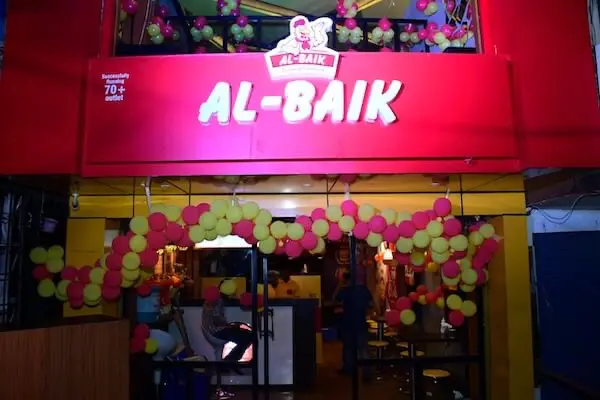
Scam Warning and Trademark Vulnerabilities
The Indian fast-food sector faces severe scam risks driven by the popularity of the Al Baik name. Unauthorized brokers and fraudulent portal websites routinely run paid advertisements promising lucrative single-unit and multi-unit franchise territories. These operators solicit advance “brand booking fees,” non-refundable site inspection charges, and stamp-duty documentation fees ranging from ₹1,00,000 to ₹5,00,000 via digital payment links. Because no corporate entity in Saudi Arabia authorizes these agreements, funds transferred to these illicit brokers are unrecoverable, leaving investors with null contracts and severe financial losses.
Furthermore, investing in domestic brands using the Al Baik moniker carries ongoing intellectual property exposure. Indian commercial courts, from the Intellectual Property Appellate Board to regional district courts, have witnessed ongoing litigation involving foreign cross-border trademark rights and conflicting domestic registrations across Class 29 and Class 43. When franchisees invest capital into storefront fabrication, signage, and localized promotions under a contested brand, adverse court injunctions can mandate immediate re-branding or storefront closures at the franchise owner’s personal expense.
Official Saudi Chain vs. Indian Namesakes vs. Independent QSR
Before allocating seed capital, business owners must evaluate whether to enter a licensing agreement with a domestic namesake or construct an independent brand from scratch. The comparison below clarifies operational rights, legal vulnerabilities, and capital expectations.
| Assessment Metric | Original Saudi ALBAIK | Domestic Indian “Al-Baik” Entities | Independent Fried Chicken QSR |
|---|---|---|---|
| Franchise Availability | Unavailable (Corporate-Owned Only) | Locally Available via Domestic Licensors | 100% Proprietary (Self-Owned) |
| Upfront Brand/Franchise Fee | ₹0 (Does Not Offer Franchises) | ₹3,00,000 – ₹6,00,000 (Varies by Operator) | ₹0 (Capital Retained for Working Reserve) |
| Estimated Initial CapEx | Not Applicable | ₹15,00,000 – ₹28,00,000 | ₹18,00,000 – ₹45,00,000 |
| Intellectual Property Security | Zero Access | Medium to High Legal Risk (Court Injunctions) | Absolute (Sole Proprietor / Pvt Ltd Trademark) |
| Supply Chain Dependencies | Proprietary Import Network | Domestic Vendor Contracts & Pre-mixes | Open Commercial Market (Direct Sourcing) |
Realistic Capital Expenditure (CapEx) for a Fried Chicken Concept
Entrepreneurs intending to capture the lucrative broasted chicken market without legal friction typically launch an independent quick-service restaurant (QSR). Building a commercially viable kitchen that matches high-output standards requires substantial technical planning and specialized equipment rather than superficial decorative spending.
The core capital allocation centers on heavy commercial kitchen equipment, which ranges between ₹8,00,000 and ₹16,00,000. Producing pressure-fried chicken with tender interiors and crisp coating demands dedicated commercial pressure fryers (such as Henny Penny or equivalent industrial open fryers), deep-freezer storage for marinated proteins, commercial blast chillers, stainless steel work surfaces, and industrial exhaust hoods equipped with electrostatic precipitators to clear local municipal inspections. Civil plumbing, grease traps, and heavy commercial three-phase electrical cabling typically consume an additional ₹2,00,000 to ₹4,00,000.
Storefront branding, POS hardware, counter aesthetics, and customer seating require an investment of ₹4,00,000 to ₹10,00,000 depending on real estate footprint. A compact delivery-first cloud kitchen of 300 square feet keeps civil modification costs at the lower boundary, while a prominent 800-square-foot dine-in high-street unit naturally reaches the upper threshold. Statutory compliance, including central FSSAI state licensing, local municipal health trade licenses, fire safety clearance, and GST registration, demands an initial budget of ₹80,000 to ₹2,50,000.
Operating Costs (OpEx), Unit Economics, and Margins
Sustaining profitability in India’s competitive poultry QSR sector depends heavily on raw material cost management and utility oversight. Food costs represent the largest ongoing operational liability. Broiler chicken, specialized breading blends, marinades, high-smoke-point frying oils, and branded leak-proof packaging routinely account for 38% to 46% of gross sales value. Frequent volatility in local poultry markets and edible oil commodities requires tight portion control and strict inventory turnover protocols.
Operational commercial rent and personnel expenses form the secondary layer of fixed costs. Securing a prime ground-floor retail location with steady foot traffic commands a monthly outflow of ₹50,000 to ₹1,80,000, typically requiring an upfront commercial security deposit equivalent to three to six months’ rent. Operating staff—consisting of specialized fryer cooks, kitchen prep hands, counter supervisors, and utility cleaners—entails a monthly payroll of ₹1,10,000 to ₹2,80,000, depending on operating shifts and city tiers.
Third-party food delivery aggregators like Swiggy and Zomato represent an essential revenue pipeline but compress unit margins. Platform commissions range from 18% to 28% plus applicable taxes on discounted gross order volumes. When factoring in platform listing fees, commercial utility consumption (continuous refrigeration, three-phase power, commercial LPG banks), and local customer acquisition, healthy independent outlets generate an operational EBITDA margin between 14% and 22%. Outlets maintaining controlled kitchen labor and consistent order volume generally achieve store-level payback within 14 to 20 months.
Recommended Guides:
Biryani by Kilo Franchise in India
Strategic Alternatives: How to Enter the QSR Market Safely
Entrepreneurs looking to enter the fast-food space should avoid chasing unauthorized brand representations. Business owners can consider verified franchise networks across established international and Indian QSR chains, such as KFC (operated in India under master franchise partners Devyani International and Sapphire Foods via strict corporate selection), ChicKing, Meat and Eat, or Five Star Chicken. These established franchisors operate structured franchise agreements with audited operational standard operating procedures (SOPs).
Alternatively, the most secure long-term strategy remains establishing a proprietary regional brand. By registering an authentic, non-conflicting trademark through the Controller General of Patents, Designs and Trade Marks (CGPDTM) and retaining direct ownership of spice formulations, an entrepreneur safeguards their capital from third-party trademark litigation while maintaining complete control over retail margins, supplier selection, and future franchise development.
Frequently Asked Questions
Can I get an official franchise of Saudi Arabia’s ALBAIK in India?
No. ELBAIK Food Systems Company S.A. operates on a corporate-managed model and does not license third-party master or single-unit franchises anywhere in India.
Why are there restaurants named “Al-Baik” operating in Indian cities?
Outlets operating across India under the Al-Baik name are run by separate, domestic Indian entities that have secured or applied for local trademark registrations. They have no corporate partnership, recipe ownership, or supply-chain links to the Saudi Arabian brand.
What is the total investment to start an independent broasted chicken QSR?
A standard 400 to 800 sq. ft. independent fried chicken outlet in India requires a capital investment between ₹18 lakh and ₹38 lakh. This budget covers commercial pressure fryers, cold storage infrastructure, kitchen ventilation, civil interiors, initial inventory, and regulatory licensing.
How can I verify if a food franchise offer is authentic?
Always verify the franchisor’s corporate registration on the Ministry of Corporate Affairs (MCA) portal, demand an active trademark registration certificate in Class 43, inspect operational company-owned outlets in person, and never deposit advance application fees to personal bank accounts or unverified third-party websites.