The Franchise Fee Trap: Does BigBasket Actually Sell Retail Franchises?
Prospective entrepreneurs evaluating a BigBasket franchise cost in India encounter widespread estimates citing an entry-level investment of ₹10 lakh to ₹30 lakh with a nominal franchise fee of ₹2 lakh to ₹5 lakh. In practical business terms, this represents a fundamental misunderstanding of the brand’s operational infrastructure.
Supermarket Grocery Supplies Pvt Ltd and Innovative Retail Concepts (operating under the Tata Digital umbrella) do not function like legacy walk-in supermarket chains such as Reliance Smart Point or Spencer’s. Instead, BigBasket’s retail engine is powered by centralised distribution centers, localised micro-fulfillment centres (dark stores), and its physical automated kiosk network.
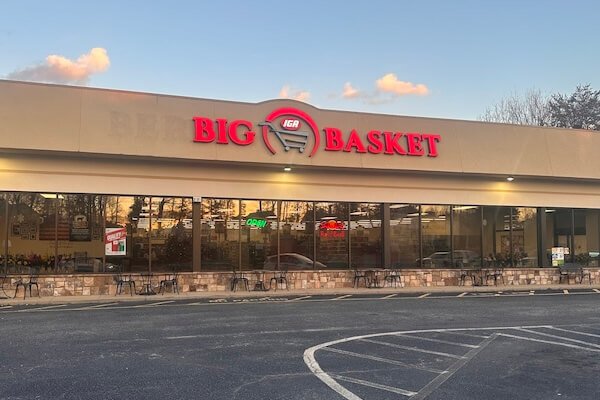
The vast majority of quick-commerce and scheduled delivery facilities run on a Company-Owned, Company-Operated (COCO) architecture or specialised third-party 3PL logistics agreements. When independent investors seek out a retail “franchise,” they frequently run into third-party aggregators selling fictitious rights.
BigBasket does not issue standardized retail store franchise agreements to individual walk-in merchants on the open market. Capital deployment in this ecosystem happens through commercial property leasing, fleet logistics partnerships, or wholesale farm/FMCG vendor onboarding.
Urgent Scam Alert: Fake Franchise Portals & Unauthorized Allotment Letters
Cybercrime units across India have flagged dozens of cloned domains (such as bigbasketfranchise.org, bb-dealership.in, or similar variations) soliciting refundable security deposits and application fees ranging from ₹25,000 to ₹3,00,000. BigBasket explicitly states that it never charges application processing fees via personal UPI handles, unverified bank accounts, or instant messaging platforms.
Any formal agreement originating from an @gmail.com or non-official corporate domain is fraudulent. Tata Group business dealings follow strict corporate legal onboarding without cash deposits or advance registration levies.
Legitimate Engagement Models vs. Traditional Retail Franchises
To evaluate where business capital actually fits, investors must distinguish between conventional franchise ownership and enterprise partner models. The table below delineates the structural differences across investment, operational autonomy, and commercial risk.
| Commercial Parameter | Fictional “Retail Franchise” Model | Real-World Fulfillment / Dark Store Partner | Property Landlord / Warehousing Lease |
|---|---|---|---|
| Operating Structure | Franchisee-Owned, Franchisee-Operated (FOFO) grocery storefront | Third-Party Logistics (3PL) or dedicated hub handling picking/delivery | Company-Leased, Company-Operated (COCO commercial lease) |
| Upfront Brand / Franchise Fee | ₹2,00,000 – ₹5,00,000 (often cited on unofficial blogs) | Nil. Performance bank guarantees (PBG) or security deposits apply | Nil. Landlord receives commercial advance/security deposit |
| Indicative CapEx Requirement | ₹10 Lakh – ₹30 Lakh | ₹25 Lakh – ₹65 Lakh (handling equipment, staging, fleet, backup power) | ₹15 Lakh – ₹40 Lakh (civil modification, flooring, industrial load compliance) |
| Inventory Ownership | Merchant purchases and risks unsold stock expiry | Zero inventory ownership; stock remains corporate-owned | Not applicable; strictly real estate leasing |
| Revenue & Margin Profile | 12% – 18% gross margins on wholesale FMCG | Fixed management fee + per-order pick-and-pack payout | Predetermined commercial monthly rental yield (8% – 11% annual ROI) |
Realistic Industry CapEx: What Setting Up a Grocery Fulfillment Hub Actually Costs
When entrepreneurs consult business feasibility figures for an independent dark store or quick-commerce hub operating within an e-grocery framework, capital expenditure extends well past basic shelving. A functional micro-fulfillment center covering 1,200 to 2,500 square feet demands heavy technological, climate-control, and operational investments to maintain strict service level agreements (SLAs).
| Expense Category | Realistic Setup Outlay (INR) | Operational Description & Industry Standards |
|---|---|---|
| Civil Works & Flooring | ₹3,50,000 – ₹7,00,000 | Heavy-duty epoxy flooring, partitioned loading bays, and staff staging amenities. |
| Cold Chain & Multi-Zone Storage | ₹6,00,000 – ₹14,00,000 | Commercial deep freezers (-18°C) for frozen foods and chillers (2°C to 8°C) for dairy, produce, and meats. |
| Heavy Racking & Material Handling | ₹4,00,000 – ₹8,50,000 | High-density industrial multi-tier slotted angle shelving, pallet jacks, and plastic crates. |
| Tech Infrastructure & Power Redundancy | ₹3,00,000 – ₹6,00,000 | High-speed industrial Wi-Fi networks, enterprise handheld barcode terminals, CCTV compliance, and 15–25 kVA generator backups. |
| Statutory Approvals & Compliance | ₹50,000 – ₹1,50,000 | FSSAI Central/State Food Safety License, local municipal trade license, fire safety clearances, and GST compliance. |
| Total Estimated Setup CapEx | ₹17,00,000 – ₹37,00,000 | Excludes real estate lease advances and operational working capital buffers. |
Working Capital, OpEx, and Realistic Margin Expectations
Online guides frequently tout gross margins of 25% to 35% on branded FMCG goods. In grocery distribution, such figures are unrealistic for packaged national brands (HUL, ITC, Nestlé), which rarely exceed 8% to 14% at distributor parity. While in-house private labels (such as BB Royal, Fresho, and BB Home) deliver higher gross margins of 28% to 38%, they also carry elevated inventory turn risks and perishability shrinkage.
In a service-partner or fulfillment hub model, profitability is dictated by throughput velocity rather than retail markups. A typical hub maintaining a daily handling volume of 700 to 1,500 orders incurs significant recurring monthly operational expenses (OpEx):
Commercial lease costs range widely across Tier-1 and Tier-2 geographies. In metropolitan centers like Mumbai, Bengaluru, and Delhi-NCR, prime accessible ground-floor space commands ₹65 to ₹110 per square foot, translating to monthly rent between ₹80,000 and ₹2,20,000. Skilled shift supervisors, warehouse pickers, and security staff account for a payroll burden of ₹1,40,000 to ₹3,00,000 per month depending on team headcount.
Uninterrupted three-phase commercial electricity for industrial refrigeration and climate systems regularly averages ₹45,000 to ₹90,000 monthly. After accounting for transit wastage, carton supplies, and operational contingency reserves, a dedicated operator needs liquid working capital reserves of ₹5,00,000 to ₹8,00,000 to weather seasonal demand fluctuations.
Net operational yields under genuine partner frameworks typically stabilize around 3% to 6% of gross handled merchandise value.
Essential Reading:
DMart Ready Franchise Cost in India (2026 Guide)
Official Onboarding: How to Partner Legally with BigBasket
If you control commercial real estate, run an active delivery fleet, or produce FMCG items, legitimate commercial avenues with BigBasket do exist. Corporate partnerships bypass third-party agents entirely.
Property owners possessing 1,000 to 10,000+ sq. ft. of ground-floor commercial or light-industrial space with 20–30 feet of frontage and three-phase power can submit commercial properties for direct corporate leasing. Proposals are vetted strictly through internal business expansion teams on the official corporate site or through verified institutional leasing channels.
Agricultural producers and food manufacturers can register as wholesale suppliers via the official vendor acquisition portal after submitting verifiable FSSAI certifications, GST returns, and factory audits. Lastly, logistics fleet operators can tender for middle-mile or last-mile delivery operations through Tata enterprise vendor empanelment processes.