International Dairy Queen (IDQ), the iconic Berkshire Hathaway-owned American soft-serve and fast-food chain, announced its entry into the Indian market through a strategic master franchise partnership with Devyani International Limited (DIL). Because Dairy Queen operates across thousands of locations globally, retail commercial investors frequently inquire about buying a Dairy Queen franchise in India. However, the reality of how global Quick Service Restaurants (QSRs) expand in India differs fundamentally from Western single-unit franchise models.
The Master Franchise Structure: Why Individual Franchises Are Not Available
Prospective investors often read international disclosure documents citing an initial franchise fee of $25,000 to $45,000 and total launch costs between ₹8 crore and ₹13 crore. Applying these figures to the Indian domestic market is fundamentally incorrect. In India, International Dairy Queen does not grant single-unit Franchise-Owned, Franchise-Operated (FOFO) licenses to retail individuals. Instead, the brand operates under an exclusive Master Franchise Agreement with Devyani International Limited—the same QSR operator managing regional networks for KFC, Pizza Hut, and Costa Coffee.
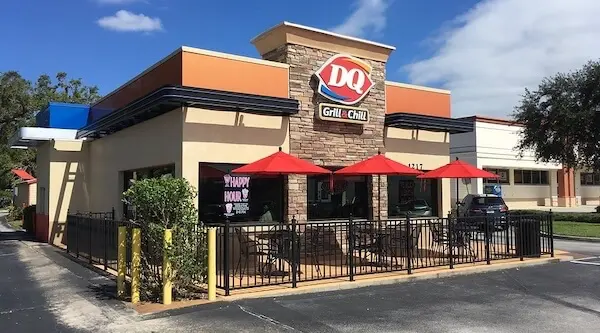
Under this corporate umbrella model, all outlet rollouts, capital expenditure, real estate procurement, and day-to-day operations are executed directly by DIL or through controlled institutional frameworks. Individual retail entrepreneurs cannot purchase, license, or operate a standalone Dairy Queen kiosk or “Grill & Chill” restaurant anywhere in the country.
Scam Alert: Beware of Fake Dairy Queen Franchise Portals
Due to high search interest surrounding American fast-food brands entering India, cyber syndicates create fraudulent websites mimicking official brand portals. These schemes solicit ₹1.5 lakh to ₹10 lakh for “dealership registration fees,” “site verification charges,” and “allotment guarantees.” Neither International Dairy Queen nor Devyani International issues retail franchise forms to the public or requests advance payments via online registration portals. Any third-party platform soliciting capital for a Dairy Queen dealership or franchise is fraudulent.
Realistic Commercial Route: Property Leasing to Corporate Operators
While an entrepreneurial operational franchise is off the table, commercial property owners can partner with corporate QSR operators through direct real estate leasing. Master franchise operators regularly scout high-street retail spaces, tier-1 shopping mall food courts, and transit hubs (such as airports and major metro stations) with carpet areas ranging between 400 square feet for kiosks and 1,800 square feet for full-format dine-in stores.
Commercial arrangements are typically structured as long-term Company-Owned, Company-Operated (COCO) leases spanning 9 to 15 years. These contracts generally incorporate a fixed minimum base rent alongside a revenue-sharing model (typically 8% to 15% of gross monthly sales, depending on footfall and location grade), with built-in escalation clauses every three to five years.
For high-street landlords, this provides stable, institutional-grade commercial yields without taking on direct food-service operational risk.
Market Economics: What Realistic QSR Unit Viability Looks Like
Projecting ₹1 crore to ₹1.5 crore monthly sales for standard retail dessert outlets is unrealistic. Established QSR beverage and dessert concepts in metro food courts typically generate between ₹10 lakh and ₹25 lakh in monthly gross revenues once footfall stabilizes.
Higher-volume flagship formats combining hot food menus with soft-serve desserts can reach ₹30 lakh to ₹50 lakh during peak operational months.
Store-level economics in the Indian fast-food sector must account for raw ingredient food costs (typically 30% to 35%), prime commercial real estate rentals (12% to 18%), local labor and utility overheads (10% to 14%), and central logistics. In a mature, healthy operation, store-level Operating Profit (EBITDA) generally settles between 12% and 17%. Net margins beyond 20% are rare in metropolitan retail environments due to rising commercial rents and sustained local competition.
Comparison: Major International QSR Models in India
Understanding the operational reality of major QSR brands in India requires looking at the actual corporate entities managing them. Most global chains do not sell franchises to individual applicants; they rely entirely on master franchisee conglomerates.
| Brand | Master Operator in India | Franchise Availability | Primary Engagement Route |
|---|---|---|---|
| Dairy Queen | Devyani International (DIL) | No individual retail sub-franchises | Commercial real estate leasing (COCO) |
| McDonald’s | Westlife Foodworld (South/West) & CPRL (North/East) | No public franchises | Long-term institutional land and property lease |
| Domino’s Pizza | Jubilant FoodWorks Limited | Exclusively corporate-owned network | High-street commercial property leasing |
| Burger King | Restaurant Brands Asia (RBA) | Closed corporate operations | Retail landlord space acquisition |
For private investors looking to operate an active retail franchise, capital is better deployed toward domestic franchise-friendly QSR chains, regional ice cream concepts (such as Naturals or Baskin Robbins sub-units), or established Indian cafe models that actively support the FOFO framework with clear unit economics and corporate auditing.
Don’t forget to check out Domino’s India Franchise Opportunity with Property Lease.