The Franchise Trap: Does Almond House Actually Offer Franchises?
Prospective food entrepreneurs searching for an Almond House franchise in India routinely encounter third-party business brokerages claiming that the Hyderabad-based artisanal mithai brand operates an open franchise network requiring between ₹35 lakh and ₹1.2 crore. In reality, Almond House (Almond House Pvt. Ltd.) maintains an uncompromised supply chain powered by its centralized, state-of-the-art experiential commercial kitchens in Hyderabad.
Because fresh milk-based sweets, baklava, and signature dry-fruit confections like Bisticks® have tightly monitored shelf lives and strict preservation requirements, the management does not delegate retail store operations, preparation, or hygiene protocols to third-party franchisees.
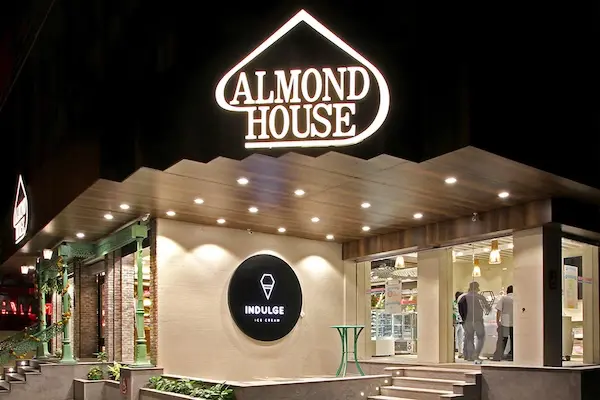
Instead of a traditional Franchise-Owned, Franchise-Operated (FOFO) route, Almond House expands using a self-funded Company-Owned, Company-Operated (COCO) expansion structure. Occasionally, the brand enters commercial property lease arrangements with commercial landlords on fixed-rent or revenue-share agreements, but operational control, staffing, and inventory management remain entirely in-house.
Investor Advisory: Beware of Advance-Fee Sweet Shop Scams
With the rapid growth of gourmet Indian sweets and festive corporate gifting, fraudulent syndicates have created cloned web pages, social media booking forms, and forged letters of intent claiming to grant “exclusive regional rights” for premium regional brands like Almond House. Victims are coerced into remitting upfront “documentation charges,” “site inspection fees,” or refundable security deposits into personal or bogus current accounts. Almond House never authorizes outside recruitment agents to collect brand fees. Legitimate real estate property pitches or B2B corporate gifting inquiries should only be processed through Almond House’s verified corporate website or official headquarters in Kukatpally, Hyderabad.
Realistic Capital Expenditure: Setting Up an Independent Premium Mithai Boutique
While Almond House itself is unavailable for franchising, entrepreneurs evaluating the high-end Indian sweets and confectionery category can model their capital requirements after the industry standards established by top-tier confectionery brands. Opening a boutique sweet, savory, and bakery lounge spanning 800 to 1,500 square feet demands substantial upfront investment in specialized refrigeration, climate control, and display infrastructure rather than simple furniture.
Store interiors for luxury confectionery demand hygienic, temperature-stabilized environments to prevent the degradation of pure ghee and mawa preparations. Specialized humidity-controlled static cooling display cases, imported curved glass showcases, architectural LED lighting, and customer-facing packaging stations typically consume between ₹18,00,000 and ₹35,00,000. In addition, an adequate back-of-house finishing station—featuring convection baking ovens, induction preparation tables, blast chillers, commercial dishwashers, and dry-storage racking—adds another ₹8,00,000 to ₹16,00,000 in capital outlay.
Working capital requirements are equally capital-intensive. Initial inventory, raw packaging materials (such as rigid gift boxes, tin packaging, and tamper-proof festive hampers), along with commercial rent deposits, utility connections, FSSAI regulatory licensing, and local municipal health trade clearances require a cash reserve of ₹10,00,000 to ₹20,00,000 before opening doors.
Business Model Comparison: Almond House Reality vs. Industry Benchmarks
The table below contrasts the fictional “Almond House Franchise” claims found on aggregator portals against the actual operational structure and the capital requirements of a genuine premium sweet brand.
| Parameter | Misleading Web Claims | Almond House Actual Model | Independent Premium Brand Benchmark |
|---|---|---|---|
| Operational Structure | FOFO (Franchise Owned, Franchise Operated) | COCO (Company-Owned, Company-Operated) | FOFO, FICO, or Proprietorship |
| Franchise / Brand Fee | ₹5,00,000 – ₹12,00,000 | ₹0 (No franchise granted) | ₹5,00,000 – ₹15,00,000 (Brand dependent) |
| Total CapEx Required | ₹35,00,000 – ₹1,20,00,000 | 100% Internal Corporate Investment | ₹40,00,000 – ₹85,00,000 (800–1,500 sq.ft.) |
| Royalty / Commission | 4% – 7% Monthly Sales | Not Applicable | 5% – 8% Revenue Share or Gross Markups |
| Gross Margins | 35% – 55% | Internal Company Metrics | 40% – 52% (Mithai & Savouries) |
| Investor Partnership Type | Franchise Store Operator | Commercial Real Estate Landlord / B2B Corporate Gifting | Active Franchisee / Joint Venture |
Legitimate Ways to Partner with Almond House
Although you cannot purchase an individual store franchise, commercial opportunities with Almond House remain viable across two direct business channels:
First, property owners possessing prime commercial spaces measuring 1,000 to 2,500 square feet on ground floors in tier-1 commercial high streets, upscale retail markets, or transit hubs can submit real estate proposals directly to their corporate leasing division. Long-term commercial leases with established food brands offer stable rental yields without operational liabilities.
Second, organizations, event managers, and wedding planners can partner through corporate bulk orders and institutional distribution agreements. Almond House maintains dedicated institutional verticals supplying customized festive hampers, corporate employee engagement gifting, and luxury wedding mithai boxes directly through certified enterprise accounts.
More Guides:
How to Get Haldiram Franchise/Distributorship Cost in India
Frequently Asked Questions
Can I get an Almond House franchise in India in 2026?
No. Almond House does not offer retail franchises in India. All operational branches across Hyderabad and airport lounges are directly company-owned and company-operated to retain proprietary preparation and quality controls.
How much does an Almond House franchise cost according to online sources?
Several unverified franchise portals claim total costs between ₹35 lakh and ₹1.2 crore, including a ₹5 lakh to ₹12 lakh franchise fee. However, these figures are fabricated; the company neither charges these fees nor licenses its brand name to external operators.
How can I rent my commercial property to Almond House?
Commercial property owners with spaces between 1,000 and 2,500 square feet located in premium high-street districts or transit hubs can contact Almond House’s business development team directly via their verified website to submit commercial lease proposals.
What are the typical profit margins in a premium sweets and mithai business?
In the premium Indian confectionery and gifting segment, well-run independent retail stores typically generate gross profit margins between 40% and 52%, with net profit margins settling between 12% and 18% after accounting for air-conditioned store utilities, skilled halwai labor, and luxury packaging materials.