Executive Overview: Investment Snapshot (2026)
While gross margins on meat, pita, and proprietary seasonings typically run between 55% and 65%, true net profitability is governed heavily by delivery aggregator commissions (Zomato/Swiggy charging 20% to 28%), local cold-chain logistics, and commercial utility bills.
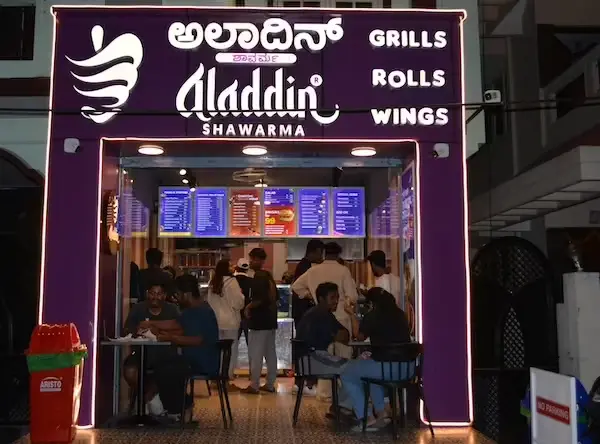
Capital Expenditure (CapEx) & Financial Structure
The upfront financial requirement divides into two primary buckets: non-refundable franchise licensing rights and physical tangible asset development. Unlike asset-light retail operations, commercial shawarma setups require high-grade commercial extraction hoods, rotisserie burners, prep tables, and commercial refrigeration units that cannot be compromised due to municipal health and fire safety guidelines.
| Investment Component | Kiosk / Express (150–350 sq.ft) | High-Street QSR / Dine-In (450–1,000 sq.ft) | Remarks & Financial Nature |
|---|---|---|---|
| Franchise License Fee | ₹4,00,000 – ₹6,00,000 | ₹8,00,000 – ₹12,00,000 | Non-refundable; covers 3–5 year brand rights, SOPs, and onboarding. |
| Kitchen Machinery & Equipment | ₹5,00,000 – ₹8,00,000 | ₹10,00,000 – ₹18,00,000 | Commercial vertical rotisseries, deep fryers, prep chillers, exhaust ducting. |
| Interior Fit-Outs & Signage | ₹4,00,000 – ₹7,00,000 | ₹10,00,000 – ₹16,00,000 | Branded facade, acrylic LED signboards, POS counter, customer seating. |
| Initial Stock & Packaging | ₹1,50,000 – ₹2,50,000 | ₹3,50,000 – ₹5,00,000 | Marination bases, proprietary sauces, pita stocks, branded packaging. |
| Statutory Approvals & Working Capital | ₹3,50,000 – ₹4,50,000 | ₹6,50,000 – ₹8,00,000 | FSSAI license, fire NOC, GST registration, and 90-day operational buffer. |
| Total Estimated Investment | ₹18,00,000 – ₹28,00,000 | ₹38,00,000 – ₹59,00,000 | Excludes commercial rental security deposits (typically 3–6 months rent). |
Operating Costs, Unit Economics, and Real Margins
A frequent error among first-time QSR franchisees is confusing gross kitchen product margin with net bottom-line cash flow. While the raw food cost of chicken, marinades, vegetables, and bread sits comfortably around 32% to 38% of revenue, downstream operational expenses quickly compress profitability.
Commercial electricity constitutes a significant recurring overhead. Commercial vertical gas/electric broilers paired with heavy centrifugal exhaust blowers and walk-in deep freezers consistently generate monthly utility bills between ₹25,000 and ₹65,000. Additionally, if the unit relies on third-party aggregators for more than 40% of overall order volume, packaging overheads (3% to 5%) and platform discovery discounts reduce real net margins.
A well-managed outlet typically operates with an actual net EBITDA of 14% to 22%, producing break-even timelines of roughly 12 to 18 months rather than overnight windfalls.
Similar Business Breakdowns:
How Much Does a Bidyut Bakery Franchise Cost in India?
Investor Caution: The “Franchise Fee” Trap & Verification Checklist
The rapidly growing food and beverage franchising sector in India has seen an increase in unauthorized intermediaries and fake brand licensing portals. Prospective investors must exercise heightened due diligence to verify they are dealing directly with the registered trademark owners rather than fly-by-night brokers claiming territorial rights.
F&B Franchise Red Flags to Watch
1. Demand for Upfront “Token” Fees: Never transfer “seat blocking” or “territory lock” deposits via UPI or personal bank accounts prior to physical meetings and standard agreement reviews. Legitimate franchisors only accept fees via audited corporate accounts alongside stamped Letters of Intent (LOI).
2. Distinguishing True Franchises from Wholesale Distributorships: Ensure the brand offers an established operational ecosystem with comprehensive standard operating procedures (SOPs). If an entity charges a steep “franchise fee” but merely supplies frozen meat rolls without providing store design architecture, staff training, POS integration, or regional marketing support, it functions as a raw-material vendor rather than a legitimate franchise partner.
3. Trademark Registration Verification: Prior to executing any Franchise Agreement, run the brand name and logo through the Intellectual Property India (IP India) portal under Class 43 (Services for providing food and drink). Verify whether the mark is “Registered” or merely “Objected/Abandoned.” Signing with an unregistered brand exposes your store to forced rebranding orders during trademark disputes.
Selecting the Right Format: Kiosk vs. High-Street Dine-In
The business viability of a shawarma outlet hinges directly on customer order patterns. Shawarma is primarily an evening and late-night grab-and-go convenience food. Because peak revenue is concentrated between 5:00 PM and 11:30 PM, committing to extensive, high-rent square footage for daytime dining can strain cash flows unless the unit is situated inside a corporate business park or college campus with midday wrap demands.
For most regional micro-entrepreneurs, an express counter or food court kiosk measuring 200 to 350 square feet offers the most defensible risk-to-reward ratio. The lower square footage curbs rental security deposits and air-conditioning power consumption while allowing staff to focus solely on high-speed order fulfillment.
Frequently Asked Questions (FAQs)
What is the total cost of setting up an Aladdin Shawarma franchise in India in 2026?
Total investment ranges between ₹18 lakh and ₹28 lakh for a compact counter or kiosk format, and up to ₹55 lakh or more for a full-scale dine-in outlet in a Tier-1 metro, including franchise fees, kitchen setup, interiors, and operating reserves.
Does Aladdin Shawarma follow a FOFO or FOCO franchise model?
Most quick-service units in this category operate under the Franchise Owned, Franchise Operated (FOFO) framework, where the investor funds the CapEx and handles daily staffing while adhering to the franchisor’s ingredient procurement and pricing SOPs.
What licenses are required to open a shawarma franchise in India?
Operators must secure an FSSAI State License, local municipal trade license (Health Trade License), Shop and Establishment registration, GST registration, and a Fire Safety No-Objection Certificate (NOC) if the outlet uses commercial gas manifolds or operates customer seating.
What is the average return on investment (ROI) timeline?
Under disciplined operational management, location rents below 12% of gross revenue, and steady evening footfall, typical payback periods range from 12 to 18 months.