Exide Industries Limited does not operate on a traditional business-format franchise system with royalties or upfront franchise licensing fees. Instead, it appoints authorized retail dealers, multi-brand battery counters, and specialized Exide Care or Exide Power Centre brand partners.
Starting an authorized setup in 2026 typically requires a capital commitment of ₹7 Lakh to ₹16 Lakh, covering commercial security deposits, high-density structural racking, specialized battery charging and testing instruments, and fast-moving inventory. While gross product margins sit between 8% and 15%, overall outlet profitability is heavily supplemented by lead-acid scrap battery buyback trade-ins and volume-linked corporate turnover schemes.
Business Classification: Distributorship vs. The “Franchise” Misconception
Prospective investors frequently search for an “Exide battery franchise,” yet Exide Industries Limited runs strictly on an authorized dealership and stockist distribution model. There are no initial franchise purchase fees, recurring trademark royalties, or corporate revenue-sharing clauses.
Dealership partners operate as autonomous commercial entities purchasing inventory directly through authorized regional distributors or corporate depots at established wholesale dealer transfer prices (DTP).
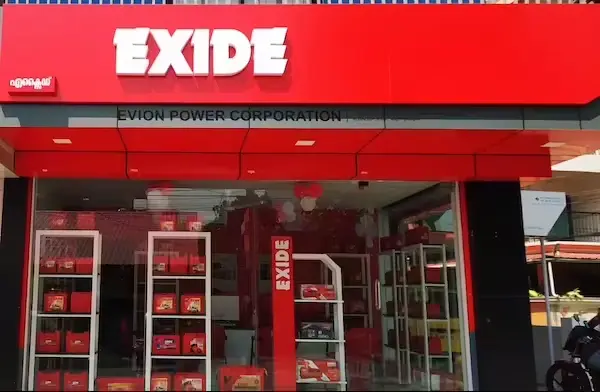
The company segments its retail footprint into multi-brand retail partners, exclusive Exide Care centers (focusing primarily on automotive replacement, digital warranty claims, and rapid fitment services), and Exide Power Centres (oriented toward home UPS inverters, commercial power backups, and solar setups).
Unlike independent multi-brand battery workshops that buy unverified inventory through grey secondary channels, direct authorized dealers gain direct access to the paperless digital warranty registration portal, corporate lead generation via Batmobile on-road breakdown services, and seasonal manufacturer rebates.
Scam Alert & Vigilance Notice: Exide Industries does not sell commercial franchises through unsolicited WhatsApp messages, third-party intermediary portals, or unverified registration domains demanding upfront processing fees. Authentic dealership allotment requires physical documentation, direct evaluation by a regional Area Sales Manager (ASM), and monetary transactions executed solely via crossed account-payee drafts or RTGS to designated Exide corporate or primary distributor bank accounts. Never pay “allotment clearance” or “site inspection fees” to personal accounts.
Capital Expenditure (CapEx) & Working Capital Breakdown
Initial capital requirements for an authorized Exide outlet depend on whether the unit is launched as a localized retail counter or a standardized Exide Care hub equipped with computerized battery load analyzers and automated multi-bank charging equipment. While baseline opening inventory for slow-moving automotive lines can start around ₹4 Lakh, practical dealer deployment requires sufficient working capital to carry tubular inverter batteries and sustain local mechanic trade credit.
| Capital Head | Suburban / Semi-Urban Setup | Tier-1 / Metro Exide Care Center | Commercial Terms |
|---|---|---|---|
| Refundable Security Deposit | ₹50,000 – ₹1,00,000 | ₹1,00,000 – ₹2,00,000 | Paid to regional distributor or corporate depot; refundable, interest-free |
| Opening Inventory (Automotive & Tubular) | ₹4,00,000 – ₹6,00,000 | ₹7,00,000 – ₹10,00,000 | Fast-moving 12V automotive, two-wheeler VRLA, and inverter combos |
| Testing & Charging Equipment | ₹40,000 – ₹80,000 | ₹80,000 – ₹1,50,000 | Digital impedance testers, carbon-pile load testers, hydrometers, bench chargers |
| Shop Fitouts, Acid-Proofing & Racks | ₹80,000 – ₹1,50,000 | ₹1,50,000 – ₹2,50,000 | Heavy-load steel angle racks, floor acid-resistant epoxy coatings, corporate signage |
| Working Capital & Trade Credit Reserve | ₹1,50,000 – ₹2,50,000 | ₹2,50,000 – ₹4,00,000 | Funds old battery scrap holding cycles and garage trade credit |
| Total Initial Capital | ₹7,20,000 – ₹11,80,000 | ₹12,80,000 – ₹20,00,000 | Excludes commercial lease advances and vehicle purchase |
Space, Structural Engineering, and Safety Mandates
A functional battery dealership requires between 250 and 600 sq. ft. of ground-floor commercial space. Securing a ground-level storefront is a non-negotiable operational necessity; heavy-duty commercial lead-acid batteries weigh between 10 kg (two-wheeler and compact car units) and upwards of 55 to 65 kg (tall-tubular 150Ah–220Ah inverter models).
Upper floors or locations with multi-step staircases substantially increase freight handling damages and daily labor strain.
The shop floor must feature dedicated, acid-resistant floor treatments (such as epoxy resin or vitrified heavy-duty industrial tiles) to prevent concrete degradation from accidental electrolyte seepage.
Crucially, battery charging generates hydrogen gas during recovery cycles, requiring continuous cross-ventilation, forced exhaust installations, acid-neutralizing wash stations (baking soda/water), and dry chemical powder (Class D/CO2) fire extinguishers.
Outlets must also comply with the Batteries (Management and Handling) Rules under the Ministry of Environment, Forest and Climate Change regarding licensed secondary containment for hazardous waste.
Profit Margins, The Scrap Battery Multiplier, and Net Realization
Gross margins on factory-fresh Exide batteries generally range from 8% to 15% across automotive, inverter, and solar verticals. However, analyzing unit retail margins alone obscures the real revenue engine of the Indian battery trade: the used lead-acid scrap buyback economy.
When an end customer or commercial fleet operator replaces a depleted battery, the old unit is surrendered under an exchange rebate.
Lead scrap maintains clear spot-commodity liquidity. Authorized dealers return authenticated scrap directly to Exide’s reverse-logistics smelting network under corporate credit-note arrangements or to authorized recyclers. This recycling loop yields an additional ₹300 to ₹1,200 per exchanged unit, protecting store profitability against retail price competition. Net dealer margins generally settle around 4% to 7% after subtracting auto-mechanic commissions, retail showroom leases, staff overhead, and local credit financing.
| Product Category | Representative Product Lines | Direct Gross Margin | Scrap Return & Secondary Dynamics |
|---|---|---|---|
| Two-Wheeler Batteries | Exide Xplore, Bikerz | 10% – 14% | Rapid turnover; high local mechanic and garage commission dependence |
| Passenger Car Batteries | Exide Epiq, Matrix, Mileage | 8% – 12% | Major exchange volume; lucrative core scrap salvage returns |
| Home Inverter & Combos | Inva Tubular, InvaMaster, Star UPS | 10% – 15% | High ticket value; seasonal demand peaks during pre-summer months |
| Solar Energy Storage | Exide Solarblitz, Tubular Photovoltaic | 12% – 16% | Driven by government rooftop solar schemes and agricultural pump tie-ups |
Competitive Market Positioning: Exide vs. Amaron vs. Luminous
Exide commands dominant brand equity in original equipment manufacturer (OEM) automotive supply agreements and deep institutional replacement channels. However, retail partners face aggressive counter-positioning. Amaron (Amara Raja Energy & Mobility) presents sharp competition in passenger car and heavy vehicle segments with long-warranty SilvenX alloy formulations and strong consumer recall. Meanwhile, Luminous Power Technologies dominates the consumer inverter and home UPS market, competing aggressively on residential inverter combo margins.
Exide’s primary commercial edge lies in its expansive service ecosystem, headlined by the “Exide Batmobile” doorstep emergency assistance network, which channels localized car-breakdown battery replacement leads straight to the nearest authorized stockist.
In semi-urban belts, Exide’s extensive heavy-commercial and tractor battery ranges (such as Exide Jai Kisan) offer stock turnover cushions rarely matched by residential-focused competitors.
| Comparative Parameter | Exide Dealership | Amaron Dealership | Luminous Dealership |
|---|---|---|---|
| Core Market Strength | Automotive OEM pull, deep rural & commercial vehicle reach | Long retail warranty periods, passenger vehicle dominance | Residential inverters, solar micro-inverters, home UPS systems |
| Total Initial Setup Investment | ₹7 Lakh – ₹16 Lakh | ₹6 Lakh – ₹14 Lakh | ₹4 Lakh – ₹10 Lakh |
| Average Product Gross Margin | 8% – 15% | 8% – 14% | 7% – 13% |
| After-Sales Support Ecosystem | Exide Batmobile on-site claim & replacement dispatch | Amaron PitStop corporate warranty settlement centers | Direct consumer doorstep technician service fleet |
Don’t forget to check out other business opportunity: Amaron Battery Dealership Cost Analysis
Step-by-Step Onboarding & Verification Protocol
Securing an authorized dealership account with Exide Industries requires formal channel screening rather than buying an unvetted franchise bundle off the shelf. The regional onboarding path follows these clear corporate stages:
1. Territory Mapping & Application Submission: Prospective partners submit commercial inquiries via Exide Industries’ official corporate portal or connect directly with the regional distributor identified through the Exide Care dealer locator network. Applicants must provide an active Goods and Services Tax (GST) registration certificate, a commercial entity PAN, municipal establishment clearances, and registered shop lease or ownership deeds.
2. Field Territory Review: The designated Area Sales Manager (ASM) and territory distributor conduct an on-site survey. They assess regional saturation to avoid cannibalizing existing Exide Care dealers within a 2-to-3-kilometer radius while reviewing the applicant’s existing local automotive relationships, including tie-ups with commercial vehicle workshops, neighborhood garages, and electric vehicle fleet operators.
3. Security Deposit & Credit Code Generation: Upon territorial clearance, the partner deposits the mandatory refundable security sum with the parent company or authorized super-stockist. A unique Dealer ERP Code is generated, granting access to digital warranty registrations, corporate billing systems, and seasonal secondary volume incentive programs.
4. Infrastructure Setup & Opening Allocation: The partner fits out the retail counter with corporate signage, reinforced load racks, digital testers, and ventilation safety gear. Initial primary inventory is dispatched from the regional supply depot, and the counter is integrated into the Exide Batmobile service routing framework for nearby roadside breakdown assignments.