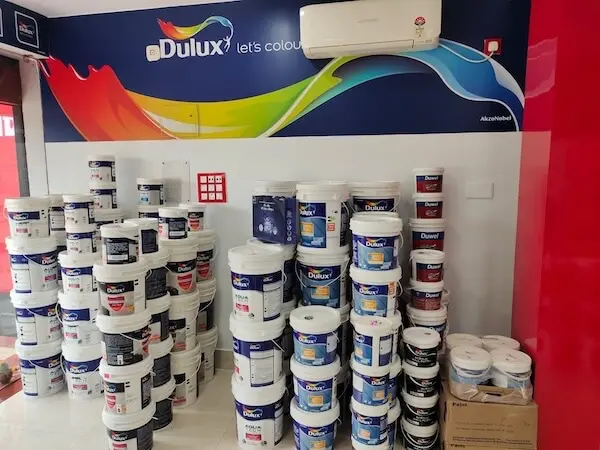
Business Classification: Clarifying the “Franchise” Misconception
Prospective entrepreneurs frequently search for a “Dulux Paint franchise,” but in the Indian coatings industry, multinational manufacturers like AkzoNobel operate almost exclusively on an authorized retail dealership and distribution network. There is no standard franchise agreement, upfront royalty fee, or percentage-of-turnover commission paid to the brand.
Retailers operate as independent proprietorships, partnerships, or private entities purchasing decorative paints, primers, putties, and exterior emulsions directly from company regional depots or carrying and forwarding (C&F) agents at dealer transfer prices.
Operating an authorized Dulux dealership gives store owners operational autonomy, including setting final consumer discounts and onboarding painting contractors. However, commercial success is linked directly to inventory velocity, working capital management, and localized contractor loyalty rather than brand-driven footfall alone. Unlike multi-brand hardware retailers who purchase through regional wholesalers, direct authorized dealers receive secondary scheme incentives, formal brand board signages, and direct access to Dulux trade software.
Scam Alert & Vigilance Notice: AkzoNobel India does not ask applicants to transfer processing fees, token allotment amounts, or dealership approval charges into personal bank accounts or via UPI IDs. Be cautious of fraudulent third-party aggregator portals mimicking official Dulux domains. Official commercial onboarding occurs strictly through designated regional Area Sales Managers (ASMs) following an in-person commercial inspection.
Total Capital Expenditure (CapEx) & Working Capital Breakdown
Opening an authorized Dulux retail counter requires a balanced allocation between physical store displays, technical shade-matching equipment, mandatory corporate security deposits, and opening inventory. While marketing brochures often quote entry figures as low as ₹5 Lakh, setting up a competitive store equipped to dispense computerized custom shades requires an actual capital commitment between ₹8 Lakh and ₹19 Lakh.
| Capital Head | Tier-2 / Tier-3 Town Setup | Tier-1 / Metro Setup | Operational Terms |
|---|---|---|---|
| Company Security Deposit | ₹50,000 – ₹1,00,000 | ₹1,00,000 – ₹2,00,000 | Refundable, non-interest-bearing corporate deposit |
| Computerized Tinting Machine & Shaker | ₹1,50,000 – ₹2,50,000 | ₹2,00,000 – ₹3,00,000 | Direct purchase, subsidized leasing, or security model |
| Opening Stock & Bases | ₹3,50,000 – ₹5,00,000 | ₹5,00,000 – ₹7,50,000 | Fast-moving bases, colorants, primers, and putties |
| Retail Racks, Counter & Lighting | ₹1,00,000 – ₹1,50,000 | ₹1,50,000 – ₹2,50,000 | Heavy-duty steel slatted shelving for 20L drum storage |
| Initial Working Capital Buffer | ₹1,50,000 – ₹2,00,000 | ₹2,50,000 – ₹4,00,000 | Required for painter credit roll and restocking cycles |
| Total Setup Investment | ₹8,00,000 – ₹12,00,000 | ₹12,00,000 – ₹19,00,000 | Excludes real estate lease advance and shop rent |
Space, Commercial Infrastructure, and Tinting Integration
A standard Dulux paint dealership operates across two distinct functional zones: an accessible front-facing retail sales area and a reinforced back-end storage depot.
Display showrooms typically require 400 to 800 sq. ft. of carpet area with at least 12 feet of street frontage for exterior brand visibility. Floor loading capacity is an essential operational factor; industrial 20-liter drums of acrylic exterior emulsions, water-proofing solutions, and cement wall putty place heavy loads on traditional commercial tiling.
High-volume sales depend heavily on installing an automated dispensing and tinting machine along with a heavy-duty gyroshaker.
Instead of stocking hundreds of finished shades, authorized dealers maintain core neutral bases (White, Pastel, Medium, Deep, and Transparent bases) alongside automated multi-colorant canisters. The computerized dispenser blends bases into custom shades on-demand, reducing dead stock while requiring dedicated square footage and a continuous 2 to 3 kVA uninterrupted power supply (UPS) to avoid shade formulation errors during brownouts.
Profit Margins, Pricing Dynamics, and Real-World Net Yield
Gross trade margins printed on retail invoice slips typically vary from 10% to 18%, depending on whether the product falls under high-volume commoditized lines like interior primers and acrylic distemper, or premium decorative coatings like Dulux Velvet Touch and Weathershield. However, treating gross trade margins as pure take-home earnings is a frequent mistake made by new entrants.
The paint retail ecosystem in India is heavily contractor-driven. Professional painters, independent interior decorators, and civil construction labor expect cash rebates, token cuts, or credit terms of 15 to 45 days.
Once a dealer accounts for contractor discounts (ranging from 3% to 6%), store rentals, commercial utility bills, machine maintenance, and dead-tint wastage, the realistic net profit margin lands between 3.5% and 6.5%. High-performing outlets prioritize total inventory turnover speed and company volume-achievement rebates over per-can retail margins.
| Product Category | Representative Products | Gross Margin Range | Working Dynamics |
|---|---|---|---|
| Decorative Wall Finishes | Dulux Velvet Touch, Ambiance, SuperClean | 12% – 18% | Higher margin; driven by retail home-owner walk-ins |
| Exterior Weather Coatings | Dulux Weathershield Powerflex, Max | 10% – 15% | High volume; strong pull during post-monsoon seasons |
| Substrate Preparation & Putty | Dulux Acrylic Putty, Primers, Sealers | 6% – 9% | Low margin, high bulk weight; critical for bundled sales |
| Waterproofing & Specialty Chemicals | Aquatech Range, DampProtect Basecoats | 14% – 20% | Fastest-growing consumer and contractor demand vertical |
Competitive Market Positioning: Dulux vs. Dominant Indian Rivals
AkzoNobel’s Dulux carries strong global brand prestige, historical formulation quality, and brand loyalty in urban Tier-1 and Tier-2 centers. However, independent dealers face significant competition from domestic players.
Asian Paints commands the largest market share in India, supported by same-day delivery logistics from regional depots, high distributor mindshare, and established consumer pull. Berger Paints provides aggressive dealer margins and competitive pricing structures in Tier-3 and rural markets, while Kansai Nerolac retains a firm grip on industrial coatings and specialized interior segments.
Setting up a standalone, exclusive single-brand Dulux dealership can pose inventory turnaround risks in smaller towns where consumer awareness favors domestic rivals.
Most seasoned paint merchants counter this by either negotiating exclusive territorial protection with the local AkzoNobel sales office or establishing an authorized Dulux mixing counter alongside complementary hardware, sanitary, and waterproofing supplies to maintain healthy shop-floor cash flows.
Don’t forget to check out other dealership, distributorship, and franchise opportunity: Dabur Distributorship Cost Details
Step-by-Step Authorized Application & Verification Workflow
Obtaining an authorized dealership code from AkzoNobel India involves a direct corporate review rather than purchasing an open retail franchise off the shelf. The onboarding workflow follows several distinct milestones:
1. Commercial Pre-Screening & Application Submission: Prospective partners begin by submitting an authorized trade inquiry through the official Dulux India portal (dulux.in) or by directly contacting the nearest AkzoNobel regional sales office. Applicants must furnish valid Goods and Services Tax (GST) registration, an operational business bank account, municipal trade licenses, and premises ownership documentation or commercial lease contracts.
2. Territory Viability Assessment: Following registration, the local Area Sales Manager (ASM) or Depot Commercial Officer conducts an on-site physical evaluation. The corporate team assesses neighborhood market density, measuring the distance to existing authorized Dulux counters to prevent dealer cannibalization while evaluating the applicant’s existing relationships with local contractors, civil architects, and painters.
3. Financial Deposition & Machinery Installation: Once approved, the dealer deposits the refundable security guarantee with AkzoNobel India and executes standard dealership commercial agreements. The company schedules delivery of the computerized automatic tinting unit and gyroshaker, coordinates technician calibration, configures color formulation software, and sets up external point-of-sale branding.
4. Initial Billing & Ongoing Stock Replenishment: The dealer places the primary inventory order with the regional depot to populate standard bases, topcoats, and colorant canisters. The merchant is then integrated into corporate training programs covering tinting mechanics, customer color consultation, and local contractor engagement initiatives.