Evaluating an investment in a Big Mart retail outlet requires navigating beyond speculative promotional numbers. This financial and operational audit breaks down realistic retail capital expenditures, margins, format differences, and vital due-diligence protocols for entrepreneurs considering a grocery supermarket in India.
Critical Investor Due-Diligence & Scam Advisory
Before committing capital to any entity operating under or pitching a “Big Mart” retail format, prospective franchisees must exercise extreme legal caution. Over recent years, multi-state franchise racket investigations—specifically naming unauthorized schemes marketed under names like Blue Mart and Big Mart—have reached state high courts and the Supreme Court of India.
Many fraudulent operators exploit generic supermarket naming conventions to solicit non-refundable “franchise fees,” “security deposits,” or “onboarding charges” promising unrealistic “Minimum Guaranteed Income” (MGI) returns of 1% to 2% monthly without verifiable supply-chain infrastructure.
Independent operators must physically inspect operating distribution centers, independently cross-examine Ministry of Corporate Affairs (MCA) corporate filings, and engage legal counsel to review Master Service Agreements prior to transferring upfront capital.
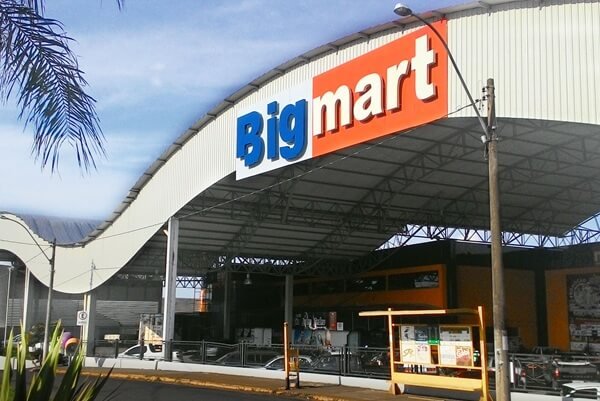
Decoding the Business Model: FOFO vs. FOCO vs. Modern Distribution
A persistent issue across Indian franchise directories is misrepresenting wholesale supply arrangements and commercial distributorships as turnkey franchise networks. In organized Indian FMCG grocery retail, brands operate under distinct structural models:
Under a Franchise Owned, Franchisee Operated (FOFO) model, the investor assumes full commercial liability, leases the property, executes fit-outs, and handles daily cashiering, staffing, and local shrinkage, utilizing the franchisor strictly for branding, POS software, and centralized warehouse supply.
In contrast, under a Franchise Owned, Company Operated (FOCO) agreement, the investor finances the CapEx while store operations and merchandising remain managed by the brand in exchange for an agreed gross-margin split.
Prospective store owners must determine whether their agreement constitutes an authentic franchise system with territorial exclusivity and trademark rights, or merely a white-label grocery distributorship masked behind an upfront onboarding fee.
Realistic Store Setup CapEx & Cost Matrix (2026 Estimates)
Setting up a functional departmental grocery store or supermarket in 2026 demands realistic cost benchmarking. Outfitting commercial retail space requires substantial civil work, precision shelving, refrigeration infrastructure, and working liquidity to withstand early inventory cash traps.
| Expense Category | Mini-Mart / Convenience Store (500 – 1,000 sq. ft.) | Supermarket Format (1,500 – 3,000+ sq. ft.) | Nature of Outlay & Commercial Notes |
|---|---|---|---|
| Interior Fit-Out & Civil Work | ₹4,50,000 – ₹8,00,000 | ₹12,00,000 – ₹20,00,000 | Commercial lighting, heavy-duty display racking, billing counter, vinyl/epoxy flooring, and ACP storefront signage. |
| IT, Equipment & Cold Chain | ₹2,50,000 – ₹4,50,000 | ₹6,00,000 – ₹10,50,000 | Multi-door display chillers, deep freezers, thermal receipt printers, barcode scanners, POS terminals, and CCTV surveillance. |
| Initial Stock / Inventory (FMCG & Staples) | ₹6,00,000 – ₹10,00,000 | ₹15,00,000 – ₹25,00,000 | Opening stock across high-velocity staples, personal care, packaged foods, and home essentials. |
| Commercial Deposit & Legal Lease Hold | ₹1,50,000 – ₹4,00,000 | ₹4,50,000 – ₹12,00,000 | Refundable commercial security deposit (typically 3 to 6 months of base rent depending on tier-1 vs. tier-2 metro locations). |
| Working Capital Reserve (90 Days) | ₹2,50,000 – ₹4,50,000 | ₹5,00,000 – ₹8,00,000 | Cash flow buffer covering store electricity, staff salaries, local licensing (FSSAI/Trade), and immediate restocking needs. |
| Total Realistic Project CapEx | ₹17,00,000 – ₹31,00,000 | ₹42,50,000 – ₹75,50,000+ | Excludes any disputed, variable, or unverified upfront brand onboarding charges. |
City-Wise Commercial Variations: Realities of Retail Real Estate
Retail economics are dictated by location dynamics rather than franchisor templates. High-density metros like Mumbai, Delhi-NCR, and Bengaluru present severe rental burdens where commercial frontage can command ₹90 to ₹250 per square foot. In such high-rent environments, fixed occupancy costs can erode gross margins unless footfall and high-margin product turnover are exceptionally swift.
Conversely, operating in Tier-2 and Tier-3 urban pockets—such as Lucknow, Jaipur, or Nagpur—reduces lease strain to ₹35 to ₹75 per square foot. However, these markets encounter separate challenges, including slower product turns on premium packaged goods, elevated freight logistics, and entrenched loyalty to neighborhood kirana stores that offer informal credit arrangements.
Realistic Industry Margins, Unit Economics, and Break-Even
Promotional materials for grocery and supermarket opportunities frequently market gross margins upwards of 25% to 40% alongside promises of a sub-one-year return on investment (ROI). In the Indian FMCG landscape, such projections are disconnected from commercial reality.
Branded staples (such as flour, edible oil, and sugar) operate on razor-thin gross margins ranging between 4% and 8%. Packaged consumer goods, packaged beverages, and toiletries typically yield 12% to 18% gross margins.
Premium categories like general merchandise, organic products, and private-label dry fruits can deliver 22% to 30%, but constitute a smaller share of overall customer basket size.
The blended gross margin for a standard organized supermarket typically settles between 14% and 18%. After subtracting real-estate lease costs, commercial electricity (which runs high due to mandatory continuous refrigeration), store staffing, shrinkage (theft/damage), and POS cloud charges, operating net margins generally range from 3% to 6%. Reaching net operating break-even typically spans 18 to 36 months of disciplined retail execution.
Explore Further:
DMart Ready Franchise Cost in India: Business Model Reality, Scam Alerts, and Landlord Partnerships (2026 Guide)
Essential Due-Diligence Checklist Before Signing
Entrepreneurs evaluating a grocery or mini-mart venture must prioritize legal and supply-chain validation over sales presentations. Confirm the following critical parameters in writing before executing commercial agreements:
Examine the audited financial filings of the franchisor entity on the Ministry of Corporate Affairs portal to verify solvency, statutory compliance, and corporate lineage. Secure explicit service-level agreements (SLAs) regarding stock delivery timelines, minimum fill rates, credit terms on fast-moving SKUs, and return-to-vendor (RTV) policies for expired or damaged inventory.
Finally, verify whether you possess absolute freedom of local vendor procurement if the primary distribution warehouse experiences stockouts, and ensure your commercial lease features reasonable break-clauses to mitigate liability should footfalls fail to meet baseline viability thresholds.