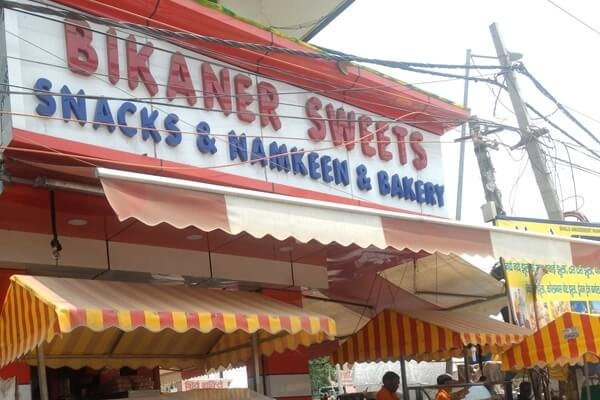
The term Bikaner Sweets does not represent a single monolithic corporate entity or a unified franchise network. In the Indian traditional mithai and namkeen industry, “Bikaner” is an established geographical descriptor and culinary tradition rather than an exclusive franchise trademark.
Consequently, thousands of independent confectioners operate under names such as Bikaner Sweets, Bikaner Mishthan Bhandar, or Bikaner Namkeen Bhandar without being part of any formal corporate chain.
Prospective entrepreneurs evaluating an estimated investment of ₹12 lakh to ₹35 lakh must distinguish between independent sweet shop setups, corporate FMCG distributorships, and registered corporate chains before committing capital.
Crucial Investor Warning: The “Bikaner Franchise” Advance-Fee Scam
Multiple cyber syndicates maintain deceptive domains claiming to provide “Official Bikaner Sweets Franchise Application Forms” or “Bikanervala Cloud Kitchen Licenses.” These fraudulent portals request non-refundable registration fees ranging from ₹25,000 to ₹2,50,000 via UPI or personal current accounts under the guise of site inspections, NOC issuance, or territory allocation.
Neither authentic traditional confectioners nor established corporations like Bikanervala Foods Pvt. Ltd. or Bikaji Foods International Ltd. authorize arbitrary third-party websites to collect initial licensing deposits through personal payment gateways. Every commercial interaction should be vetted directly with corporate headquarters or legal representatives before transferring funds.
Brand Disambiguation: Franchise vs. Distributorship vs. Independent Setup
A primary pitfall for aspiring sweet-shop operators is confusing distinct retail distribution structures with standard franchise agreements. Major industry players operate under radically different business frameworks:
Bikanervala Foods Pvt. Ltd. operates primarily via company-owned company-operated (COCO) models or large-scale food court partnerships requiring floor plans upwards of 1,200 to 5,000 sq. ft. and capital outlays often exceeding ₹1.5 crore to ₹3 crore. They rarely grant micro-format retail franchises to individual shop owners.
Meanwhile, brands like Bikaji Foods focus on FMCG distribution networks, modern trade placement, and stockist dealerships rather than standalone neighborhood sweet-shop franchises. The vast majority of standalone neighborhood outlets operating as “Bikaner Sweets” are privately owned proprietorships or regional partnerships that source branded packaged namkeen while manufacturing fresh milk sweets on-site through their own culinary staff (halwais).
| Format / Model | Brand Entity Status | Capital Expenditure (CapEx) | Primary Commercial Relationship |
|---|---|---|---|
| Independent Sweet & Snack Store (Using Generic Bikaner Name) | Unorganized / Sole Proprietorship | ₹12,00,000 – ₹20,00,000 | 100% self-owned; no franchise fee; full manufacturing liability. |
| Packaged Namkeen & Sweets Distributorship (e.g., Bikaji) | Corporate FMCG Manufacturer | ₹15,00,000 – ₹30,00,000 | Wholesale distribution/stockist contract with trade credit & inventory deposit. |
| Corporate Restaurant & Sweet Lounge (e.g., Bikanervala / Bikano) | Registered Corporate Brand | ₹1.50 Crore – ₹3.50 Crore+ | Strict institutional FOCO/COCO model with centralized supply and corporate revenue share. |
| Regional Sweet Counter Franchise (Regional Trademark Owner) | State-level Registered Trademark | ₹18,00,000 – ₹28,00,000 | One-time onboarding fee, standardized kiosk fabrication, scheduled supply replenishment. |
Realistic Capital Expenditure (CapEx) Breakdown
For an entrepreneur establishing a 400 to 800 sq. ft. standalone sweet and savory outlet under an authorized regional brand or as an independent establishment, the overall establishment budget spans between ₹14 lakh and ₹29 lakh. The investment divides into structural civil work, refrigeration systems, retail merchandising displays, and working capital buffers.
| Investment Component | Estimated Outlay (INR) | Scope and Specifications |
|---|---|---|
| Civil Works & Interior Architecture | ₹5,00,000 – ₹8,00,000 | Hygienic anti-skid tiling, washable wall cladding, MEP installations, LED ambient illumination, and exterior signage. |
| Display Fixtures & Refrigeration Units | ₹3,50,000 – ₹6,00,000 | Heated glass display units for dry savories, humidity-controlled refrigerated curved-glass counters for milk sweets, and deep freezers. |
| Kitchen Preparation Equipment | ₹2,50,000 – ₹5,00,000 | Commercial stainless steel kadhais, gas burner banks, planetary dough mixers, heavy-duty exhaust hood ducting, and weighing stations. |
| Initial Raw Materials & Finished Goods | ₹2,00,000 – ₹4,50,000 | Procurement of shelf-stable namkeen lines, flour, desi ghee, mawa/khoya, dry fruits, and branded food-grade packaging materials. |
| Statutory Licensing & Compliance | ₹40,000 – ₹90,000 | FSSAI State Food License, municipal health trade license, local fire safety NOC, GST registration, and weights & measures verification. |
| Operational Reserve (Working Capital) | ₹3,00,000 – ₹5,00,000 | Liquidity cushion covering the first 90 days of commercial lease liabilities, utility bills, and staff compensation. |
| Total Indicative CapEx | ₹16,40,000 – ₹29,40,000 | Excludes commercial real estate security deposit and brokerage expenses. |
Geographic Location Analysis and Real Estate Requirements
High retail footfall and ease of accessibility dictate retail success in traditional confectionery. Sweets require strategic positioning near transport nodes, dense residential catchments, or primary market thoroughfares where spontaneous purchasing behavior is high. Real estate dynamics diverge sharply across metro and tier-2 regions:
In Tier-1 metropolises such as Mumbai, Delhi-NCR, and Bengaluru, high-street retail spaces demand commercial rentals ranging from ₹120 to ₹250 per square foot, alongside initial interest-free security deposits spanning 3 to 6 months of lease value. A 500 sq. ft. high-street property in these markets can consume ₹1.5 lakh to ₹2.5 lakh in monthly overhead before generating gross sales.
Conversely, in secondary hubs like Pune, Lucknow, or Jaipur, comparable prime properties rent for ₹50 to ₹90 per square foot, which substantially lowers the monthly breakeven threshold and protects initial capital during early sales ramps.
Unit Economics, Spoilage, and Net Margins
Traditional Indian sweet shops operate with a bifurcated margin structure. The business model blends high-margin, shelf-stable goods with volatile, perishable milk items that demand strict inventory control:
Packaged savories, bhujia, papad, and dry fruit assortments generate dependable gross profit margins of 35% to 45%. Because these products boast shelf lives varying from 60 to 180 days, their inventory risk remains negligible. In contrast, mawa-, paneer-, and chhena-based confections generate higher gross markups reaching 50% to 60%, but carry shelf lives of only 24 to 48 hours without specialized atmospheric packaging.
Spoilage and handling wastage in the fresh dairy category frequently runs between 5% and 8% of production value during peak summer months, directly eroding retail net gains.
Factoring in staff remuneration for skilled halwais and retail clerks, utility outlays dominated by commercial electricity for cold cases, packaging consumables, and commercial rent, a well-managed store yields a sustainable net profit margin of 12% to 18%. Outlets situated in self-owned commercial properties or low-rent commercial districts can achieve net margins approaching 22%, whereas premises burdened by excessive rent struggle to maintain 10% net profitability.
Similar Business Breakdowns:
Anand Sweets Franchise Cost in India (2026): Reality Check, Business Model & Realistic CapEx
Due Diligence Checklist for Prospective Operators
Before executing commercial agreements or disbursing advance capital for any Bikaner-branded business concept, verify these four technical criteria:
First, inspect the registered trademark status on the Intellectual Property India (IP India) registry under Class 30 (staple foods, confectionery, spices) and Class 43 (services for providing food and drink). Ascertain whether the franchisor possesses a registered wordmark or merely an easily contestable stylized logo.
Operating under an unauthorized generic title leaves an enterprise vulnerable to trademark infringement litigation from legacy conglomerates.
Second, review the proposed supply chain architecture. Determine whether the enterprise mandates sourcing raw commodities (khoya, ghee, flour) exclusively from proprietary facilities at inflated rates, or permits local APMC market procurement. Unfavorable raw material supply lock-ins represent a primary driver of unit-level insolvency among food retail franchisees.
Third, verify that the master agreement features clear, written territorial exclusivity clauses that prevent the brand from opening competing outlets within a 2- to 3-kilometer radius. Finally, retain an independent chartered accountant to evaluate the unit’s financial model against conservative local sales numbers rather than relying on promotional revenue models provided by sales agents.