Birkenstock does not operate an open, entry-level commercial franchise network in India. Prospective investors must look beyond misleading online claims of fixed “franchise fees” and understand the brand’s actual corporate-controlled distribution, shop-in-shop partnerships, and property leasing models.
Essential Takeaways for Prospective Retailers
Official Franchise Fee: ₹0 / Not Applicable. Birkenstock India does not sell standard off-the-shelf retail franchises to individual franchisees.
Primary Business Models: Direct-to-Consumer (D2C), Company-Owned Company-Operated (COCO) flagship stores, authorized multi-brand retail partnerships (MBOs), and commercial property leasing.
Indicative Retail CapEx (For Authorized Stockists/Leasing): ₹80 Lakh – ₹2 Crore+, governed by prime high-street commercial leases, standardized German brand store architecture, and initial inventory holding.
Investor Warning: Never transfer application deposits or registration fees to unverified websites, third-party brokerages, or informal email solicitations claiming to allocate Birkenstock franchise territories.
The Franchise Trap: Does Birkenstock Offer Franchises in India?
A common misconception in the Indian retail sphere is that every multinational lifestyle label expands through conventional Franchise-Owned, Franchise-Operated (FOFO) agreements. Birkenstock operates under strict global brand guidelines that prioritize distribution integrity, customer experience, and uniform pricing.
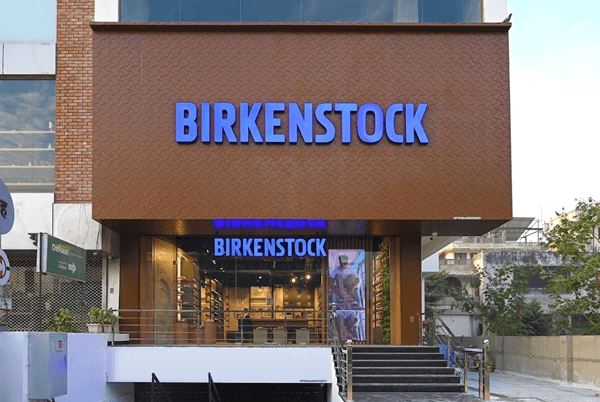
In India, the brand primarily expands via direct corporate subsidiaries, strategically placed Company-Owned Company-Operated (COCO) showrooms, authorized wholesale accounts, and shop-in-shop formats within luxury department chains.
Consequently, searching for a standard “Birkenstock franchise fee” leads into an informational trap. Birkenstock does not sell blanket territorial licenses or retail distributorship rights to individual retail aspirants online.
Instead, retail relationships are restricted to established institutional retailers, certified luxury distributors, or commercial property owners seeking to lease prime high-street real estate directly to the company.
Scam Advisory: Beware of Fake Birkenstock Dealership Portals
Due to the surging demand for Birkenstock’s ergonomic footwear across Tier-1 and Tier-2 Indian cities, unauthorized syndicates frequently launch fraudulent portals masquerading as official dealership acquisition forms. These operators request refundable allotment deposits, documentation charges, and upfront security bonds ranging between ₹2 Lakh and ₹10 Lakh.
Birkenstock will never ask prospective business partners to wire token fees into personal savings accounts or third-party bank accounts.
Retailers and commercial property landlords should verify all communication strictly through corporate domains and disregard unsolicited WhatsApp calls, PDF dealership brochures, or sponsored social media advertisements offering “instant retail authorizations.”
Indicative Setup Capital: What a Premium Footwear Showroom Demands
While an off-the-shelf franchise package does not exist, establishing an authorized luxury footwear outlet or executing a brand-compliant retail space requires substantial capital expenditure.
Store fit-outs must mirror Birkenstock’s global architectural identity, incorporating sustainable cork materials, specialized mood lighting, bespoke display joinery, and certified security setups.
For realistic balance-sheet modeling, an entrepreneur outfitting a 700 to 1,200 sq. ft. showroom in an upscale mall or high street will encounter significant cost variables across interior development, stock purchases, and operational capital reserves.
| Investment Head | Estimated Range (INR) | Financial & Operational Rationale |
|---|---|---|
| Upfront Franchise Fee | ₹0 / Undisclosed | No standard franchise fee; brand utilizes corporate or distribution models. |
| Store Interior & Architecture | ₹25 Lakh – ₹65 Lakh | Global fit-out standards, premium cork aesthetic, specialized fixtures, and signage. |
| Opening Inventory Commitment | ₹30 Lakh – ₹70 Lakh | Core iconic styles (Arizona, Boston, Gizeh), seasonal collections, and full size curves. |
| Security Deposit & Lease Advance | ₹15 Lakh – ₹40 Lakh | Typically 3 to 6 months of rent advance in high-footfall Grade-A malls or prime retail streets. |
| Working Capital & Contingency | ₹15 Lakh – ₹25 Lakh | Covers 4–6 months of retail payroll, utility overheads, local marketing, and inventory restocking. |
| Total Indicative Project Outlay | ₹85 Lakh – ₹2 Crore+ | Varies strictly by commercial square footage, city tier, and partnership framework. |
Metro-Wise Capital Dynamics: Real Estate and Location Variances
Footwear retailing at premium price points relies on concentrated footfalls from affluent demographics. Real estate expenditure represents the single largest variable influencing overall project viability across India’s major metropolitan commercial belts.
In Mumbai, securing space in leading commercial centers such as Lower Parel, Bandra Linking Road, or international airport terminals pushes commercial rental deposits and overall capital deployment upward to ₹1.1 Crore – ₹2.2 Crore.
In contrast, prime micro-markets across Delhi-NCR, including DLF Promenade, Select Citywalk, or Khan Market, demand an estimated layout of ₹90 Lakh – ₹1.9 Crore, driven by stiff security deposits and intense lease competition.
In southern retail hubs like Bengaluru (Indiranagar 100 Feet Road, UB City corridors) and Hyderabad (Jubilee Hills, Inorbit Mall), total project exposure ranges between ₹75 Lakh and ₹1.7 Crore.
Meanwhile, emerging luxury markets such as Pune (Koregaon Park, Senapati Bapat Road) offer slightly more balanced occupancy rates, with initial capital outlays centering around ₹65 Lakh to ₹1.4 Crore.
Financial Performance: Gross Margins, Operating Costs, and ROI
Profitability in high-end lifestyle footwear does not rely purely on brand awareness. Success is heavily dictated by inventory velocity, sell-through rates without heavy discounting, and occupancy cost-to-sales ratios. In standard premium footwear distribution models, gross trading margins generally hover between 35% and 45%, depending on the terms of wholesale procurement and logistics handling.
However, net operating margins tend to narrow to 12% to 18% once overhead deductions take effect. Prime mall rentals often mandate either minimum guaranteed monthly payouts or revenue-sharing models (typically 8% to 14% of gross billing), which, coupled with specialized sales personnel salaries and shrinkage management, demand disciplined inventory turns to achieve healthy returns on invested capital.
Related Franchise Audits:
Adda Footwear Distributorship & Retail Dealership (2026)
Available Commercial Channels: How to Partner with Birkenstock
Investors seeking commercial exposure to Birkenstock’s brand momentum have viable pathways, provided they abandon the pursuit of traditional franchise application forms:
1. Commercial Property Leasing (COCO Expansion): Landlords and developers holding 800 to 1,500 sq. ft. of prime, high-visibility commercial frontage on high streets or Grade-A shopping malls can present their site to Birkenstock’s corporate retail expansion team. Under this framework, the brand executes long-term commercial lease deeds directly.
2. Authorized Multi-Brand Retail (MBO) Retailing: Established luxury fashion and footwear retailers with existing boutique footprints can apply through corporate procurement channels to function as authorized stockists, stocking original product lines through authenticated wholesale trade accounts.
3. Corporate Inquiries: Any formal business proposal should be initiated through the corporate contact points listed on Birkenstock India’s official portal. Retailers must ensure they receive direct contractual verification and legal due diligence before making any balance-sheet commitments.